Sony and Warner Music’s lawsuit against Anthropic lands in the middle of a larger test for the AI industry: whether training and output practices that helped build large language models can survive mounting copyright challenges without forcing expensive licensing deals or curbs on model development.
Anthropic Copyright Case Raises AI Licensing Costs
The case matters economically because it goes straight to the cost structure of generative AI. If courts decide Anthropic or its peers must compensate rights holders for training data or for outputs that too closely reproduce copyrighted material, the industry’s best-case margin assumptions could narrow quickly. That would shift more value toward owners of music, books and other media libraries, and away from AI firms that have relied on broad data ingestion to build their products at scale.
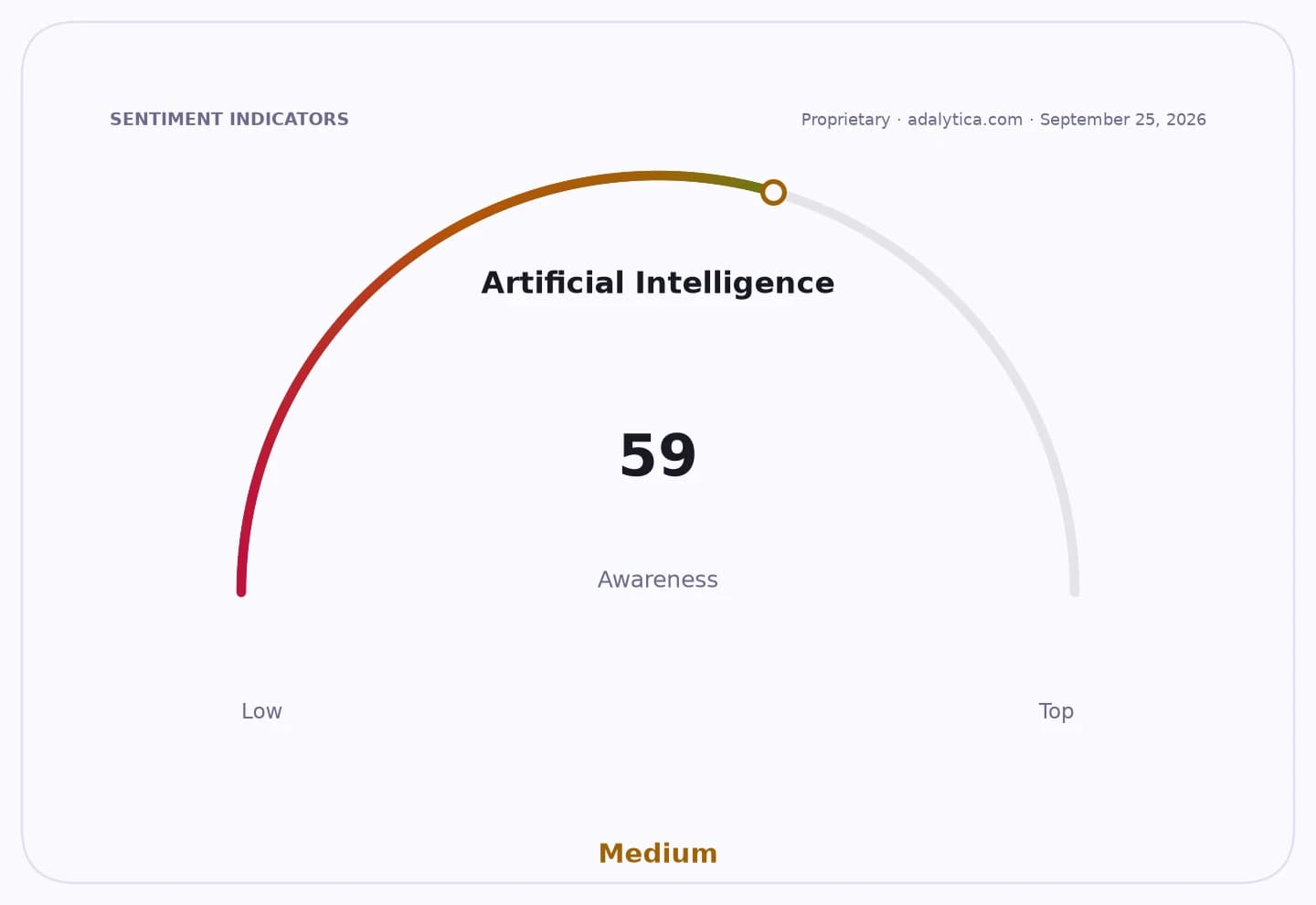
Sentiment IndicatorsⓘProprietary · adalytica.com · August 30, 2026
This is a snapshot — live sentiment, awareness and momentum for 130+ markets update continuously in the dashboard.Open AlphaPulse
It also matters to investors because Anthropic sits near the center of the AI ecosystem, even as it remains private. Any ruling that increases legal exposure or imposes licensing obligations could ripple across the sector, affecting valuation multiples for model developers, cloud providers and chip suppliers tied to the growth of AI services. Public-market proxies such as Microsoft, which backs and distributes AI tools, and Nvidia, which supplies the underlying compute, have already been buffeted by swings in expectations around AI monetization and regulatory risk.
Anthropic has acknowledged in its filings that it faces intellectual property claims and other litigation, and the music industry’s move adds to a growing pattern of challenges aimed at the foundations of AI training. The dispute also comes as courts and regulators are being asked to define where innovation ends and infringement begins, a question that could set the pace for licensing economics across the creative industries.
For now, the key investor takeaway is that copyright is becoming a balance-sheet issue for AI, not just a legal one. The longer these disputes drag on, the more likely the industry is to see heavier compliance costs, more selective data deals and slower expansion of profit margins, even if demand for AI products keeps rising.
| Entity | Gains | Losses |
|---|---|---|
| Sony Music / Warner Music | ▲licensing leverage | ▼model-unlicensed training |
| Anthropic | ▲limited if it prevails | ▼legal costs, product constraints |
| AI rivals | ▲clearer rules if settled | ▼industry-wide litigation risk |
| Content owners | ▲compensation potential | ▼weaker control if courts side with AI |