Apple is seeking about $7 billion from a U.S. dollar bond sale, moving to lock in long-term funding as big technology companies keep turning to debt markets to finance artificial-intelligence spending and shareholder returns.
Apple Plans About $7 Billion Bond Sale

The offering would make Apple the latest mega-cap to tap the bond market while Treasury yields remain elevated, keeping borrowing costs higher across corporate finance. Apple’s own longest-dated tranche is being marketed at about 80 basis points over U.S. Treasuries, underscoring that even the world’s most cash-rich companies are paying up for capital.
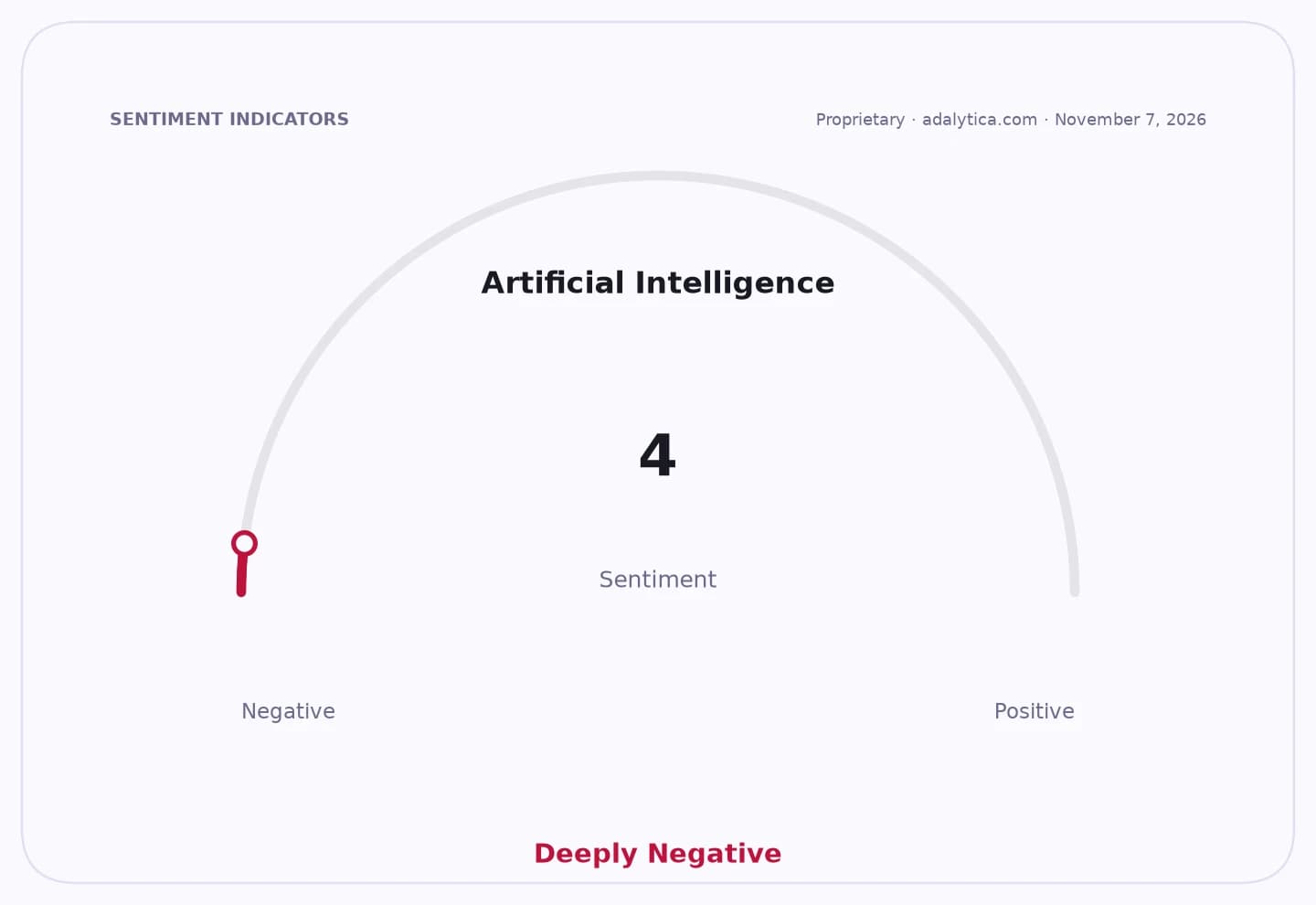
Sentiment Indicators
The iPhone maker’s seven-part deal includes two floating-rate notes due in 2028 and 2029 and five fixed-rate notes due between 2028 and 2036, according to a regulatory filing. Goldman Sachs, Bank of America Securities, Deutsche Bank Securities and JPMorgan are joint bookrunners.
Apple plans to use proceeds for general corporate purposes, including share buybacks and repayment of outstanding debt. That matters because the company ended September with $136.9 billion in cash, cash equivalents and marketable securities, but it has also been one of the most aggressive repurchasers in corporate America, buying back $85.8 billion of stock in fiscal 2026 and paying $15.7 billion in dividends and equivalents.
For investors, the deal reinforces a familiar pattern: Apple is using cheap, investment-grade financing to support capital returns while preserving liquidity, rather than drawing down overseas cash or relying solely on operating cash flow. It also signals that demand for top-tier corporate credit remains strong even as benchmark yields stay near multiyear highs and the Fed funds rate is around 3.89%.
Apple last sold bonds in May, when a $4.5 billion issue drew about $10 billion in orders, showing the company can still attract deep demand. The new sale is likely to be watched closely for appetite across the broader investment-grade market, especially after a stretch of elevated government borrowing costs and heavy debt issuance from large-cap tech names funding data-center and AI buildouts.
The transaction could also help set pricing for other highly rated issuers weighing new debt as they juggle AI capex, buybacks and refinancing needs. Final size and terms may still change depending on investor demand.
| Entity | Gains | Losses |
|---|---|---|
| Apple | ▲Cheap long-term funding | ▼Higher interest expense |
| Bond investors | ▲High-grade supply | ▼Lower yield than riskier debt |
| Shareholders | ▲Ongoing buybacks support | ▼Potentially more leverage |
| Competing tech issuers | ▲Better market benchmark | ▼Tighter attention on funding costs |