Dow Jones futures pointed higher Thursday even as Nasdaq futures slipped, underscoring a market rotation that may matter more to long-term investors than a single day’s move. The split is happening just after a powerful post-election rally and a sharp drop in oil prices gave the broader market a lift, while several mega-cap technology leaders — including Apple, Microsoft and Amazon — are now flashing buy signals on standard technical indicators.
Apple, Microsoft and Amazon trade above key averages
That combination matters because it suggests investors are not abandoning the market, but shifting where they want to take risk. Cyclical and value names are getting a bid as rates, politics and commodity prices move, while the biggest tech franchises are offering a different kind of opportunity: pullbacks inside secular growth stories. For patient investors, that is often where the best returns begin.
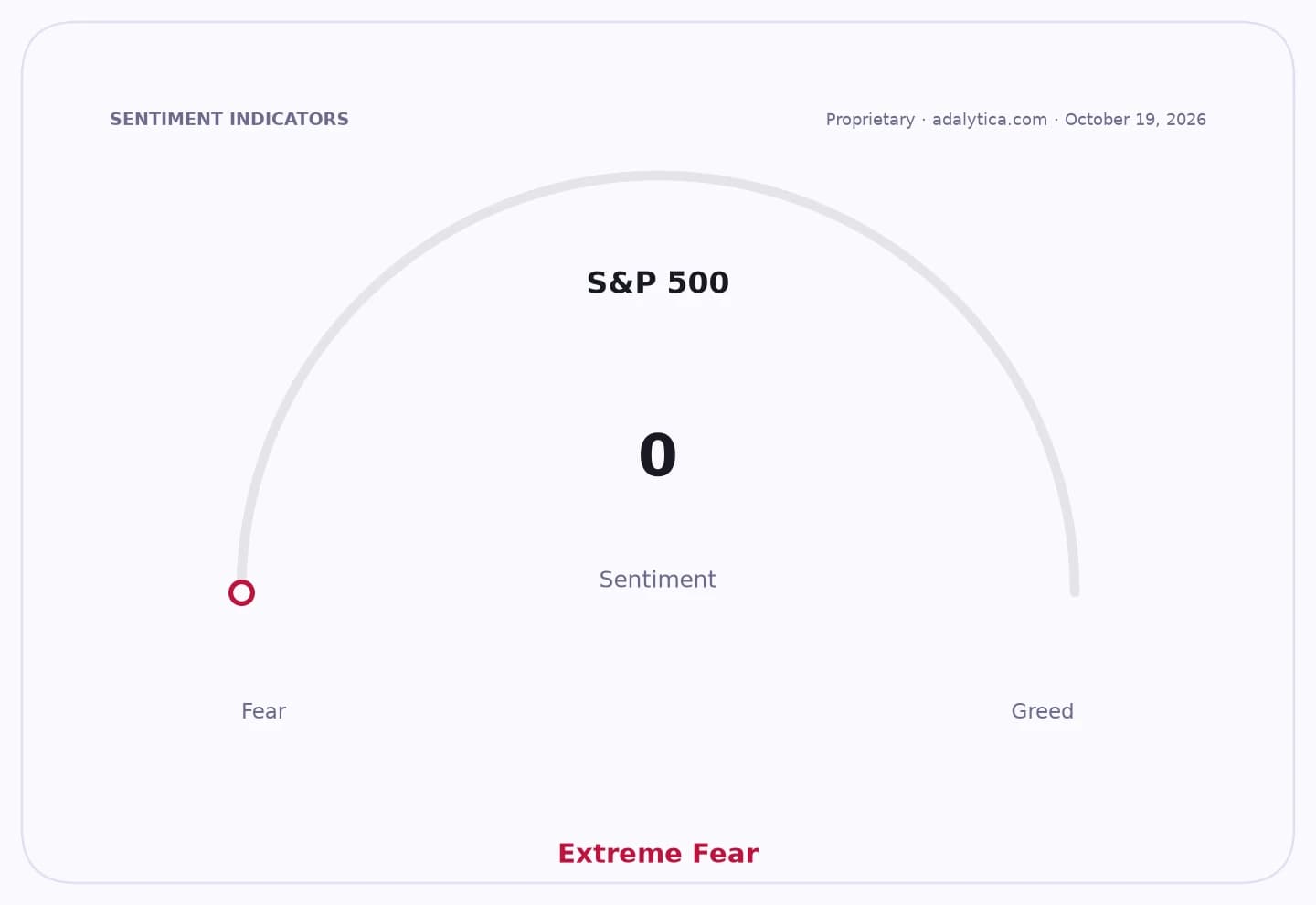
Sentiment Indicators
Apple, Microsoft and Amazon remain the kind of businesses that can compound for years because they sit at the center of durable trends: devices, cloud computing, software, artificial intelligence and e-commerce. Their latest trading patterns back that up. Apple closed at $349.81, above its 50-day moving average of $336.62 and comfortably above its 200-day average of $299.05. Microsoft finished at $541.75, also above both its 50-day line of $517.21 and its 200-day average of $439.24. Amazon ended at $268.73, above its 50-day average of $254.00 and its 200-day average of $244.09.
Those are not just chart points. They matter because they often show that institutional buyers are stepping back in after volatility. Apple’s relative strength index was 57.0, Microsoft’s 53.7 and Amazon’s 53.9, all consistent with stocks that have cooled from prior swings without looking overstretched. For investors who think in years, not days, that is the sort of setup that can offer an entry point rather than a warning sign.
The bigger market backdrop also deserves attention. Adalytica’s S&P 500 Trade Signals show sentiment at 47, neutral, even as awareness remains at “extreme greed,” a reminder that investors are still paying close attention after a huge move. The U.S. dollar’s trade signal is also firm, with sentiment at 83, which can pressure multinationals over time but also signals the market is still digesting changing expectations for growth and policy. Meanwhile, the PMI recession sentiment gauge sits at 54, neutral, suggesting the economy is not flashing an obvious collapse signal even as sentiment whipsaws.
That mix helps explain why the market can rally and still leave tech under pressure. Investors may be rotating toward parts of the market that look cheaper or more tied to an improving macro picture, while using any weakness in megacap tech to reassess valuations and growth durability. For the Nasdaq, that can mean more volatility. For disciplined investors, it can mean more opportunities.
The long-term question is not whether tech can wobble — it always can — but whether the earnings power of the best companies keeps compounding. On that score, Apple, Microsoft and Amazon still look like core holdings for diversified portfolios. If you are building wealth over 5 to 10 years, the smarter move is usually not to chase every bounce, but to own great businesses when the market gives you a better price. Thursday’s futures action is a reminder to keep cash ready, stay diversified and watch the leaders closely.
| Entity | Gains | Losses |
|---|---|---|
| Dow Jones industrials | ▲Rotation into cyclical names | ▼Tech-heavy growth trade |
| Apple, Microsoft, Amazon | ▲Buy-the-dip interest | ▼Near-term momentum traders |
| Nasdaq futures | ▲— | ▼Profit-taking in megacap tech |
| Long-term investors | ▲Better entry points | ▼Short-term market timers |