Now is the time for a rebound in neglected stocks as lower interest rates, softer yields and a cooling labor market improve the case for beaten-down parts of the market that lagged the AI-heavy rally.
IWM, QQQ and SPY after rate-cut rotation

The macro backdrop is turning more favorable for smaller and cheaper shares. The fed funds rate is forecast at 3.89% for November, down from 3.88% in October and far below the 2026 peak path, while the 10-year Treasury yield is projected at 4.845%, near recent highs but off the 4.95% level seen earlier in the week. U.S. unemployment, meanwhile, is seen holding around 4.11%, suggesting the economy is slowing without breaking.
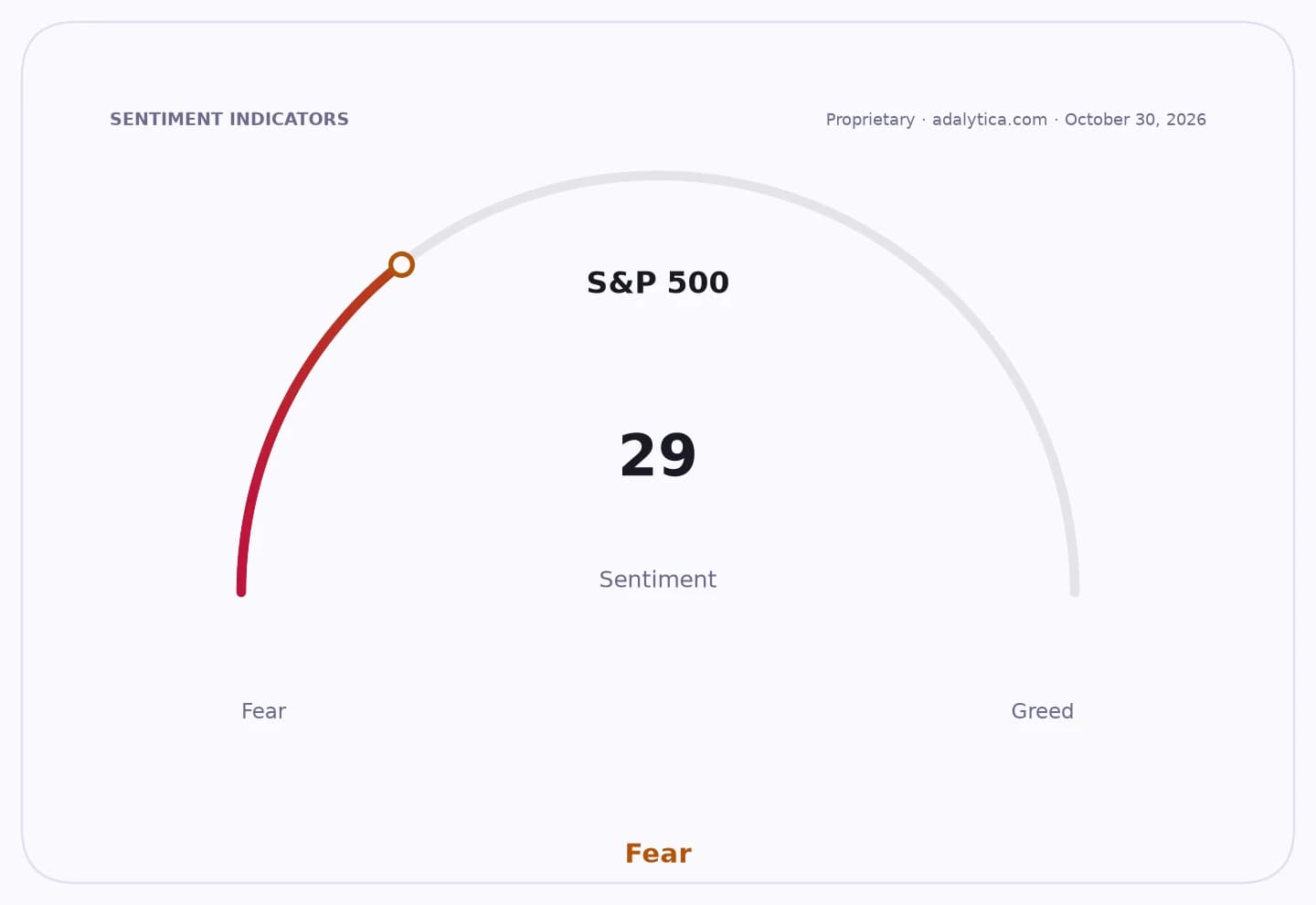
Sentiment Indicators
US Dollar
That mix matters because neglected stocks tend to benefit when investors move away from stretched momentum names and back toward balance-sheet, earnings and valuation support. Smaller companies in particular are highly sensitive to borrowing costs, and a steadier labor market gives the Federal Reserve room to ease without signaling a recession.
The market is already showing signs of a rotation. The Russell 2000 ETF, IWM, rebounded to $273.67 on Nov. 6 after briefly sinking to $270.98 the prior session, while the S&P 500 ETF, SPY, closed at $735.29, well below its recent high near $766.81. The Nasdaq 100 ETF, QQQ, has been hit harder, sliding to $656.10 from $691.95 two sessions earlier and leaving it down more than 5% in two days.
S&P 500
Technical indicators also show the broader market unwinding from overbought levels. IWM’s 50-day moving average sits at $281.94, only modestly above the latest close, while its RSI has reset to 53.0 from 87.8 in December. QQQ’s RSI is down at 30.5, a level that typically reflects heavy selling, and SPY’s RSI has fallen to 34.9. On Adalytica’s S&P 500 Trade Signals, awareness remains at 100, but sentiment is neutral at 49, underscoring a market that is still crowded in attention even as enthusiasm cools.
For investors, that sets up a classic value-style rebound trade: less-loved cyclicals, small caps and profit-generating laggards could outperform if yields drift lower and the Fed confirms an easier stance. The risk is that sticky long-term rates or renewed volatility keep money parked in mega-cap defensives and AI leaders instead.
The next catalyst is the November Fed meeting path and any fresh shift in Treasury yields, which will likely determine whether the rotation out of crowded growth names becomes durable or fades into another short-lived bounce.
| Entity | Gains | Losses |
|---|---|---|
| Small-cap value stocks | ▲Rate relief, multiple expansion | ▼Continued yield pressure |
| IWM / Russell 2000 longs | ▲Rotation inflows, rebound potential | ▼Growth-led market dominance |
| Mega-cap tech / QQQ | ▲None from rotation trade | ▼De-risking, valuation compression |
| Treasury bondholders | ▲Softer yields if cuts price in | ▼Inflation stickiness, higher term premiums |