Ethereum’s 66% surge in the third quarter has revived the bullish case for the world’s second-largest crypto asset, but the bigger market story is not simply that ETH beat the S&P 500 — it is that Ethereum is once again acting like the core settlement layer for crypto capital while still trading well below its long-term highs.
Ethereum Q3 Surges on Stablecoin and Tokenization Use
That matters because a rally driven by network utility, not just speculation, tends to be stickier and more consequential for investors. Ethereum hosts $147.9 billion in stablecoins and $17 billion in tokenized real-world assets, giving it a deeper base of on-chain capital than most rival networks. It also collected $354,748 in fees over the 24 hours ending Oct. 14, a modest figure in absolute terms but a sign that users are still paying for access to the chain’s liquidity, trading, lending and tokenization ecosystem.
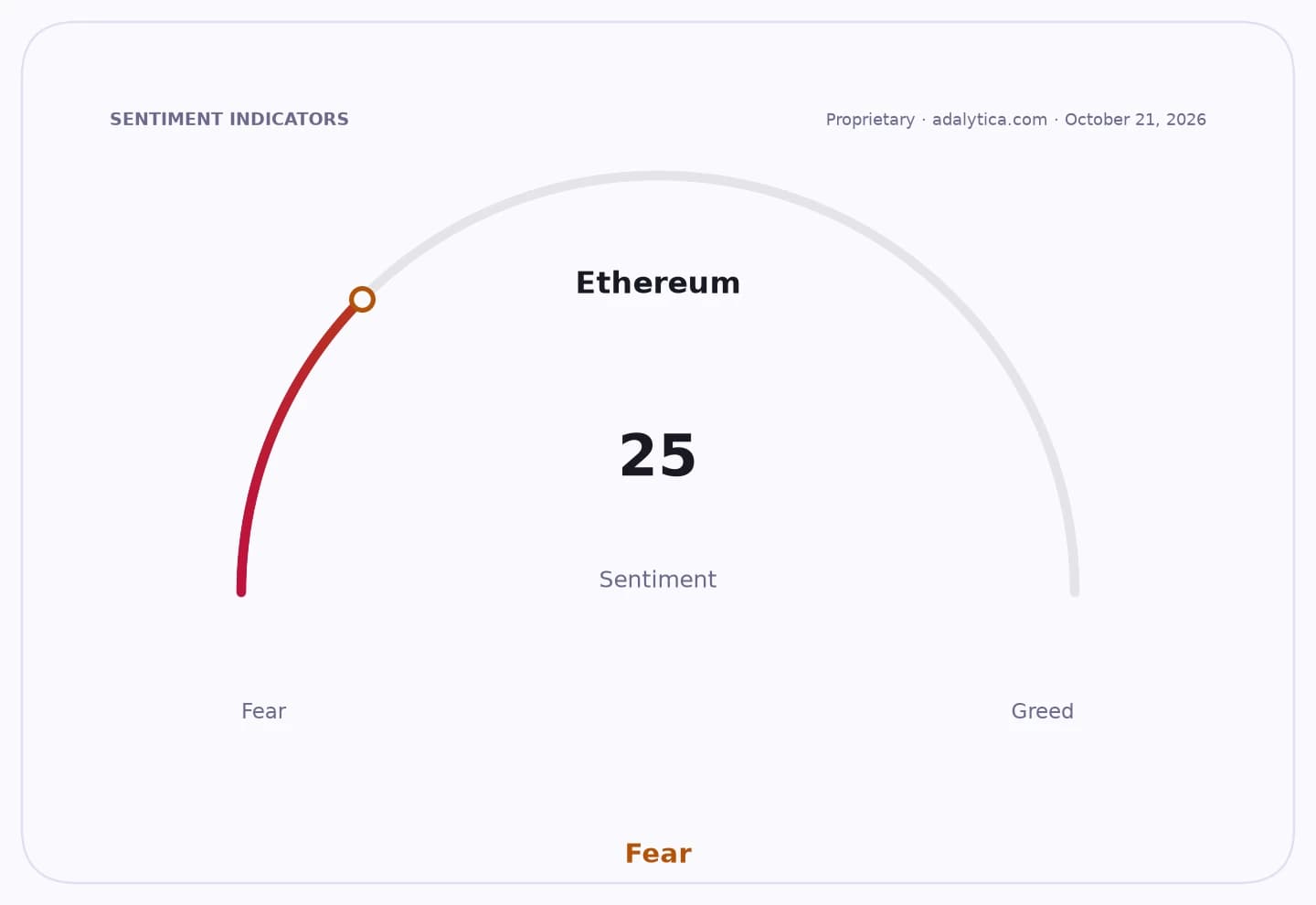
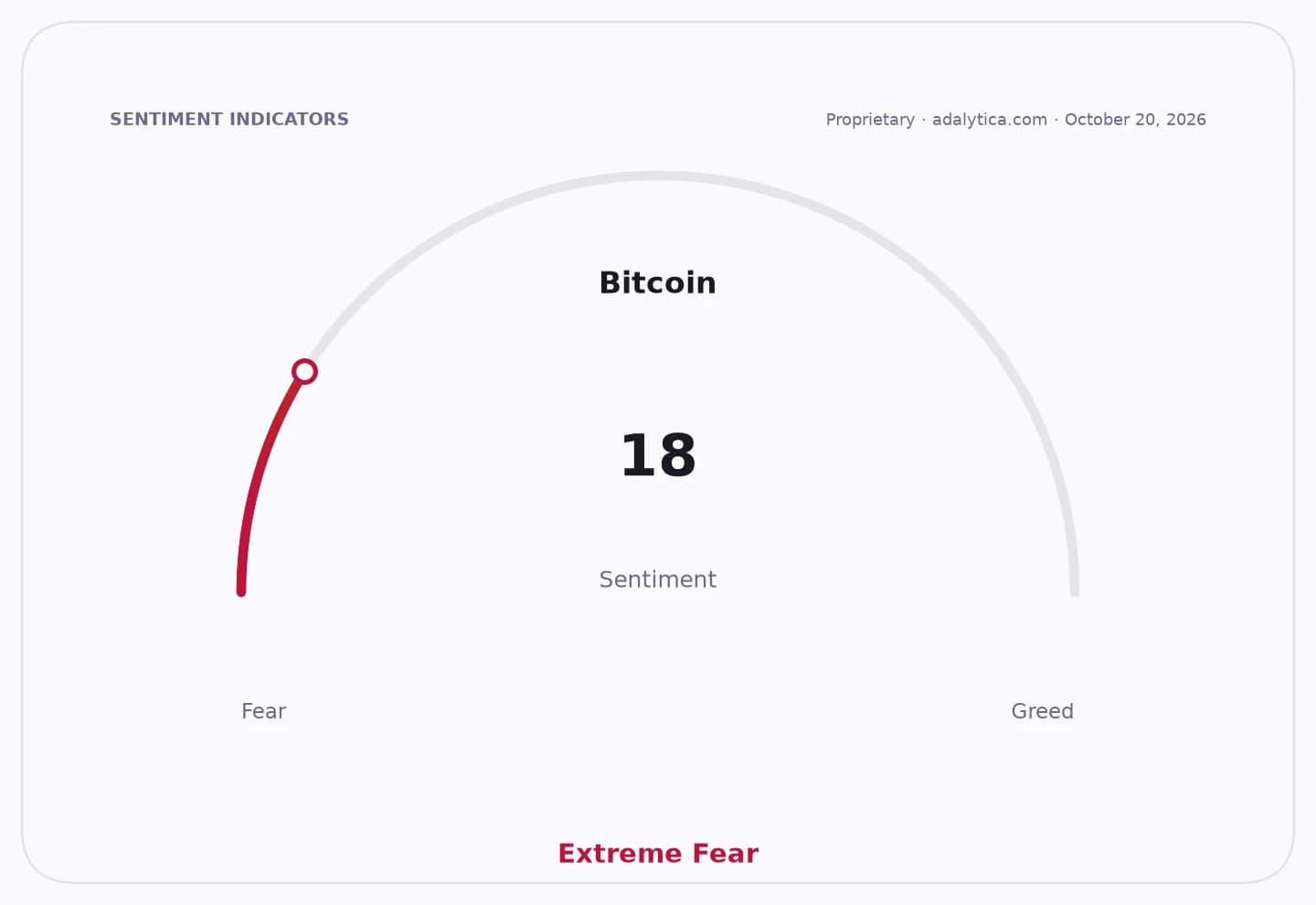
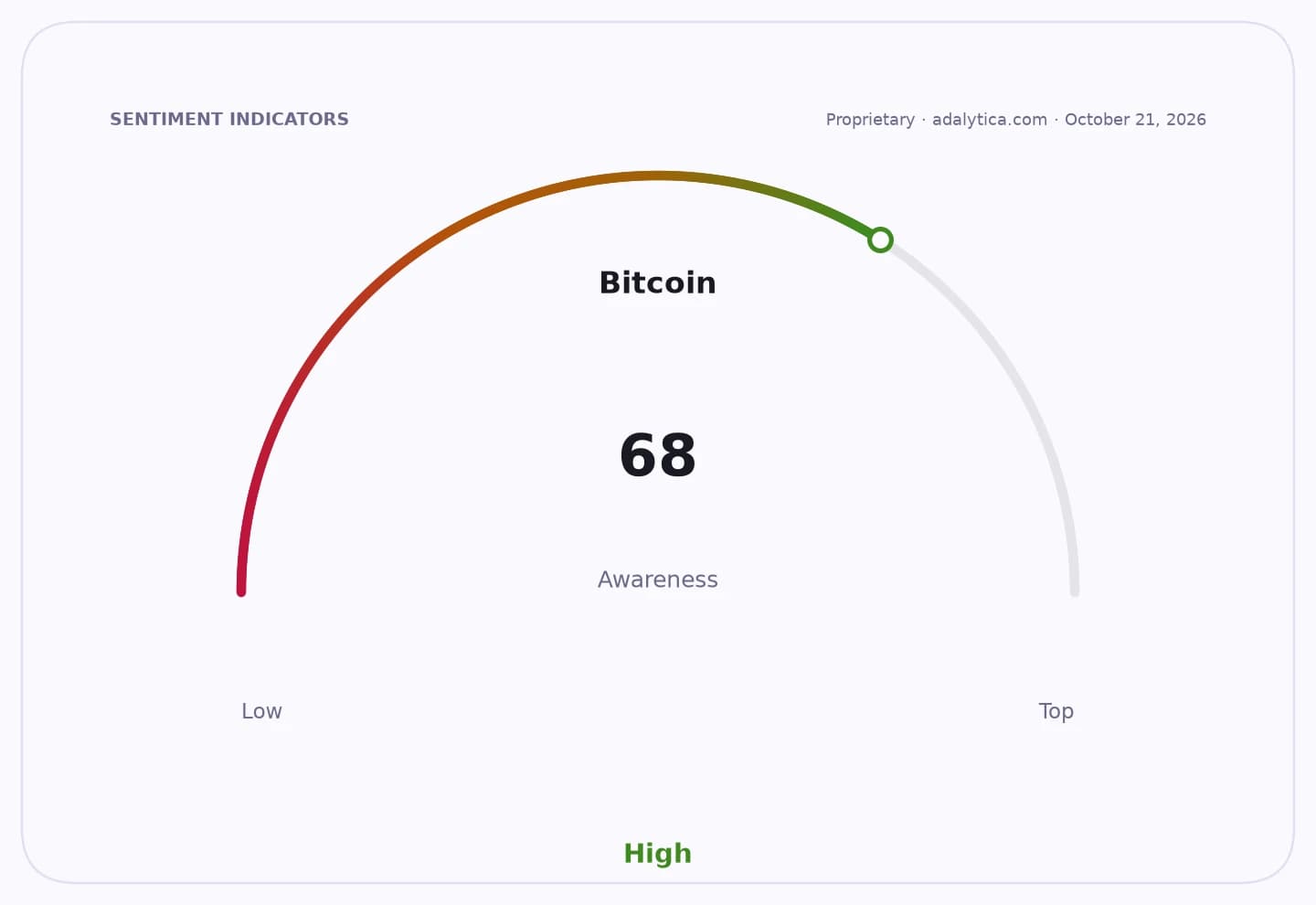
Sentiment IndicatorsⓘProprietary · adalytica.com · October 21, 2026
This is a snapshot — live sentiment, awareness and momentum for 130+ markets update continuously in the dashboard.Open AlphaPulse
For equity and crypto investors, the comparison with the S&P 500 is what gives the move its headline appeal. The broad index rose only 2% in the quarter, while Ether’s jump marked its best three-month performance since 2021. Tom Lee, chairman of BitMine Immersion Technologies, has said Ethereum is “dwarfing” other major assets, and on a short-term basis that is fair. But the more important question is whether the rally is evidence of a durable repricing or just another sharp crypto leg higher inside a still-uneven cycle.
The case for caution is straightforward. Ethereum remains down 37% over five years, while an S&P 500 index fund would have gained 85% with dividends reinvested. That gap is why many portfolio managers remain reluctant to treat ETH as a core long-term holding despite the recent surge. A 66% quarterly gain can repair sentiment quickly, but it does not erase years of underperformance or the volatility that has repeatedly punished late buyers.
The technical backdrop is mixed rather than euphoric. Ethereum’s recent reading of 29.1 on the relative strength index points to a market that is still far from overbought after the latest pullback, while the price of $2,438.85 is sitting below its 50-day moving average of $2,549.79. The MACD remains negative, suggesting momentum has cooled after the run earlier in the year. That leaves room for another advance, but also leaves the chart vulnerable if risk appetite fades.
The fundamental bullish argument is that Ethereum continues to own the highest-value use case in crypto: a place where capital is already concentrated and can be deployed into yield-generating activity. Staking participation hit a record 43.8 million ETH in the third quarter, according to the market context, underscoring that holders are still locking up supply rather than exiting the network. JPMorgan’s launch of deposit tokens on Ethereum further reinforces the institutional narrative, showing that parts of traditional finance are increasingly willing to build on the chain rather than around it.
Still, investors should separate network relevance from price momentum. Ethereum’s next upgrade, Glamsterdam, is meant to raise capacity and is slated for mainnet deployment in the fourth quarter after testing began on Oct. 6. If the upgrade improves throughput and lowers friction, it could support another rerating by making the chain more competitive for tokenized assets and DeFi activity. If adoption stalls, however, the market may continue to view ETH as a strategically important network with a less compelling return profile than its strongest advocates expect.
Adalytica’s Ethereum Fear & Greed Index is neutral at 35, while its 30-day change shows a decline, suggesting the market is still trying to decide whether the latest surge marks a regime change or just a strong quarter. That ambiguity is exactly why the setup matters. Ethereum is no longer just a speculative trade, but it is not yet a no-brainer long-term allocation either.
For investors, the practical takeaway is that Ethereum’s Q3 performance strengthens the case for owning some exposure, especially for those betting on tokenization, stablecoins and on-chain financial activity. But after such a powerful rebound, the better strategy may be disciplined accumulation rather than chasing the move outright.
| Entity | Gains | Losses |
|---|---|---|
| Ethereum holders | ▲Q3 outperformance | ▼Still lagging five-year returns |
| DeFi and tokenization users | ▲Deeper liquidity base | ▼Higher on-chain competition |
| Long-term crypto investors | ▲Network adoption story | ▼Volatility and execution risk |
| S&P 500 benchmark investors | ▲Relative safety | ▼Missed crypto upside |