Bitcoin remained the dominant crypto asset by market value while trailing three smaller tokens in search activity, a reminder that capital and attention in digital assets are not moving in lockstep. For investors, the split matters because it shows how speculation is increasingly concentrating in lower-cap names even as Bitcoin keeps its central role as the sector’s reserve asset.
Bitcoin Trails Smaller Tokens in Search Activity
In the latest snapshot at 10 p.m. ET Oct. 17, Bitcoin ranked fourth in searches even though its market capitalization stood at about $1.64 trillion, far ahead of the rest of the market. The largest search name was Lighter, whose LIT token traded at $3.12 and carried a $780.6 million valuation, followed by Quack AI, which jumped nearly 80% in 24 hours to $0.116. Pearl ranked third in search activity after rising 8.4% to $1.83. Bitcoin, by contrast, was little changed on the day, up 0.18% at $81,616.
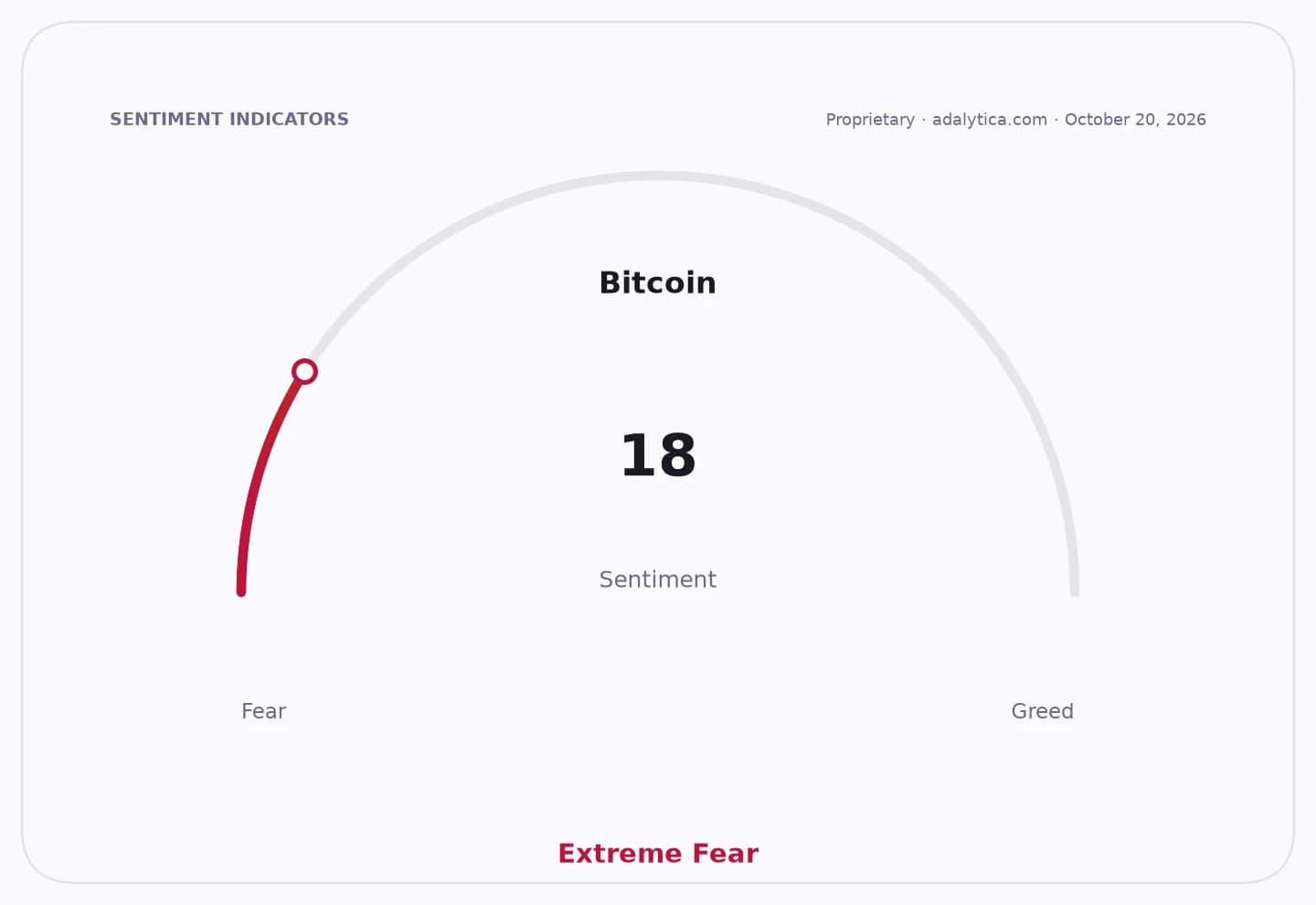
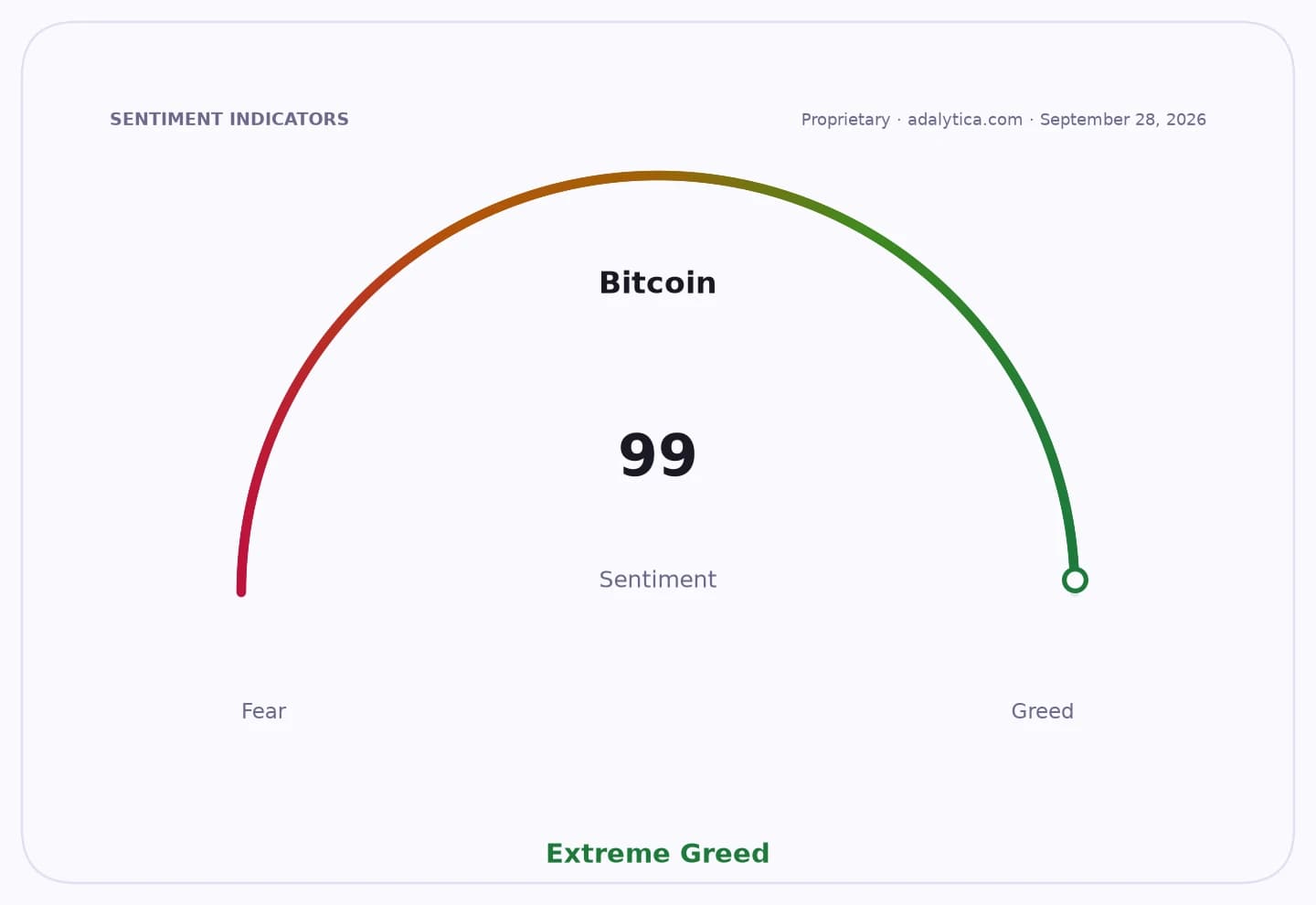
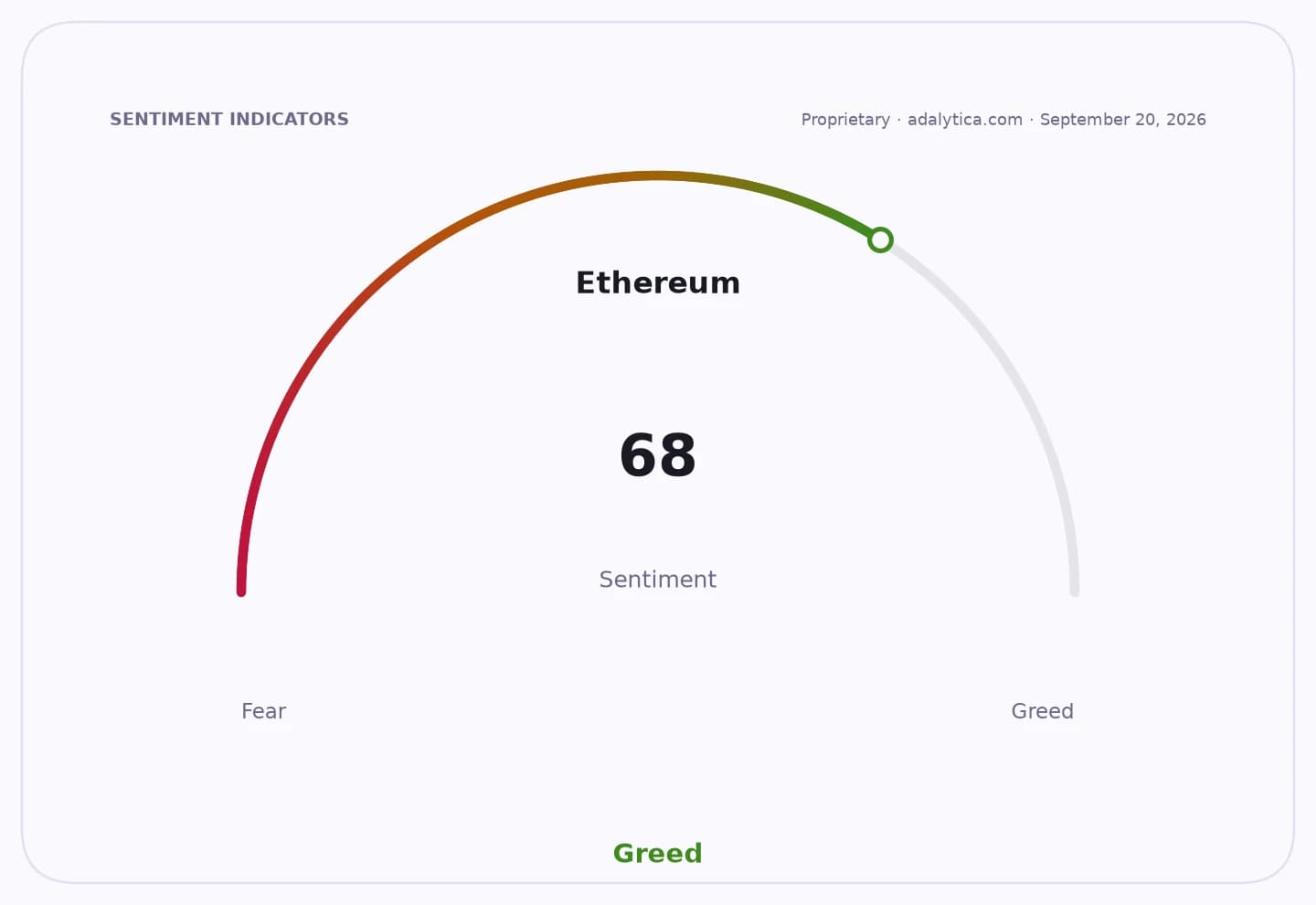
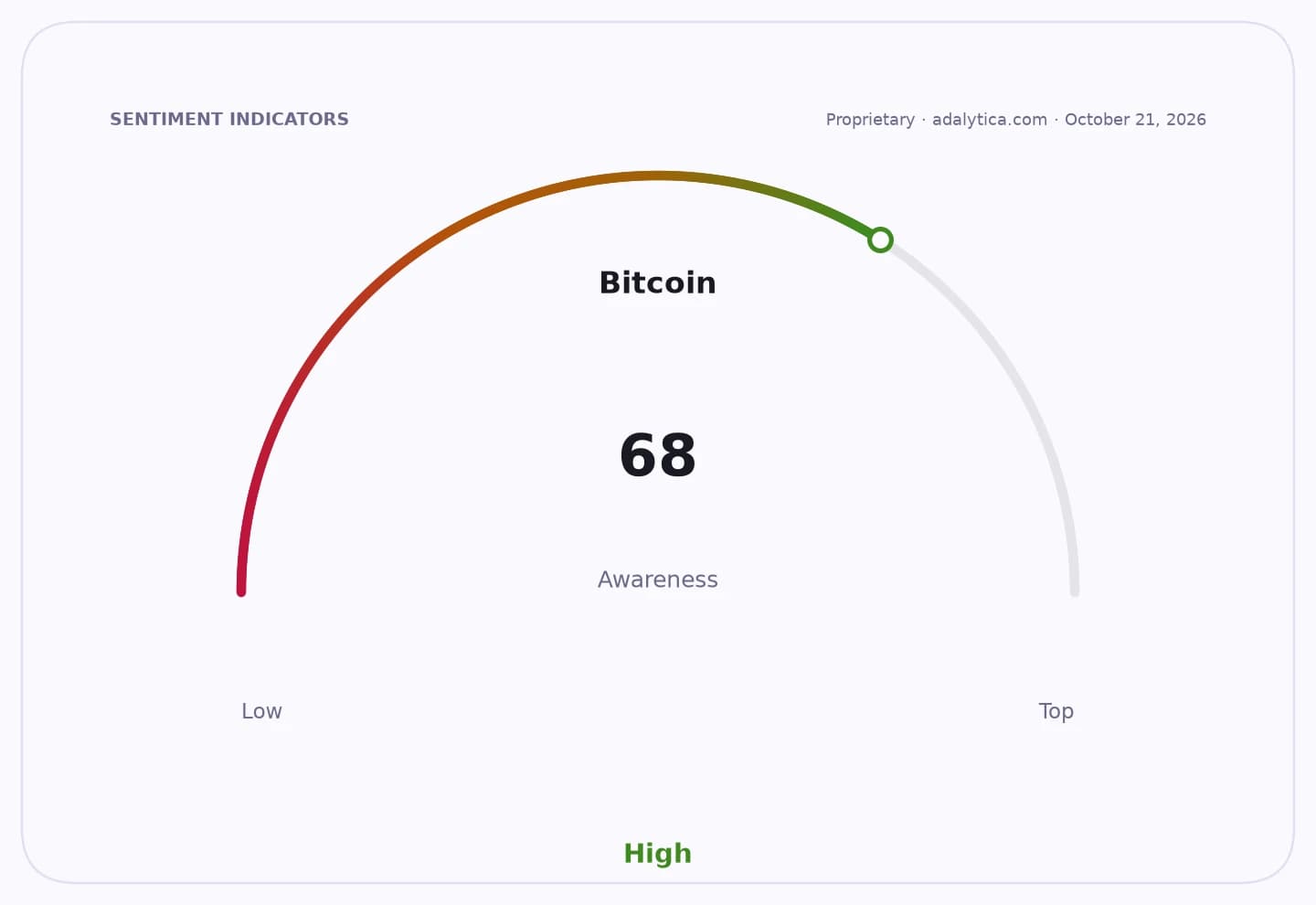
Sentiment IndicatorsⓘProprietary · adalytica.com · October 21, 2026
This is a snapshot — live sentiment, awareness and momentum for 130+ markets update continuously in the dashboard.Open AlphaPulse
The divergence underscores a market in which retail attention is chasing momentum while institutional capital continues to anchor Bitcoin’s scale and liquidity. That split is economically important because search interest often feeds short-term price discovery in smaller tokens, but it does not confer the balance-sheet depth, settlement utility or portfolio relevance that keeps Bitcoin at the center of crypto allocation strategies.
The pattern also fits the recent price action. Bitcoin’s 50-day moving average and 200-day moving average remain above current levels, and its RSI reading of 53 points to a market that has recovered from oversold territory but is still not showing the kind of overheated conditions typically seen in broad speculative surges. Adalytica’s Bitcoin Fear & Greed Index, meanwhile, was at 16, in “Fear,” even as awareness held at a neutral 68. That combination suggests investors are paying attention to the asset, but still approach it cautiously after a volatile stretch.
The disconnect has implications for listed crypto proxies as well. Coinbase, which often benefits from trading volume and retail participation, has seen its stock stabilize but remain below its 50-day and 200-day averages in the latest readings. Strategy, the largest corporate Bitcoin accumulator, has also traded well below its earlier highs, despite Bitcoin’s larger structural role in the market. If search traffic continues to migrate toward newer tokens, liquidity and fee generation may increasingly favor platforms with broad altcoin exposure, while Bitcoin-related holdings stay driven more by macro allocation and treasury demand.
That leaves two competing narratives. The bullish case is that Bitcoin’s lead in market capitalization shows it remains the asset most likely to absorb capital when investors want crypto exposure with the deepest liquidity and strongest institutional adoption. The bearish case is that attention is fragmenting into speculative pockets, which can support temporary rallies in smaller tokens without improving the market’s overall quality or breadth.
For now, the message is straightforward: Bitcoin still defines the size of the crypto market, but it no longer defines where the hottest attention is going. Traders should watch whether search momentum keeps favoring smaller names, and whether that eventually turns into a broader rotation out of Bitcoin dominance or just another short-lived burst of retail speculation.
| Entity | Gains | Losses |
|---|---|---|
| Bitcoin | ▲Market dominance | ▼Search attention |
| Lighter / Quack AI / Pearl | ▲Retail visibility | ▼Scale credibility |
| Crypto exchanges | ▲Higher trading activity | ▼Concentration in majors |
| Long-term Bitcoin holders | ▲Reserve-asset status | ▼Momentum leadership from altcoins |