July 6, 2026 — Apple unveiled a new AI chip for data centers, stepping into Nvidia’s most lucrative market as the race to build artificial-intelligence infrastructure shifts toward control of the silicon that runs it.
Apple AI Chip Challenges Nvidia Dominance
The move matters because AI data centers have become the central battleground in technology spending. Nvidia has dominated that market with accelerators used to train and run large AI models, but Apple’s entry extends its custom-silicon strategy beyond devices and into infrastructure, threatening to redirect some AI hardware demand away from merchant chip suppliers.

Apple shares closed up 1.3% at $312.66 on Monday, extending their gain since July 1 to more than 6%. The stock finished above its 50-day and 200-day moving averages and near the upper end of its conventional Bollinger Band range, signaling strong investor momentum around the company’s AI push. Nvidia rose 0.4% to $195.55 but remained below its 50-day moving average and about 17% under its May 14 close, reflecting a more cautious setup for the market leader.
The economic stakes are large. AI infrastructure spending is accelerating globally, with Microsoft advancing plans for an AI data center in North Rhine-Westphalia and SK Group Chairman Choi Tae-won outlining a 2,100 trillion won investment plan centered on AI data centers and semiconductor fabrication. Choi described the next generation of facilities as “factories that produce intelligence,” underscoring why chips, power and capacity have become strategic assets rather than back-office technology.
Apple’s chip also sharpens a risk already flagged by the broader semiconductor industry: customers are becoming competitors. AMD said in a May filing that it may face competition from customers that internally develop products to support similar AI workloads. That warning now looks less theoretical as the largest technology companies seek to reduce dependence on Nvidia’s GPUs, manage supply constraints and capture more of the economics of AI computing.
Nvidia’s advantage remains formidable. Its hardware, software ecosystem and data-center relationships give it scale that new entrants will struggle to match quickly. But Apple does not need to displace Nvidia overnight to matter. Even a shift in incremental AI workloads toward in-house silicon could pressure pricing, alter supply agreements and give large buyers more leverage.
Apple’s own filings point to the pressure behind the strategy. The company said it is facing supply constraints and rising costs for components including advanced semiconductors, NAND storage and DRAM. Owning more of the AI hardware stack could help Apple manage performance, costs and availability as AI features become more central to its products and cloud services.
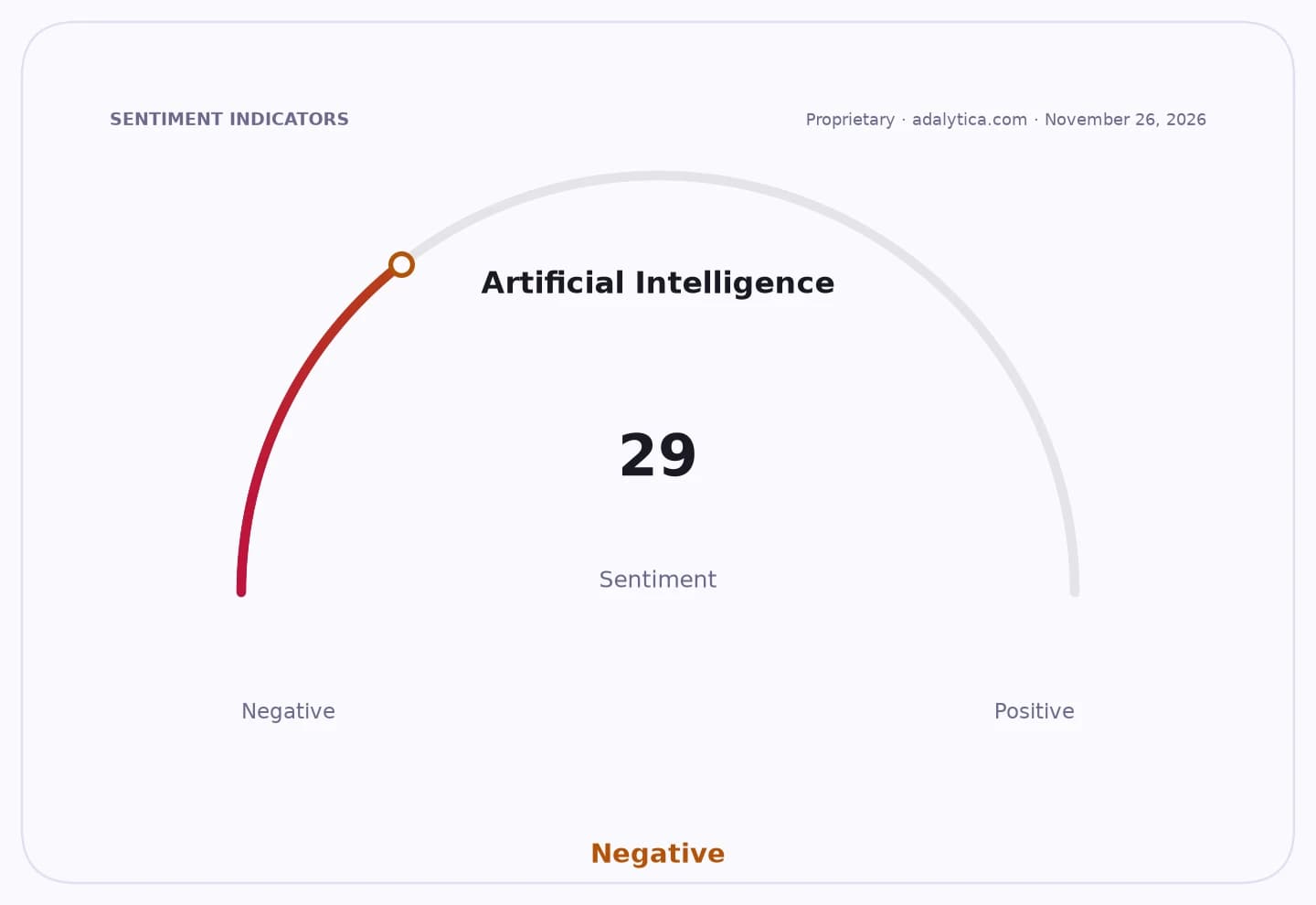
The buildout also carries constraints beyond chips. AI data centers are straining local grids through higher power use and heat generation, prompting greater focus on battery energy storage systems and other energy-management tools. A proprietary Adalytica.com gauge showed mildly positive sentiment toward the AI data-center theme at 0.25, reflecting continued investment enthusiasm tempered by energy, regulatory and environmental concerns.
The next test is whether Apple can turn chip design into data-center scale. If it can, Nvidia’s biggest long-term challenge may not be another GPU vendor, but its largest customers deciding they would rather own the accelerator roadmap themselves.
| Entity | Gains | Losses |
|---|---|---|
| Apple | ▲More AI stack control | ▼Higher execution risk |
| Nvidia | ▲Defends installed base | ▼Potential share pressure |
| Cloud and AI buyers | ▲Greater supplier leverage | ▼Integration complexity |
| AMD and other chip rivals | ▲Validation of AI demand | ▼More custom-silicon competition |