AppLovin’s post-earnings drop is forcing Wall Street to reset just how much perfection it was pricing into one of the market’s most explosive ad-tech winners.
AppLovin Falls After Earnings as Targets Reset
That matters because AppLovin is no longer being valued like a niche mobile-ads company. It has become a premium growth story tied to the biggest themes in markets right now: AI-driven advertising optimization, digital ad spend, and the battle for scarce investor capital in a market that is rewarding only the strongest compounders. When a stock has already delivered huge gains, even a solid quarter can disappoint if it does not clear a very high bar.
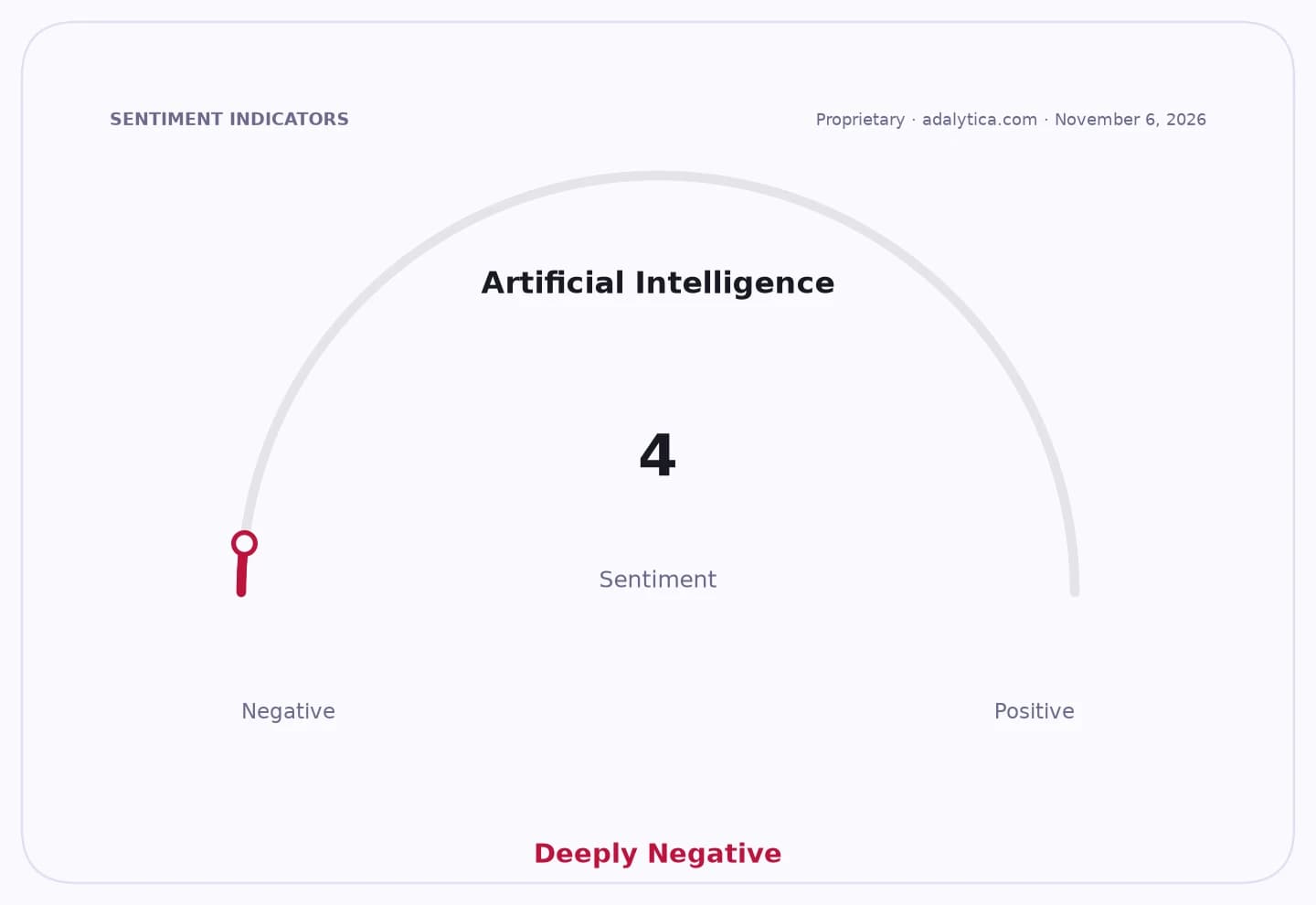
Sentiment Indicators
The stock’s recent trading pattern shows just how volatile that setup can be. AppLovin closed at $395.51 on Nov. 10, well below its levels earlier in the year, even after a sharp rebound from a February trough near $366.91. The shares had traded as high as $724.62 late last year, and the wild swings in relative strength and momentum indicators underscore a market still wrestling with valuation. In technical terms, the stock remains well below its 200-day moving average, a sign that investors are still debating whether the long-term growth story justifies the ride.
What’s changing now is not the story, but the expectations. AppLovin’s latest quarterly filing showed revenue of $2.18 billion for the three months ended Sept. 30, up sharply from a year earlier, and the company has been telling investors it can keep improving the effectiveness and predictability of its advertising technology. That is exactly the kind of message that supports a premium multiple. But once a stock has already been bid up on that promise, analysts tend to focus on whether future quarters can keep delivering enough growth, margin expansion and cash generation to justify even higher price targets.
That is why the stock’s reaction matters beyond a single-day move. If analysts are trimming targets after earnings, it usually means the market is shifting from “how fast can this grow?” to “how much of that growth is already priced in?” For long-term investors, that is the key question. A business can still be excellent and still be a poor short-term stock if expectations get too far ahead of fundamentals.
The broader backdrop actually remains constructive for AppLovin. Digital advertising continues to concentrate in platforms with scale, targeting precision and measurable return on ad spend. Bigger players such as Meta and Google are also signaling the same secular opportunity: advertisers are still looking for efficiency, and platforms that can deliver it are likely to keep winning budgets. That supports the long-term bull case for AppLovin, especially if its software keeps improving results for clients in mobile, e-commerce and social advertising.
Still, investors should not confuse a great business with a one-way stock. AppLovin’s recent momentum has been interrupted before, and the combination of elevated expectations, a fast-moving competitive landscape and a stock that has already had a huge run makes it sensitive to any hint of slowing growth. For patient investors, that may be less a reason to flee than a reminder to keep sizing disciplined and stay focused on multi-year earnings power, not the next quarter’s noise.
For now, AppLovin remains one to watch closely. If management can keep turning revenue growth into durable free-cash-flow expansion, the long-term compounding case is still intact. But analysts’ target resets are a useful warning: even the most unstoppable stocks eventually have to earn their premium all over again.
| Entity | Gains | Losses |
|---|---|---|
| AppLovin long-term holders | ▲durable ad-tech compounding | ▼near-term multiple compression |
| Analysts | ▲fresh earnings data to refine models | ▼harder justification for lofty targets |
| Digital ad rivals | ▲broader sector validation | ▼pressure to match AppLovin efficiency |
| New buyers | ▲possible better entry point | ▼less upside if growth is already priced in |