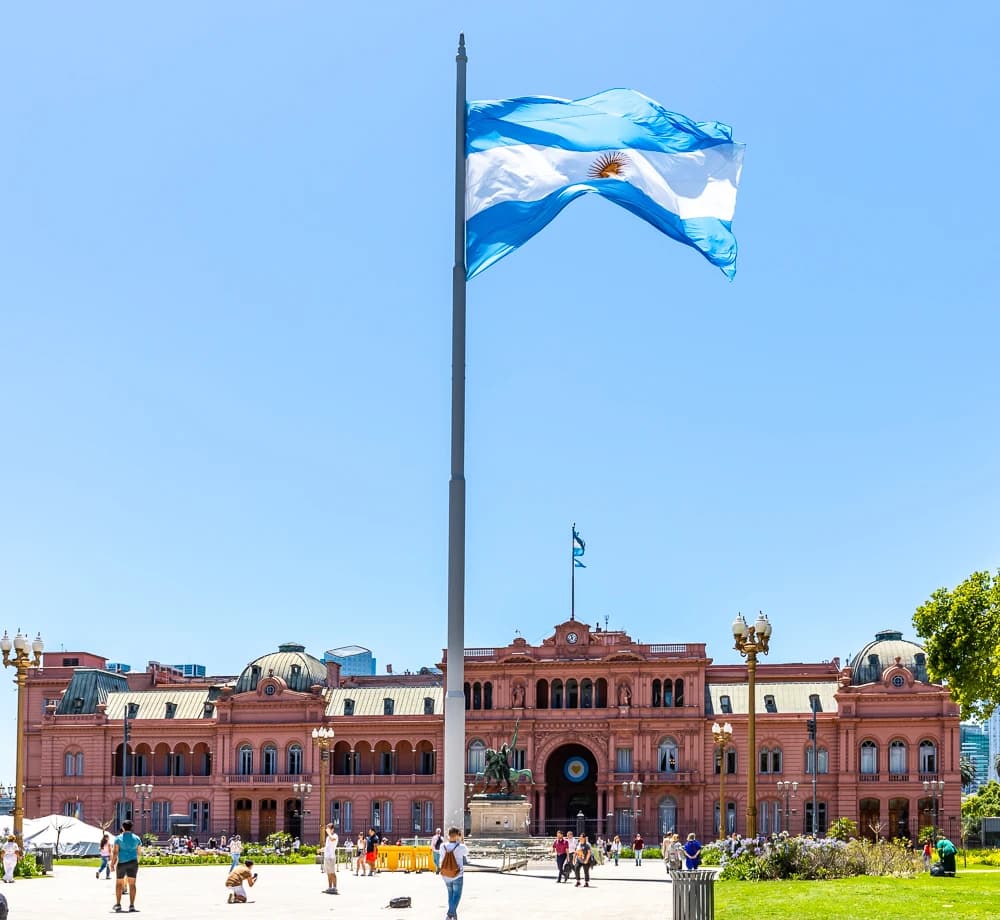
Argentina is using one of its boldest pro-investment moves yet to try to shore up its finances: a new citizenship program for foreigners who put at least $350,000 into the country, alongside fresh easing of rules on foreign land purchases.
Argentina citizenship program targets foreign investors

That matters because Argentina is still struggling to turn pro-business rhetoric into durable capital inflows. The government says the program, due to be operational by late 2026, is designed to “strengthen” the nation’s budgetary and financial position. In plain terms, Buenos Aires is trying to attract long-term money into an economy that badly needs it, while signaling to investors that it wants fewer barriers and more certainty.
Sentiment IndicatorsⓘProprietary · adalytica.com · October 3, 2026
This is a snapshot — live sentiment, awareness and momentum for 130+ markets update continuously in the dashboard.Open AlphaPulse
The offer is straightforward. Foreigners can qualify either by making a non-refundable $350,000 contribution to the national treasury or by buying an $800,000 government bond created for the program. The regime also extends to spouses and children, and the government says the funds will support public finances. Officials are pitching the plan as transparent and aligned with OECD and Financial Action Task Force anti-money-laundering standards.
For investors, the key question is not whether the headline is attention-grabbing — it is whether Argentina can finally build a credible, repeatable investment framework. The country drew just $3.134 billion in foreign direct investment last year, according to the OECD, far below Brazil’s $76.877 billion and Mexico’s $40.871 billion. That gap tells you everything about why Milei’s administration is leaning so hard on policy change: Argentina remains a high-potential market that global capital still treats with caution.
The timing is important, too. The citizenship push comes as Argentina lifts restrictions on land purchases by foreigners, rolling back a 15% cap imposed under earlier rules. Those reforms are politically sensitive and have already triggered opposition protests. But from an economic standpoint, they all point in the same direction: the government is trying to unlock capital, not just for one-off inflows but for a broader rerating of Argentina as an investable destination.
That matters for sectors with real asset value and long investment horizons, from energy and mining to agriculture and infrastructure. The country has already been able to announce large commitments, including TotalEnergies’ $10 billion plan in Patagonia and Glencore’s $4 billion copper investment in the northwest. Those deals suggest there is money willing to come in when the rules look stable enough. The challenge is making that stability last.
As always with Argentina, the risk is that policy momentum outruns political durability. Investors will want proof that these reforms survive the next backlash and the next election cycle. If they do, Argentina could become a much more interesting long-term play. If they do not, the country will remain what it has been for years: rich in resources, but short on trust. For patient investors, this is worth watching closely.
| Entity | Gains | Losses |
|---|---|---|
| Argentine government | ▲More capital inflows | ▼Political opposition |
| Foreign investors | ▲Citizenship option, looser rules | ▼Higher policy risk |
| Energy and mining firms | ▲Better deal access | ▼Legacy restrictions |
| Domestic land critics | ▲None | ▼More foreign ownership pressure |