Argentina’s pitch to foreign capital got much bigger in Paris, where Javier Milei’s government paired a new copper project and a fresh Vaca Muerta expansion with a push to sell citizenship to investors. For long-term investors, the message is simple: Argentina is trying to turn its resource wealth into a durable growth story, and it is doing so by offering the one thing global capital wants most — clearer rules.
Argentina approves Glencore copper and Vaca Muerta projects

That matters because Argentina has spent years scaring away money with policy whiplash, capital controls and chronic macro instability. Milei is betting that a different formula can work: lock in large, export-oriented projects through the RIGI incentive regime, open the economy to foreign funding and use energy, mining and infrastructure to generate hard-currency earnings. If that works, it could ease one of Argentina’s deepest structural weaknesses — its shortage of dollars — while creating a more investable economy.
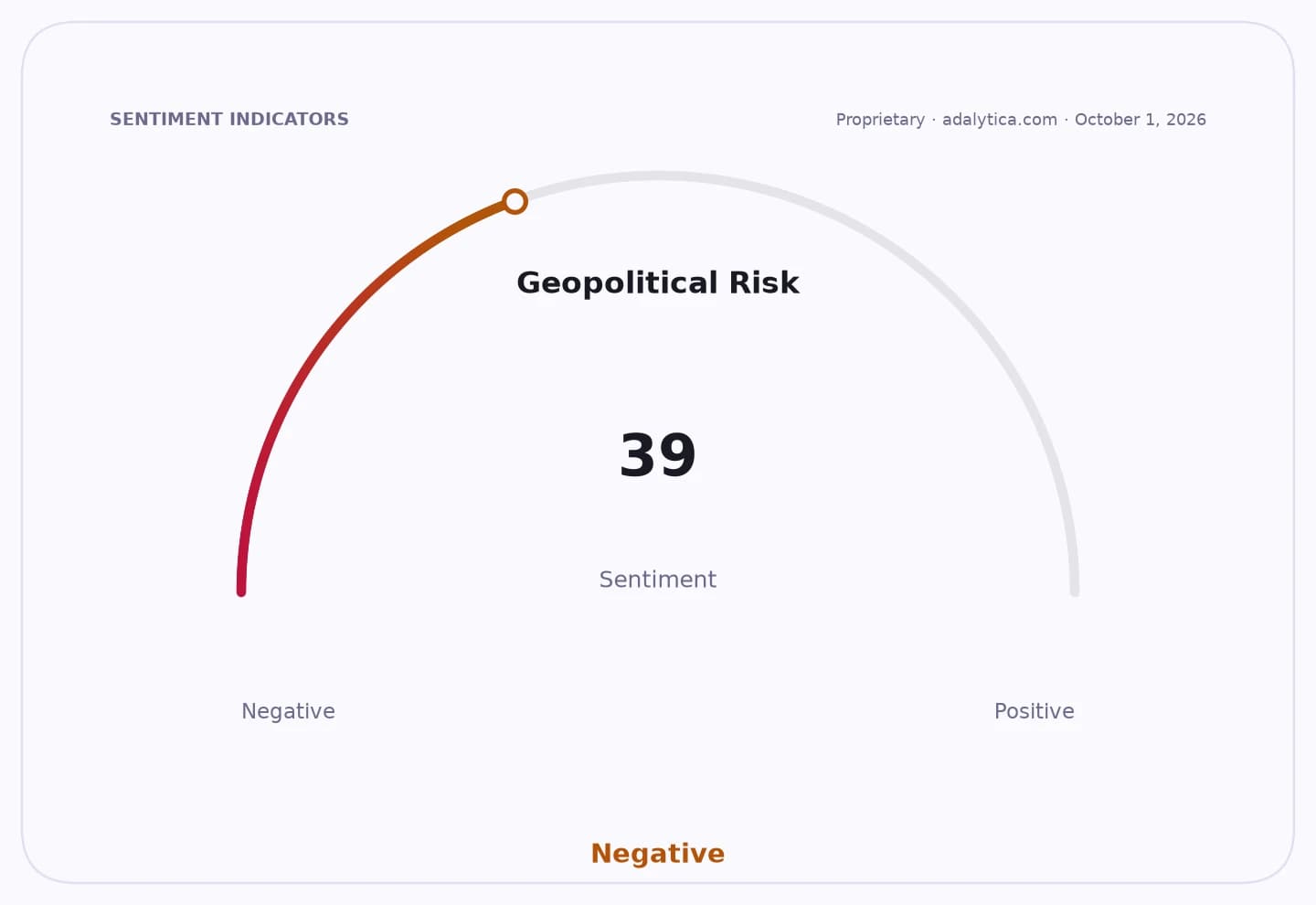
Sentiment IndicatorsⓘProprietary · adalytica.com · October 3, 2026
This is a snapshot — live sentiment, awareness and momentum for 130+ markets update continuously in the dashboard.Open AlphaPulse
The biggest new piece was the approval of Glencore’s Agua Rica copper project in Catamarca under the RIGI, a package the government says implies about $4 billion of capital spending and roughly $2.167 billion in annual exports once fully operating. The project is expected to generate up to 3,500 construction jobs and 1,250 direct operating jobs, with first production targeted for 2031. Copper is especially important because it is a strategic export for a world shifting toward electrification, data centers and power infrastructure.
Milei also announced approval of a second RIGI for a $12.5 billion project in Vaca Muerta, where Pluspetrol and provincial partner GyP plan to push output above 100,000 barrels a day over a 25-year horizon. That project alone is designed around 620 horizontal wells, new processing plants and export potential of about $2.2 billion a year. Together, the two projects show that Argentina is not just talking about reform — it is trying to convert geology into cash flow.
For investors, the attraction is obvious. Argentina remains a high-risk market, but it is one with unusually large upside if the policy framework holds. The RIGI is meant to give the kind of long-duration stability that oil, gas and mining projects require. That is exactly why it matters for companies like Glencore, Pluspetrol and the broader supplier base that would benefit from a more predictable investment climate.
The government is also broadening the playbook beyond resources. In Paris, officials unveiled a “citizenship by investment” program that would grant Argentine nationality to foreigners investing at least $350,000 directly into the Treasury or $800,000 through a special bond. Whether that scheme attracts meaningful capital is still an open question, but it reinforces the same message: Argentina wants to compete for global money instead of shutting it out.
Market action suggests investors are paying attention, even if they are not fully convinced. Argentina ETF EPU has held above its 200-day moving average and recently improved from oversold territory, while the broader emerging-markets ETF EEM has also stabilized. But Argentina-specific assets remain far more volatile, reflecting how much depends on policy credibility and execution. Adalytica’s Global Stability Sentiment gauge shows extreme greed even as awareness remains low, a reminder that enthusiasm can outpace actual on-the-ground conviction.
The long-term opportunity is real, but so are the risks. Commodity cycles can turn, large projects can slip, and Argentina’s politics have a habit of testing investor patience. The difference this time is that Milei is trying to anchor the country’s growth story in exports, infrastructure and foreign capital rather than consumption and inflation. If he can keep that framework intact, Argentina could finally begin to look less like a recurring macro crisis and more like a compounding investment case.
For investors with a multi-year horizon, that is worth watching closely. The country is still a speculative bet, but Paris showed that Milei is trying to make it a serious one.
| Entity | Gains | Losses |
|---|---|---|
| Milei government | ▲Investment inflows | ▼Policy skeptics |
| Glencore and Pluspetrol | ▲Export growth | ▼Delays and red tape |
| Argentina economy | ▲Dollar earnings | ▼Import dependence |
| Foreign investors | ▲Hard-asset exposure | ▼High country risk |