The Argentine central bank’s latest market survey is set to reinforce the view that inflation is cooling and that the peso, while still expected to weaken, is not priced for a disorderly move in the near term.
Argentina REM to Show Cooling Inflation, Softer Peso

That matters because the Relevamiento de Expectativas de Mercado, or REM, has become one of the clearest gauges of how economists and financial firms see the next few months for prices, rates and the exchange rate in an economy where credibility is still being rebuilt. For investors in Argentine assets, the survey is less about the central bank’s own forecast than about whether private-sector expectations are converging on a lower-inflation, more stable-currency path — a prerequisite for lower nominal rates, valuation support and eventually a recovery in consumption and credit.
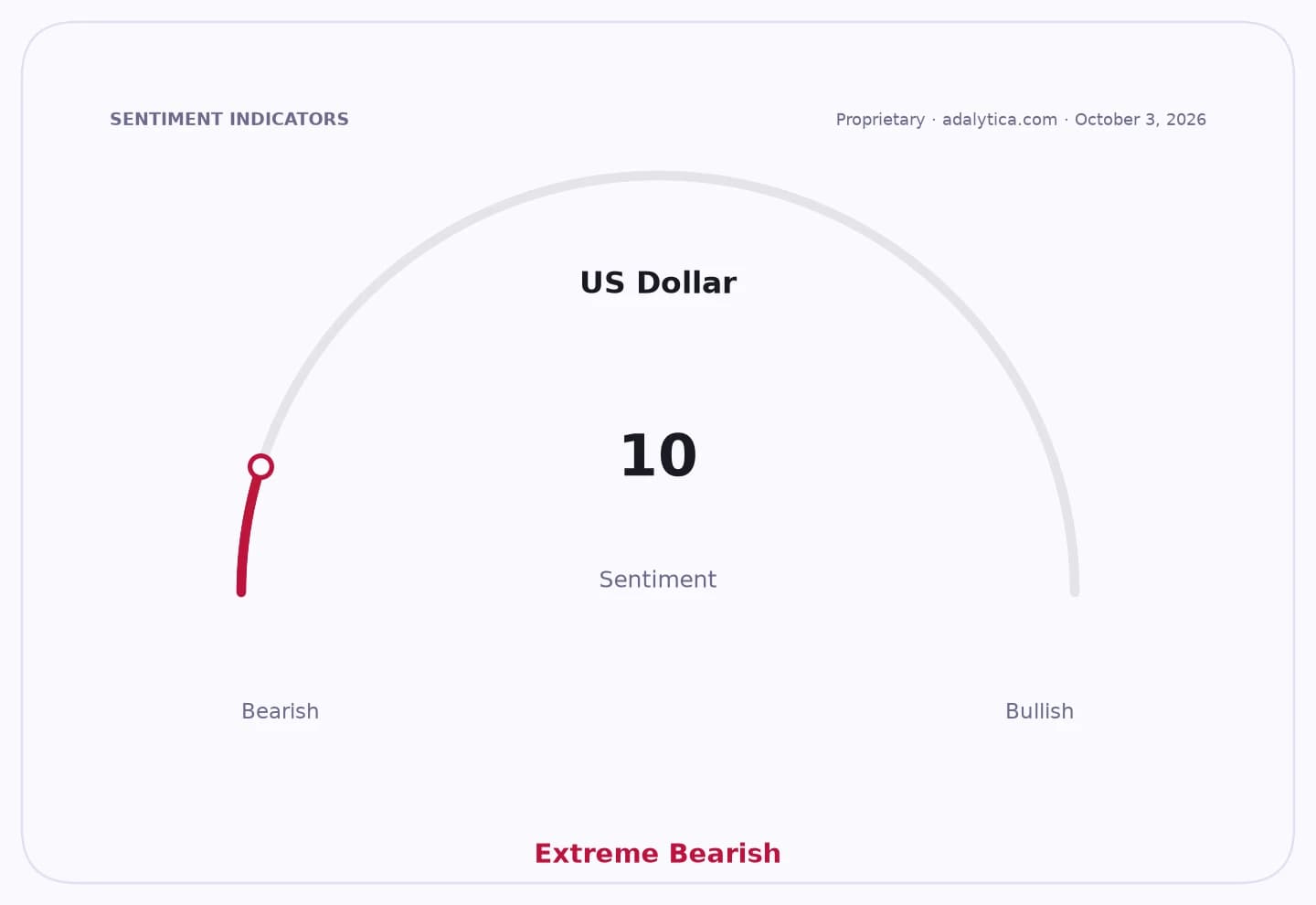
Sentiment IndicatorsⓘProprietary · adalytica.com · October 6, 2026
This is a snapshot — live sentiment, awareness and momentum for 130+ markets update continuously in the dashboard.Open AlphaPulse

In its previous round, the REM put August inflation at 1.7%, down 0.1 percentage point from the prior estimate, while participants saw inflation running at 7.5% in the fourth quarter of 2026, unchanged from the earlier survey. The top 10 forecasters put that quarter at 7.6%. For December 2026, the full panel projected a nominal exchange rate of 1,630 pesos per dollar, implying an annual depreciation of 12.6% versus December 2025; the top 10 saw 1,626 pesos.
That combination is economically significant because it suggests the market is still assuming a managed adjustment rather than a fresh bout of currency stress. For Argentina, where inflation, the peso and sovereign risk are tightly linked, even modest changes in consensus forecasts can quickly feed into bond pricing, bank margins and the path of real wages. A softer inflation trajectory also helps the government’s fiscal arithmetic by reducing the inflation tax distortions that complicate spending plans, while improving the odds that real interest rates can come down without reigniting dollar demand.

The REM itself has gained importance because it aggregates 45 participants — 33 local and international consultancies and research centers, plus 12 financial institutions — and is compiled from surveys taken in the last three business days of each month. It tracks retail prices, interest rates, the nominal exchange rate, activity, the primary fiscal balance, unemployment, exports and imports, giving the market a regular read on short- and medium-term expectations.
The currency backdrop has been more volatile in the spot market than the survey implies. The peso exchange rate in the data has moved around 1,520 per dollar in early October, after trading as high as 1,534.81 and as low as 1,508 on recent sessions. By conventional technical indicators, the dollar-peso pair is still trading above both its 50-day and 200-day moving averages, with momentum easing from overbought levels. That points to a market that remains cautious, but not in outright panic.
Argentine equities have already shown how quickly sentiment can swing with macro expectations. The ARGT exchange-traded fund, a common U.S.-listed proxy for the country, was hit hard earlier this month, with its relative strength index sinking to deeply oversold levels before rebounding. Banco Galicia’s ADRs and the local dollar market have also been volatile, underscoring how sensitive financial assets remain to any sign that inflation is sticking or the peso is slipping faster than expected.
For the government, a benign REM would support the case that disinflation is continuing, but it would not remove the bigger challenge: translating lower inflation into higher real incomes and stronger demand. Recent local commentary has pointed to rising poverty and pressure on household consumption even as exports support growth, a reminder that disinflation can coexist with weak domestic activity if wages lag.
For investors, the next REM reading will matter most as a test of credibility. If forecasts continue to drift lower, it would strengthen the argument for duration in pesos, help banks and rate-sensitive assets, and reduce the market’s risk premium on the currency. If expectations stop improving, or the projected exchange rate begins to move sharply higher, it would signal that the disinflation process is losing traction and that Argentina’s asset rally may be vulnerable to another correction.
| Entity | Gains | Losses |
|---|---|---|
| Peso bulls | ▲Lower inflation expectations | ▼Dollar hedge demand |
| Argentine government | ▲Credibility on disinflation | ▼Pressure to tighten policy |
| Banks and pesos assets | ▲Lower rate risk | ▼Higher FX volatility |
| Consumers and wage earners | ▲Slower price growth | ▼Real income erosion if wages lag |