Factory activity across Asia kept expanding in October, but the pace weakened in key chip hubs as the region starts to feel the first signs that the AI investment boom may be cooling, a turn that matters for export growth, corporate earnings and the broader outlook for global manufacturing.
Asia Factory Growth Slows as AI Demand Cools

The slowdown is most important because Asia’s factories have been one of the few bright spots in a weak global economy, lifted by surging orders for semiconductors, servers and other AI-linked equipment. If that demand loses momentum, the hit will ripple through chipmakers, equipment suppliers, exporters and the currencies of economies that have been leaning heavily on tech shipments.
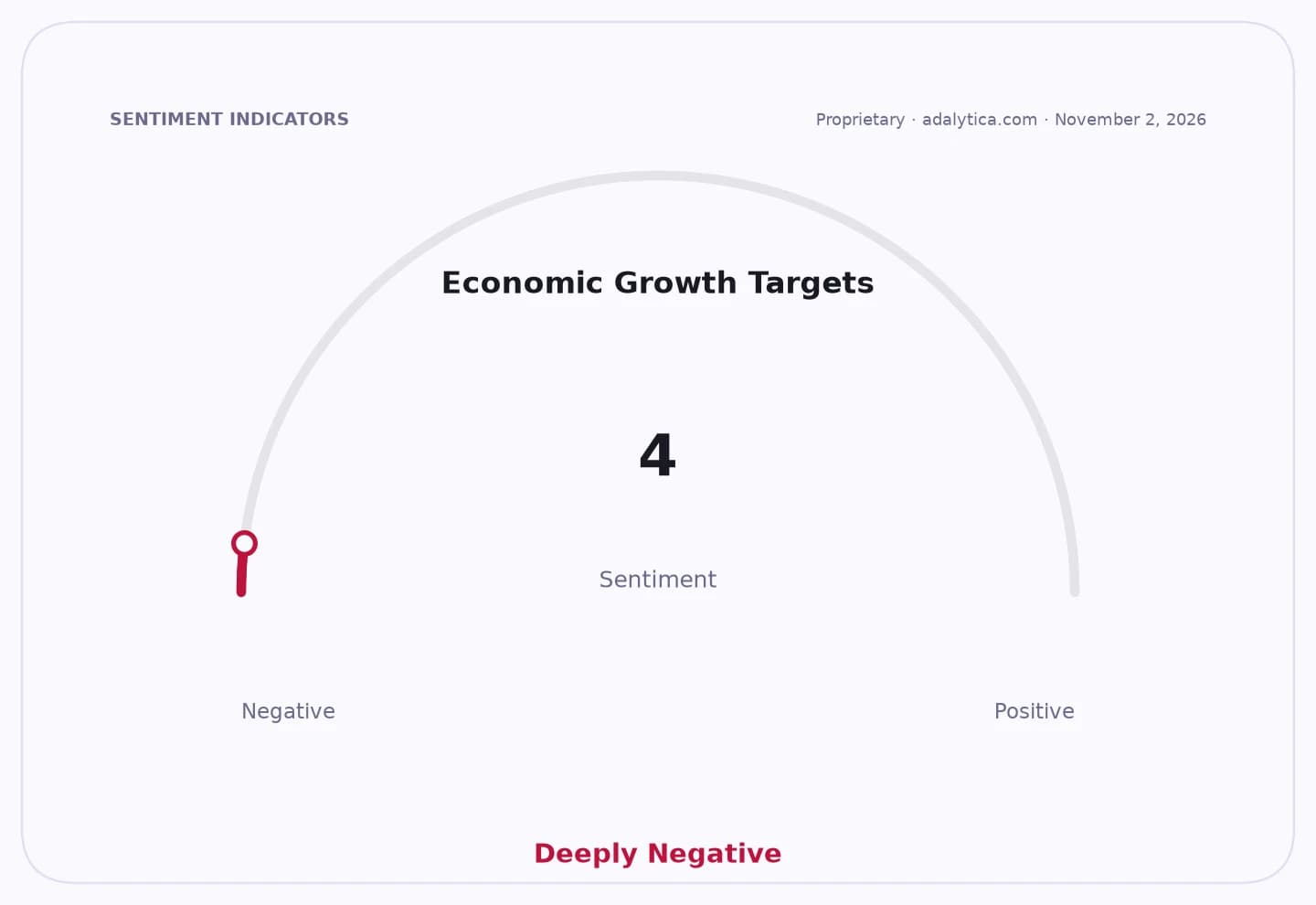
Sentiment Indicators

Private surveys showed manufacturing easing in China, Japan, South Korea and Taiwan in October even as activity stayed in expansion territory. China’s RatingDog manufacturing PMI slipped to 52.0 from 52.1, while official data released Saturday showed factory activity there contracted for a third time in four months. Japan’s PMI fell to 53.3 from 54.1, the slowest expansion in seven months, South Korea’s dropped to 51.3 from 53.9, and Taiwan’s eased to 54.9 from 56.7.
The read-through for investors is straightforward: the market is beginning to test whether AI-related demand can justify the capital spending surge that has powered shares in names tied to the theme. Nvidia, Taiwan Semiconductor Manufacturing Co. and ASML have all weakened recently, with their shares still above long-term support levels but trading below recent peaks, while Adalytica’s AI sentiment gauge sits at “Extreme Fear,” underscoring a sharp deterioration in market mood around the trade.
Artificial Intelligence
The surveys also point to a more immediate macro squeeze. Prolonged conflict in the Middle East has kept fuel and food prices elevated, weighing on consumption and business confidence across Asia just as price competition from China intensifies pressure on regional exporters. That combination raises the odds that factory margins and orders soften further even if global chip demand stays resilient.
Toru Nishihama of Dai-ichi Life Research Institute said strong chip and AI demand had masked weaknesses in Asian and global economies, but that is getting harder to sustain as war-related inflation drags on. Capital Economics said China’s activity lost momentum in October, with manufacturing softening and construction confidence turning down, suggesting fiscal support may not be enough to deliver a strong year-end rebound.
Asia still has some pockets of resilience. Vietnam, Indonesia and Malaysia saw faster factory expansion in October, and the IMF still expects Asia to grow 4.8% in 2026 and 4.4% in 2027. But the fund has warned that the region faces rising risks from an energy shock linked to the Iran conflict and a potential correction in the AI boom, a combination that could unsettle exporters, capex-heavy tech suppliers and equity markets that have been trading on the assumption of relentless AI spending.
For investors, the next catalyst is whether upcoming earnings and purchasing surveys confirm a broader slowdown in AI-related orders or show that the dip is only a pause. If semiconductor demand holds, the recent pullback could prove temporary; if not, Asia’s factory complex may be entering a more pronounced phase of adjustment.
| Entity | Gains | Losses |
|---|---|---|
| Chip exporters | ▲Still benefit from AI demand | ▼Face slowing order growth |
| AI hardware suppliers | ▲Supported by ongoing capex | ▼Hurt by profit-taking and demand doubts |
| Asian consumers | ▲None | ▼Hurt by higher fuel and food prices |
| Regional exporters vs. China | ▲Some protection from demand | ▼Lose pricing power to Chinese competition |