Asian gold producers are moving to keep more of their output at home after the metal’s sharp rally made exports more valuable — and more strategically important — as governments and central banks try to capture a bigger share of the boom.
Asian Gold Producers Keep More Metal at Home
The shift matters because it is changing how gold flows through one of the world’s most important mining regions. Instead of sending more ore and doré abroad for refining, producers and policymakers across Asia are trying to retain bullion locally through higher refining capacity, export taxes and official buying. That can tighten supply available to international buyers, support domestic value-add industries and leave producers with a greater share of the downstream margin created by record prices.
Sentiment IndicatorsⓘProprietary · adalytica.com · October 5, 2026
This is a snapshot — live sentiment, awareness and momentum for 130+ markets update continuously in the dashboard.Open AlphaPulse
Gold futures have been trading above $4,100 an ounce, with prices still far above the 50-day and 200-day moving averages, even after a pullback from earlier peaks near $5,300. Technical readings show the market has cooled from overheated levels, but the broader move remains historically strong, reflecting sustained investor demand for havens at a time of unusually high geopolitical stress and a weaker tone in the U.S. dollar.
That backdrop is encouraging governments and miners to rethink the old export model. When bullion prices are elevated, refining and minting domestically can capture more of the economic rent in-country through jobs, taxes and local supply chains. In some cases, policymakers are going further by discouraging exports outright or by using state and central bank purchases to keep more metal inside the domestic system. For producers, the incentive is equally clear: selling into local channels can preserve leverage to the high-price environment while reducing dependence on foreign refiners and traders.
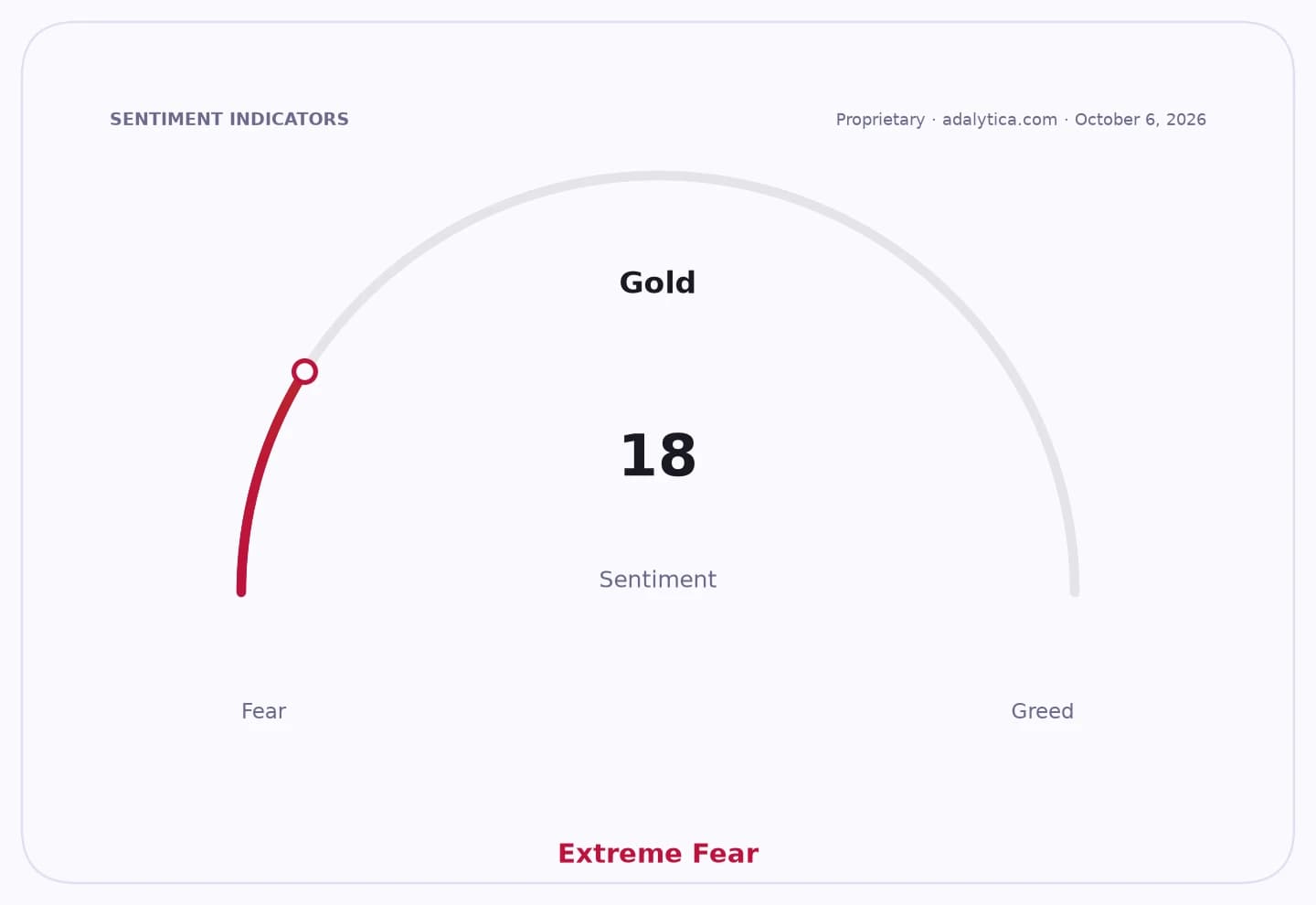
The regional push also has implications for global gold liquidity. If more Asian output is absorbed domestically, the flow of physical metal into the international market can become less elastic just as investors are using gold as a hedge against policy uncertainty and geopolitical risk. Adalytica’s Gold Fear & Greed Index has flipped to “Extreme Fear,” while its Global Stability gauge also sits at extreme fear, underscoring why bullion remains in favor despite the recent pullback. A softer dollar tone adds another layer of support by making gold cheaper for non-U.S. buyers.
For investors, the immediate beneficiaries are likely to be miners and refiners with access to domestic demand and the infrastructure to process more output locally. That can improve margins if local selling prices remain aligned with global benchmarks, although the picture is more mixed if taxes or compulsory sales reduce the net price producers receive. The losers are likely to be foreign refiners, bullion traders and end buyers competing for a smaller pool of freely available metal.
The bull case is that hoarding and local refining strengthen Asia’s gold ecosystem, improve terms of trade for producing countries and deepen domestic capital formation around a strategically important asset. The bear case is that policy intervention distorts pricing, squeezes miners’ flexibility and could eventually encourage smuggling or discourage investment if producers feel they are not fully capturing the market rally.
What to watch next is whether more countries move from encouragement to compulsion. Any expansion of export restrictions, official purchase programs or domestic refining mandates would reinforce the trend and could make the physical market tighter even if futures prices remain volatile. For gold investors, that means the rally is no longer just about macro fear; it is increasingly about supply being deliberately kept closer to home.
| Entity | Gains | Losses |
|---|---|---|
| Asian gold miners | ▲Higher local margins | ▼Fewer export options |
| Domestic refiners | ▲More throughput | ▼Foreign refiners |
| Governments/central banks | ▲More local value capture | ▼Free-flow exporters |
| Global bullion buyers | ▲— | ▼Tighter physical supply |