Australia’s prime minister is moving to tighten oversight of artificial intelligence as fears grow that the technology could be misused in election campaigns, adding to a global regulatory backlash that is weighing on major U.S. AI names.
Australia to tighten AI oversight over election risks
Artificial Intelligence
Anthony Albanese has pledged to regulate AI giants more strictly under Australian law after a poll showed about half of Australians view AI as a significant threat. The push reflects rising political anxiety over deepfakes, synthetic news and election manipulation, risks that have moved from theoretical debate to a live policy issue for governments heading into campaigns.
Sentiment Indicators
The prospect of tougher rules matters economically because it could slow adoption, raise compliance costs and curb the pace at which AI platforms and infrastructure providers monetize the technology. It also underscores how election-related misuse concerns are no longer confined to social media moderation, but are now extending to the hardware, cloud and model layers that power generative AI.
Investors have already been showing more caution toward the sector. Microsoft shares fell to $521.12 on Wednesday from $555.80 on Nov. 4, while Nvidia dropped to $173.73 from $181.60 over the same stretch, with both stocks now trading below their 50-day moving averages. Nvidia’s relative strength index was 26.4, a level that points to deeply oversold conditions, while Microsoft’s RSI stood at 50.0, signaling a more neutral setup after a recent pullback.
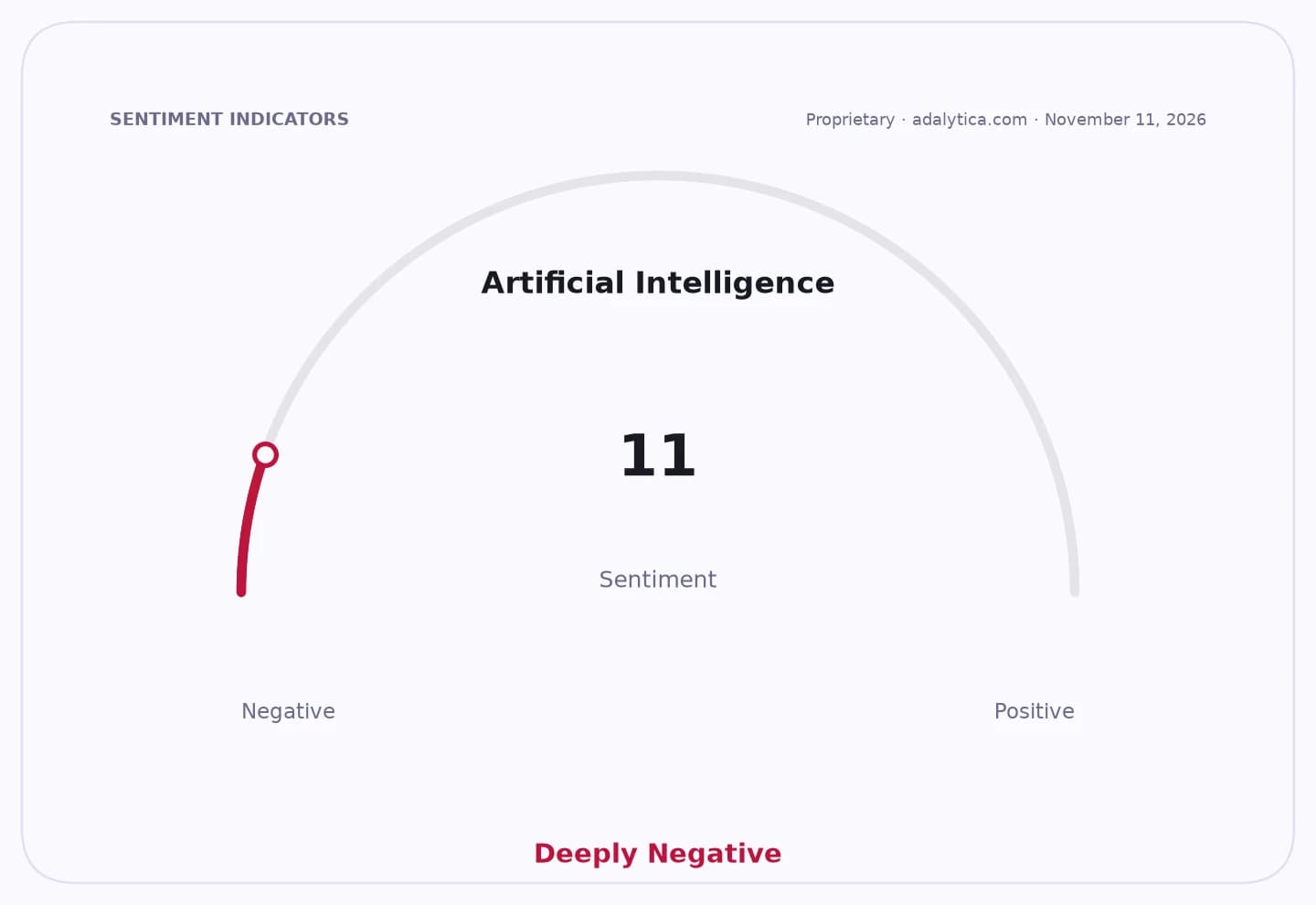
The broader market backdrop is also turning more defensive. Adalytica’s AI sentiment gauge was at 21, in “Fear,” with awareness at 4, or “Extreme Fear,” suggesting heightened concern across the theme as regulators and voters focus on the political and social risks of AI. Microsoft’s own earnings sentiment snapshot was neutral at 50, with awareness in “Fear,” indicating investors remain cautious even as they assess the company’s exposure to AI spending and regulation.
The immediate question is whether Australia’s stance becomes a template for other governments wrestling with the same problem. For AI firms, the next catalyst is likely to be whether regulators turn election concerns into formal disclosure, content or deployment rules — a development that could reshape compliance burdens and investor expectations across the sector.
| Entity | Gains | Losses |
|---|---|---|
| Australian regulators | ▲Stronger oversight powers | ▼Faster AI rollout |
| Voters and election officials | ▲Lower misinformation risk | ▼Unchecked deepfakes |
| Microsoft and Nvidia | ▲None immediate | ▼Regulatory uncertainty |
| AI platforms and ad tech firms | ▲Public trust if rules work | ▼Higher compliance costs |