Bangladesh’s prime minister has endorsed a decade-old university project that could turn human waste and agricultural residue into fuel oil, a small but potentially important step toward reducing the country’s reliance on imported crude at a time when energy security is under strain.
Bangladesh backs KUET waste-to-fuel pilot
The project, led by researchers at Khulna University of Engineering and Technology, is still at the demonstration stage, but it has already produced bio-crude from waste using hydrothermal liquefaction and delivered laboratory yields of 50% to 55%, according to officials who briefed the prime minister in Dhaka. If the process can be scaled, the researchers say it could eventually replace 10% to 15% of imported crude oil and save the country the equivalent of as much as 13,000 crore taka a year in foreign exchange.
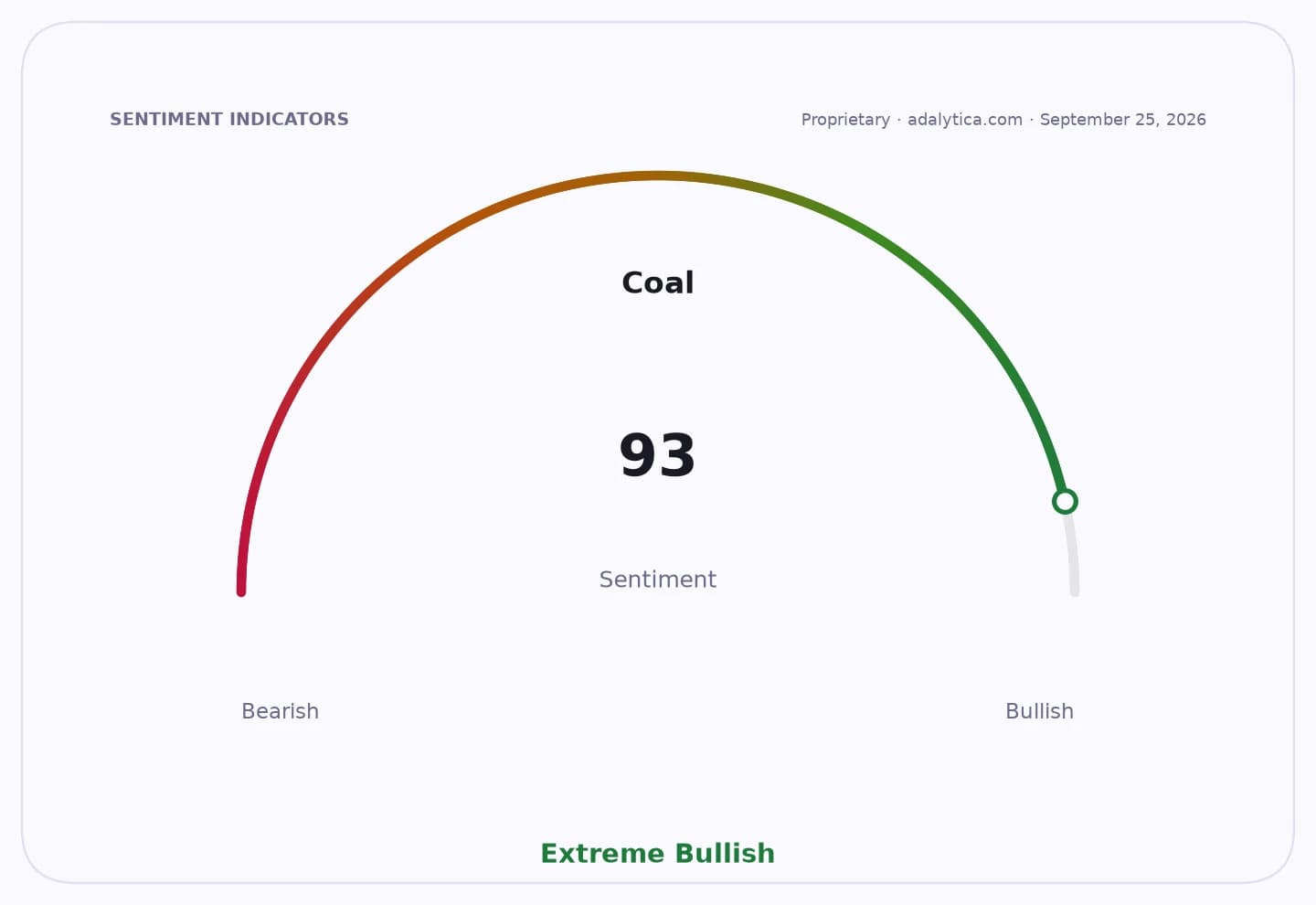
Sentiment IndicatorsⓘProprietary · adalytica.com · October 13, 2026
This is a snapshot — live sentiment, awareness and momentum for 130+ markets update continuously in the dashboard.Open AlphaPulse
That makes the initiative economically relevant well beyond its scientific novelty. Bangladesh, like many import-dependent economies, faces a persistent drain on reserves whenever global oil prices rise. Brent and WTI have been volatile and remain elevated by historical standards, keeping pressure on fuel subsidies, transport costs and the current account. Any domestic source of liquid fuel, even one that begins as a pilot, matters because it potentially trims import demand while also offering a way to deal with waste streams that are costly to manage.
The government’s backing is the key new development. Researchers said they will next seek to build a pilot plant capable of processing 1 to 3 tons of waste a day, at a cost of roughly 100 crore to 120 crore taka, to test commercial viability and production economics. Without that step, the project remains an interesting lab result. With it, Bangladesh would begin to answer the hard questions investors and policymakers care about: can the technology operate reliably at scale, can input waste be secured at low cost, and can the output compete with imported fuel on price?
The research also fits a broader policy narrative that is becoming more urgent as fuel shortages and price shocks reverberate across economies. Clean-fuel and waste-to-energy technologies are gaining attention not because they are immediately transformative, but because they can serve multiple public goals at once — lower import dependence, reduced pollution, better waste treatment and new industrial activity. For Bangladesh, that combination is attractive because it links an energy problem with a municipal and environmental one.
For investors, the immediate significance is not a tradable asset or a near-term earnings catalyst, but a signal of policy direction. Public support raises the odds that funding, regulatory approvals and institutional coordination will follow, especially with officials from the energy ministry, the Bangladesh Petroleum Corporation and the University Grants Commission present at the briefing. Over time, that could create opportunities for engineering contractors, waste-management operators and any local fuel or clean-tech ventures able to participate in pilot infrastructure.
The bear case is obvious: the project may prove too costly, too complex or too small to matter commercially, especially if collection, preprocessing and operating costs swamp the value of the fuel produced. The bull case is that Bangladesh is testing a rare domestic feedstock advantage — waste — in a country with chronic fuel import exposure and rising pressure to modernize waste management.
If the pilot works, the country would have more than a research success. It would have a template for turning an expensive liability into a local energy source, which is exactly the kind of incremental industrial shift that can matter in an economy where every dollar of imported fuel counts.
| Entity | Gains | Losses |
|---|---|---|
| Bangladesh government | ▲Lower import pressure | ▼Near-term subsidy burden |
| KUET researchers | ▲Funding and scale-up support | ▼Project execution risk |
| Waste generators | ▲New disposal pathway | ▼Higher sorting/collection demands |
| Fuel importers | ▲— | ▼Potentially lower fuel demand |