The Bank of Japan has effectively locked in a December rate hike, but investors are still being asked to price a policy path that could flatten out well below anything resembling a normal Japanese rate cycle.
Bank of Japan Seen on Track for December Hike
That matters because the BOJ is moving from emergency-era accommodation into a world where every hike now has macro and market consequences: for the yen, for Japanese bond yields, and for global carry trades that have relied on Japan’s ultra-low rates for years. The uncertainty is not over whether the BOJ will tighten further in the near term, but over where it believes “neutral” ends — and that leaves the market guessing how far the central bank can go before it starts to bite.
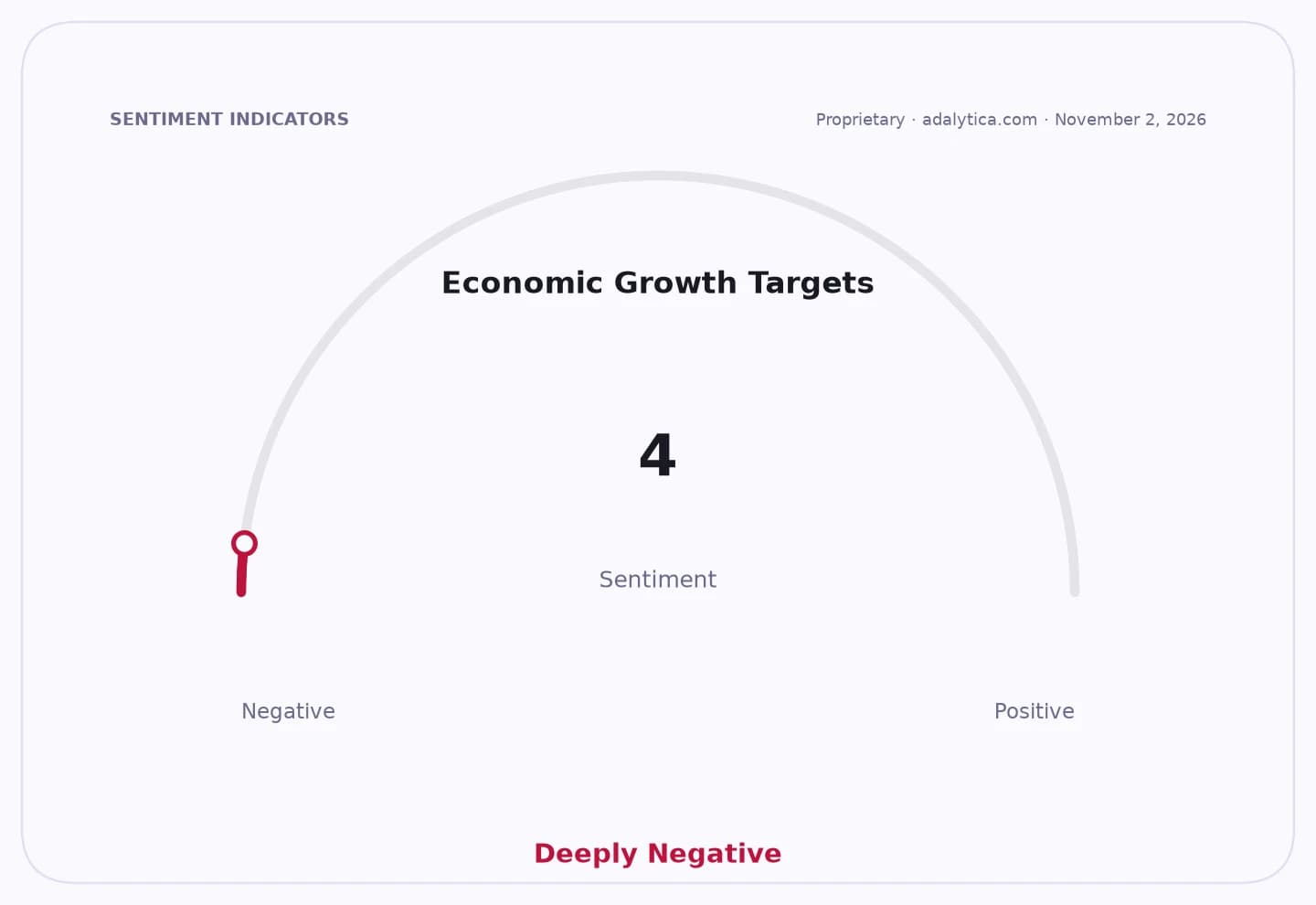
Sentiment Indicators
The policy pivot is no longer theoretical. The BOJ is signaling that inflation has become embedded enough to justify another move in December, even as policymakers remain unclear about the terminal rate. That ambiguity is crucial for investors because the gap between a modest tightening cycle and a real normalization story is enormous for Japanese assets. If the neutral rate is judged to be only around 1.5% or lower, the BOJ may be near the limits of how aggressive it can be without destabilizing growth and government borrowing costs.
Markets are already reflecting a world in which Japan’s monetary regime is changing, even if cautiously. The yen has been trading around 157.8 per dollar, weak by historical standards but no longer in free fall, while the 10-year Treasury yield sits near 5% and the 2-year around 4.6%, underscoring that global carry is still anchored by elevated U.S. rates. At the same time, the spread between U.S. 10-year and 2-year yields has narrowed to about 38 basis points, a sign that markets are weighing slower growth and more policy convergence rather than a clean continuation of the dollar’s dominance.
That backdrop is why the yen remains a high-conviction trade. The move away from ultralow Japanese rates is still underappreciated by parts of the market, especially if the BOJ continues hiking while the Federal Reserve also edges toward a December increase. Even so, the yen’s response may be asymmetric: every sign that Japan is abandoning policy distortion supports the currency, but every hint that the neutral rate is low caps how far the re-rating can go. In other words, this is not a one-way bull case for the yen — it is a repricing story with a ceiling.
For investors, the practical implication is that Japanese financial conditions are entering a new regime. Japanese bond volatility is likely to stay elevated, exporters face a currency that can strengthen on policy surprises, and rate-sensitive trades tied to the yen-funded carry ecosystem could keep unwinding in bursts. The clearest beneficiaries are Japanese banks and domestically oriented financials that gain from a higher-rate environment, while leveraged borrowers, exporters and carry-trade sellers are the most exposed if the BOJ signals more tightening ahead.
The next catalyst is not just the December meeting itself, but how quickly policymakers define the neutral rate after it. If the BOJ confirms that inflation is stable enough to justify more hikes, investors will need to price a longer normalization cycle than many expected. That is the opportunity: positioning early for a stronger yen, higher Japanese yields and a slow but real end to Japan’s decades-long rate exception.
| Entity | Gains | Losses |
|---|---|---|
| Japanese banks | ▲Wider margins | ▼— |
| Yen bulls / FXY holders | ▲Policy normalization trade | ▼Carry-trade shorts |
| Japanese exporters | ▲— | ▼Stronger yen |
| Long-duration Japanese bonds | ▲— | ▼Higher yields |