The yen firmed against a wobbling dollar ahead of the Federal Reserve’s policy meeting, with traders positioning for a potentially less supportive backdrop for the U.S. currency as Treasury yields eased and investors reassessed the Fed’s next move.
Yen Firms Ahead of Fed Meeting
That matters because the dollar’s recent strength has been one of the main forces keeping the yen under pressure this year. A softer greenback can quickly change the tone in Japan’s currency market, where the gap between U.S. and Japanese interest rates remains the key driver of capital flows. With the Fed in focus, even modest shifts in rate expectations can ripple through foreign exchange, bonds and equities.
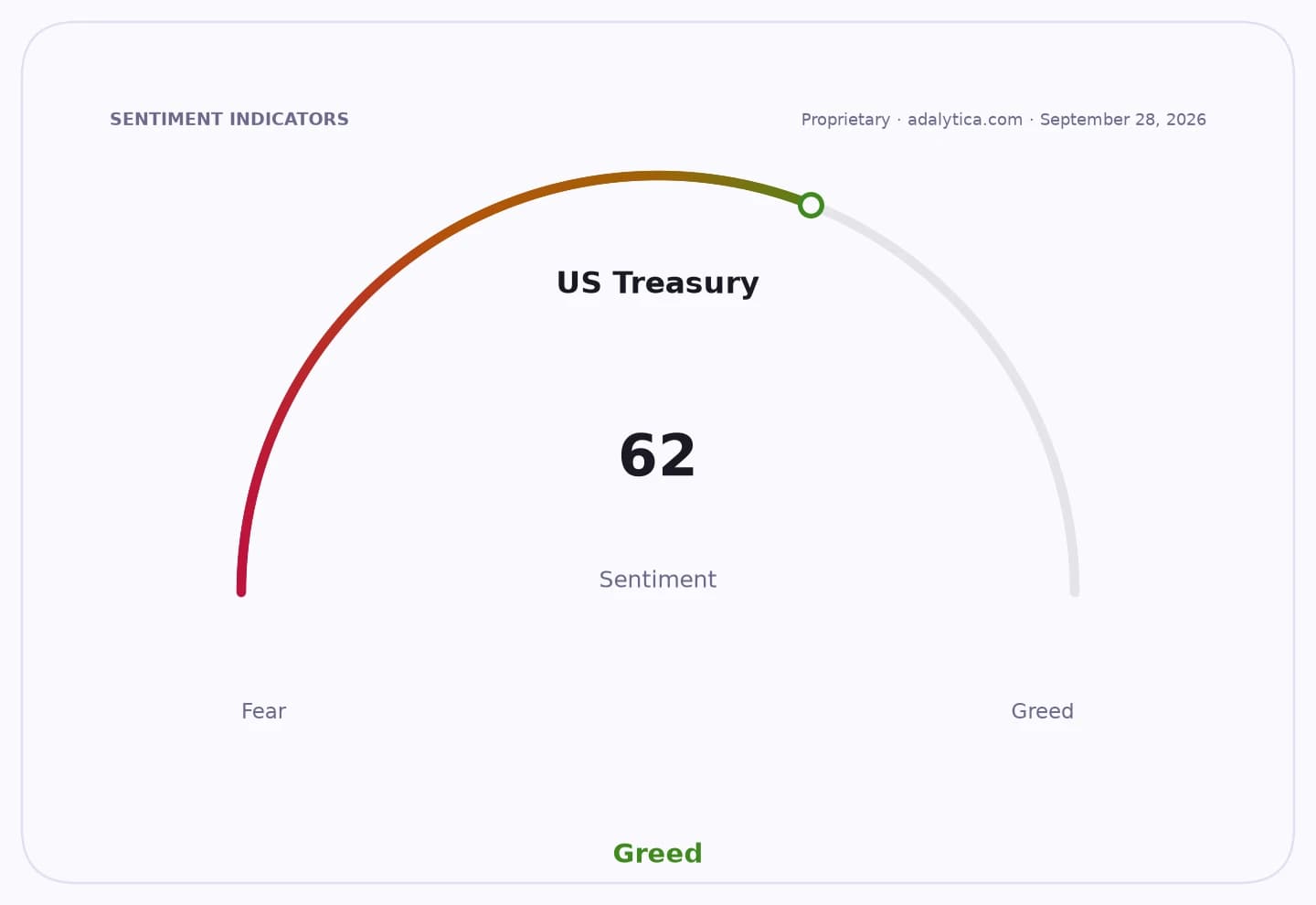
Sentiment IndicatorsⓘProprietary · adalytica.com · October 28, 2026
This is a snapshot — live sentiment, awareness and momentum for 130+ markets update continuously in the dashboard.Open AlphaPulse

The broader backdrop points to a market still wary of policy surprises. U.S. 10-year Treasury yields were trading around 4.96%, down from 5.0% late last week, while two-year yields held near 4.65%, suggesting investors are trimming some bets on further U.S. tightening. The federal funds rate forecast for October stands at 3.726%, versus 3.75% in September, underscoring expectations that the Fed will keep policy restrictive but not necessarily accelerate it. The dollar index was near 102.39, below its recent intraday highs, though still above its 50-day moving average and with the 200-day average acting as support.
In Japan, the yen’s recovery remains fragile. Invesco’s CurrencyShares Japanese Yen Trust, a proxy for the currency, was little changed around 58.1 after recovering from earlier weakness, reflecting how quickly FX sentiment has swung. Technically, the dollar-yen move has been volatile rather than decisive, and traders appear reluctant to press aggressive bets until the Fed clarifies whether U.S. rates will stay higher for longer.
The stakes extend beyond the currency pair itself. A firmer yen would ease imported inflation for Japanese consumers and companies, but it could also weigh on exporters and on the Nikkei’s large earnings base, especially if the move is driven by a broad dollar selloff rather than Japan-specific strength. Conversely, a renewed dollar rebound would likely revive pressure on the yen and keep imported costs elevated in Japan, reinforcing the view that the Bank of Japan still has limited room to normalize policy quickly.
For investors, the immediate question is whether the Fed meeting confirms a plateau in U.S. yields or reopens the case for higher-for-longer pricing. A cooler dollar and lower Treasury yields would favor yen bulls and challenge the recent consensus that the currency can only weaken from here. But if the Fed sounds firmer than markets expect, the dollar’s yield advantage could reassert itself fast.
| Entity | Gains | Losses |
|---|---|---|
| Yen bulls | ▲Softer dollar, lower yields | ▼A hawkish Fed |
| U.S. exporters | ▲Weaker dollar competitiveness | ▼Stronger dollar |
| Japanese exporters | ▲Weaker yen support | ▼Sharper yen strength |
| Fed rate-cut bets | ▲Softer policy outlook | ▼Higher-for-longer guidance |