The U.S. dollar weakened in New York trading Friday as investors scaled back expectations for further Federal Reserve rate increases, a shift that matters because it points to softer U.S. yield support for the greenback and a changing backdrop for global asset prices.
Dollar Falls as Fed Hike Odds Drop
The dollar index fell 0.21% to 101.837, its first weekly decline in more than a month against the euro and yen, after a run of hotter U.S. inflation data briefly jolted markets earlier in the week. By Friday, those worries had given way to comments from Fed officials suggesting there was no urgent need to tighten policy further, helping steady Treasury yields and removing one of the dollar’s main tailwinds.
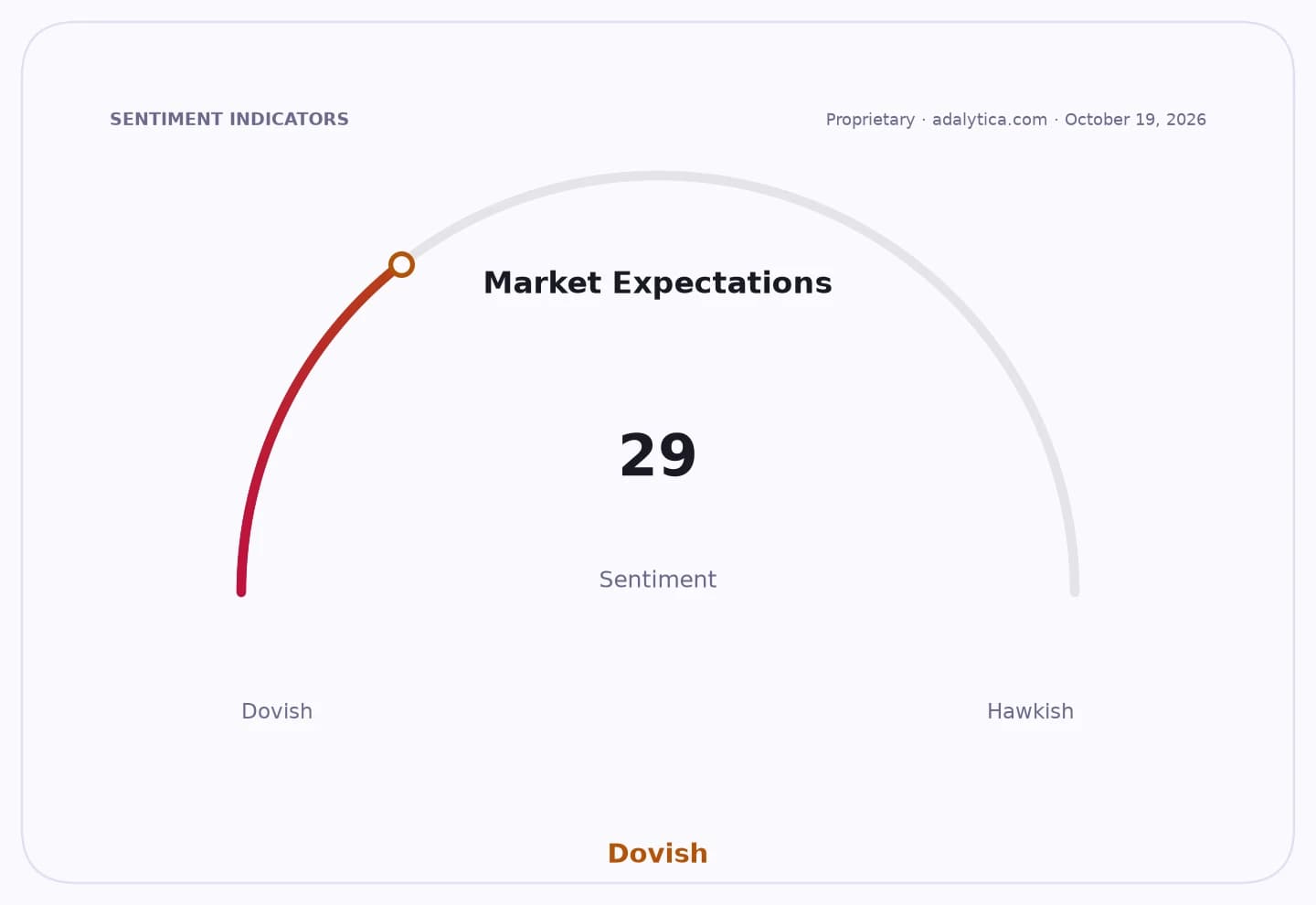
Sentiment IndicatorsⓘProprietary · adalytica.com · October 20, 2026
This is a snapshot — live sentiment, awareness and momentum for 130+ markets update continuously in the dashboard.Open AlphaPulse

For investors, that is a big deal. Currency markets do not move in isolation; they shape returns on stocks, bonds and commodities, and they influence whether money flows toward the U.S. or back into other markets. If the Fed is closer to being done than markets had feared, the dollar’s carry advantage narrows, making it harder for the currency to keep outperforming.
The greenback fell to 158.05 yen from 158.14 on Thursday and slipped to 0.8242 Swiss franc from 0.8271. It also eased to 1.4153 Canadian dollars from 1.419, while the euro rose to 1.1233 dollars and sterling climbed to 1.3319 dollars. In other words, the move was broad, not just a one-currency story.
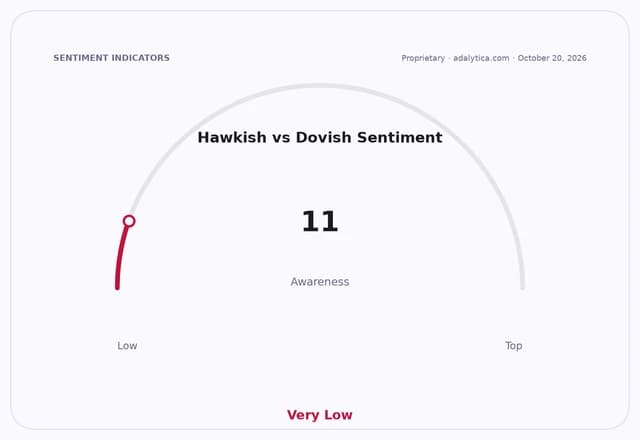
Hawkish vs Dovish Sentiment vs UUPadalytica.com
Explore this data interactively — full history, time series and cross-market comparisons.Open AlphaPulse
What makes this week especially interesting is the unusual link to artificial intelligence stocks. AI shares sold off sharply, and stress spread into parts of the credit market as investors questioned whether some data-center operators can grow fast enough to service their debt. In a normal risk-off episode, the dollar often benefits as a safe haven. This time, it did not. That suggests the market is wrestling with two forces at once: less faith in another Fed hike and rising concern that the AI trade may have outrun fundamentals.
That combination matters for long-term investors because it affects the cost of capital across the economy. A less aggressive Fed can support valuations, particularly for growth stocks and sectors dependent on cheap financing. But if AI-related spending is starting to strain credit markets, investors may be discovering that even the most powerful secular trend needs cash flow to back it up.
Treasury futures also found support, reinforcing the view that rates may have peaked or are close to it. CME FedWatch showed markets pricing an 83% chance that the Fed holds rates steady at its next meeting, up from 49% a month earlier. Adalytica’s forward-guidance gauge also showed a sharp jump in sentiment around the Fed outlook, underscoring how quickly traders have moved from fearing another hike to expecting a pause.
The dollar’s broader backdrop remains complicated. Swiss franc strength reflected demand for safety, while the yen gained after a stretch of weakness. In Europe, France’s fiscal worries stayed on the radar, and geopolitical risk from the Middle East and Ukraine still hangs over markets. But for now, the dominant force is U.S. policy expectations: when the market stops pricing in more rate hikes, the dollar usually loses one of its strongest supports.
For investors, the takeaway is simple: this is a reminder that macro trends can flip fast, and that the dollar’s path depends less on headlines than on how those headlines reshape Fed thinking. If inflation stops accelerating and the central bank stays put, the greenback may have a harder time extending its rally. That would be worth watching for anyone with international exposure, commodity holdings, or growth stocks tied to easy financing.
| Entity | Gains | Losses |
|---|---|---|
| Non-U.S. currencies | ▲Relief from weaker dollar | ▼Less support if Fed re-tightens |
| U.S. importers | ▲Cheaper overseas purchases | ▼Higher input costs if dollar rebounds |
| Goldilocks growth stocks | ▲Lower rate pressure | ▼Credit-sensitive names if financing tightens |
| Dollar bulls | ▲Profit-taking opportunities | ▼Momentum fades as rate-hike odds fall |