The dollar advanced as US Treasury yields climbed to levels not seen in nearly two decades, underscoring how a resilient American economy is keeping financial conditions tighter for longer and drawing capital into dollar assets.
US Dollar Gains as Treasury Yields Rise
The 10-year Treasury yield rose to 5.18% and the 2-year yield to 4.87%, according to the data supplied, with both benchmarks hovering near their highest levels since 2007 and 2006 respectively. That move has reinforced the dollar’s appeal against major peers: the Invesco DB US Dollar Index Bullish Fund, or UUP, closed at 28.62 on Sept. 25 after a steady climb from 28.19 in early August, while technical readings such as the 50-day and 200-day moving averages remain supportive and RSI readings show the fund is elevated, though not yet signaling a reversal.
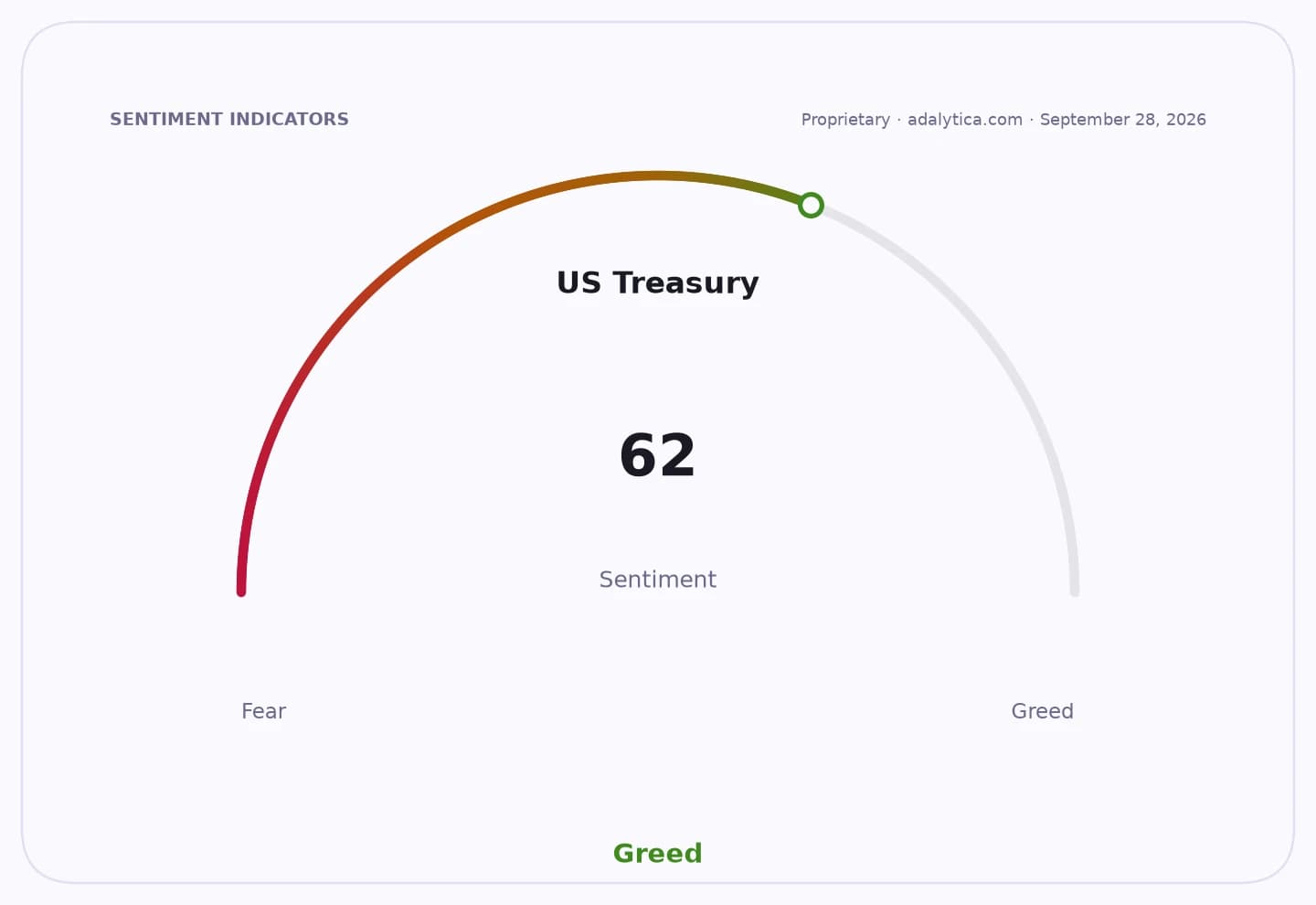
Sentiment IndicatorsⓘProprietary · adalytica.com · September 28, 2026
This is a snapshot — live sentiment, awareness and momentum for 130+ markets update continuously in the dashboard.Open AlphaPulse
Higher yields matter because they increase the return on dollar-denominated assets at a time when the US economy continues to outpace much of the developed world. That makes it harder for the euro, yen and other low-yielding currencies to compete, especially when the Federal Reserve is still seen as maintaining restrictive policy. The move also pushes up the cost of capital across markets, from corporate borrowing to mortgages, and raises the risk that tight financial conditions will eventually bite into growth.
For investors, the yield surge cuts both ways. Dollar bulls benefit from the carry and the safe-haven bid, while exporters, multinational companies and commodity producers face a stronger headwind from currency translation and tighter global liquidity. The Adalytica expectations gauge for Fed rate decisions sits in “Extreme Fear,” reflecting how abruptly the market has priced in a more hawkish-for-longer backdrop, even as broader equity sentiment remains in “Extreme Greed.” That combination suggests investors are still buying risk assets, but with a dollar and rate backdrop that could become less forgiving.
UUP’s price action confirms that story. The fund is trading above both its 50-day and 200-day moving averages, and momentum indicators remain positive, pointing to sustained demand for dollar exposure rather than a short-lived spike. Treasury sentiment data from Adalytica also shows elevated interest in bond trades, while the 10-year and 2-year yields have continued to grind higher rather than reverse sharply.
The broader narrative is that the market is repricing the cost of money, not just in the US but globally. OECD growth forecasts have been revised higher, yet that optimism is being checked by the prospect that elevated US yields will keep the dollar firm and financial conditions tight. Unless inflation data or Fed guidance changes the rate outlook, the dollar’s strength is likely to persist — and with it, pressure on overseas borrowers, importers and any asset priced on the assumption that US yields would soon ease.
| Entity | Gains | Losses |
|---|---|---|
| US dollar | ▲Higher yield support | ▼Foreign currency rivals |
| UUP holders | ▲Currency appreciation | ▼Short-dollar positions |
| US Treasury buyers | ▲Higher income on new debt | ▼Existing bond holders |
| US exporters & multinationals | ▲Stronger capital inflows | ▼Translation and pricing pressure |