Berkshire Hathaway’s aggressive repurchases have become the clearest sign that management sees value in its own stock even as operating profit eases, with the conglomerate buying back a record $9.6 billion in the latest quarter while signaling the pace may soon slow or stop.
Berkshire Hathaway Buybacks Hit Record $9.6 Billion
S&P 500
The split matters because Berkshire is a bellwether for both corporate capital allocation and the underlying health of large swaths of the US economy. A company that sits on one of the market’s largest cash piles is choosing to return capital rather than deploy it into new investments, implying management still sees few compelling opportunities at attractive prices despite abundant liquidity and a still-solid macro backdrop.
Sentiment Indicators
That tension is what makes the earnings report more important than the headline numbers alone. Berkshire’s operating profit declined, with insurance underwriting dragging on results after pretax earnings from that business softened sharply in the third quarter. The company’s filing also pointed to the possibility of adverse consequences from market and economic conditions that could affect both operating businesses and equity holdings, underscoring how quickly a diversified balance sheet can still be hit by pockets of weakness even in a generally resilient economy.
For investors, the buyback signal cuts both ways. On one hand, Berkshire’s willingness to retire shares at scale suggests Buffett-era discipline remains intact and that management believes the stock is cheap enough to justify record capital returns. On the other, if buybacks are about to taper, one of the most dependable sources of support for the shares may be fading just as profits lose momentum. That leaves the stock more exposed to the quality of future earnings growth rather than the mechanical lift from repurchases.
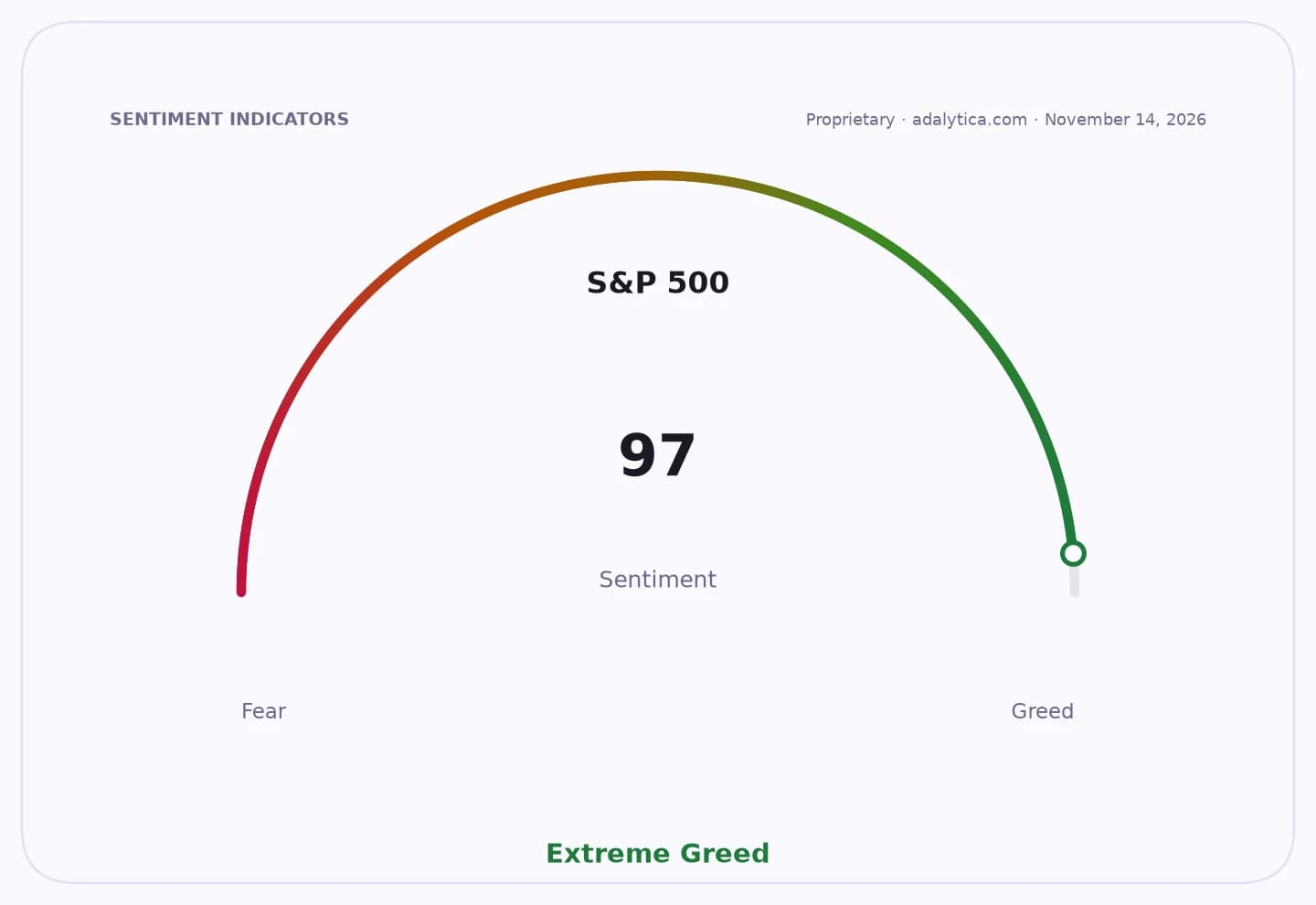
The market backdrop adds another layer. Berkshire shares have climbed well above both the 50-day and 200-day moving averages, and technical readings such as RSI remain elevated, pointing to a stock that has already priced in a fair amount of optimism. Broader US equities have also been trading with extreme greed in Adalytica’s S&P 500 trade signals, while Treasury-bond sentiment shows extreme fear, a combination that suggests investors are still favoring risk assets and are less inclined to pay up for defensive duration. In that environment, Berkshire’s relative appeal depends less on macro enthusiasm and more on whether its operating businesses can reaccelerate.
The key question now is whether the company is entering a more cautious phase of capital management. If profits stabilize and cash continues to compound, Berkshire can keep signaling confidence through buybacks. If underwriting weakness persists and the repurchase pace slows materially, the stock may have to stand on earnings alone. For investors, that makes the next few quarters a test of whether Berkshire is simply pausing after an unusually large repurchase burst, or whether the record buyback itself was a high-water mark for one of Wall Street’s most closely watched capital-allocation stories.
| Entity | Gains | Losses |
|---|---|---|
| Berkshire shareholders | ▲Capital returns; share-count reduction | ▼Buyback support may fade |
| Berkshire management | ▲Signals confidence in valuation | ▼Less flexibility if earnings weaken |
| Sellers of Berkshire stock | ▲Liquidity from large repurchases | ▼Miss out on long-term compounding |
| Insurance underwriting peers | ▲Benchmark for disciplined capital use | ▼Standout weakness in Berkshire results |