Berkshire Hathaway’s decision to lift its Delta Air Lines stake by 12% while trimming Bank of America in the third quarter is a clean read on where capital is moving now: away from a flatter banking trade and toward businesses that can still compound through strong pricing, disciplined capacity and resilient travel demand.
Delta Air Lines Stake Raised as Bank of America Cut

That matters because Berkshire is not making a cosmetic portfolio tweak. It is backing an airline that has spent 2026 regaining investor confidence as Delta stock climbed from the low $50s to $86.60 in recent trading, well above its 50-day and 200-day moving averages. The move suggests Warren Buffett’s firm sees more durable earnings power in Delta than in one of its long-time financial holdings, even as banks remain tied to the path of rates, credit quality and deposit competition.
Sentiment Indicators
For investors, the signal is twofold. First, Berkshire is still willing to own transportation leverage when it believes the cycle is favorable, and Delta remains the best-positioned of the major U.S. carriers to defend margins through premium seating, loyalty revenue and operational scale. Second, the reduction in Bank of America underscores a broader valuation problem for the sector: even with shares near $50, BAC has been unable to reassert a convincing uptrend, with technical momentum still softer than Delta’s and the stock sitting below its 50-day average.
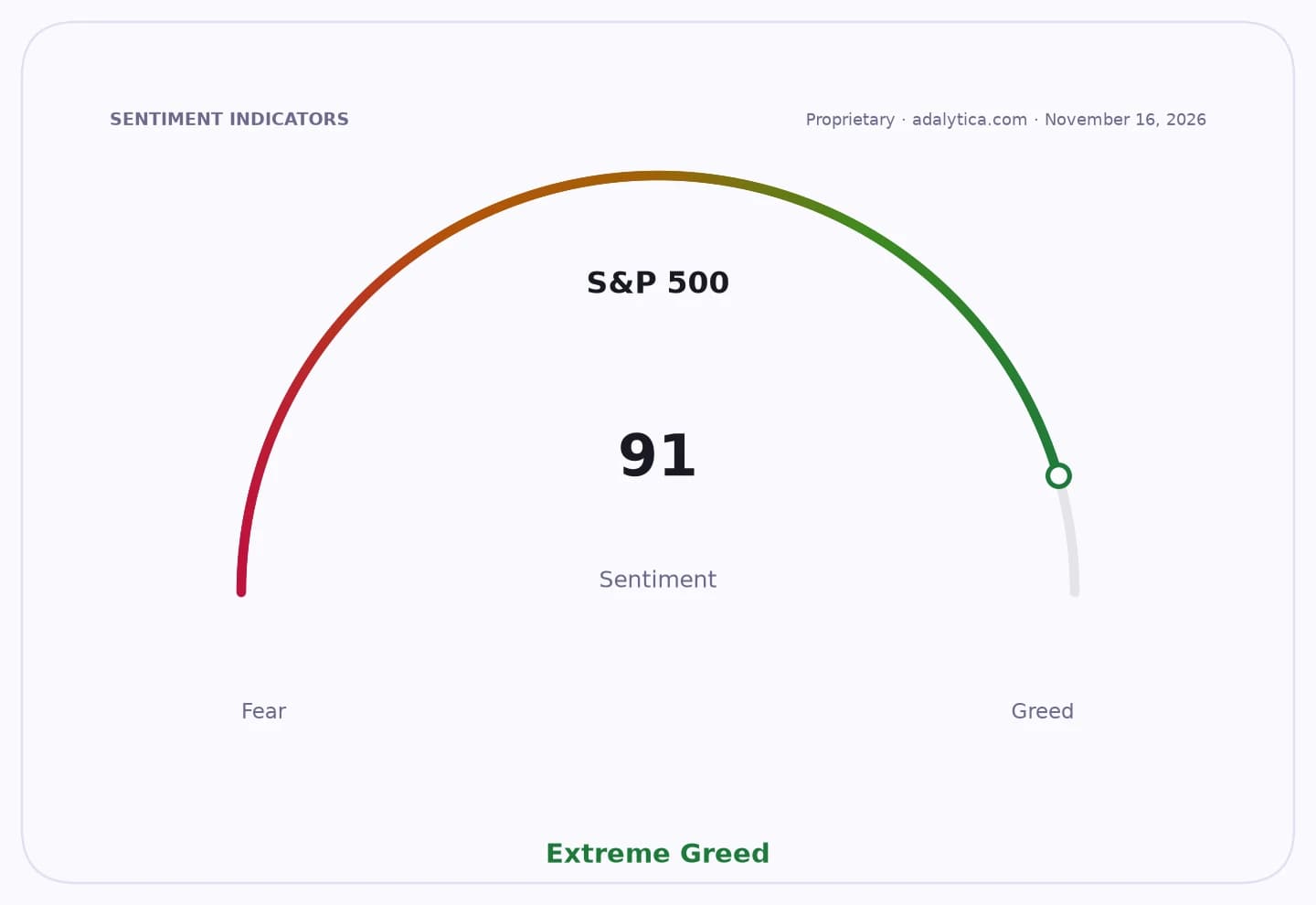
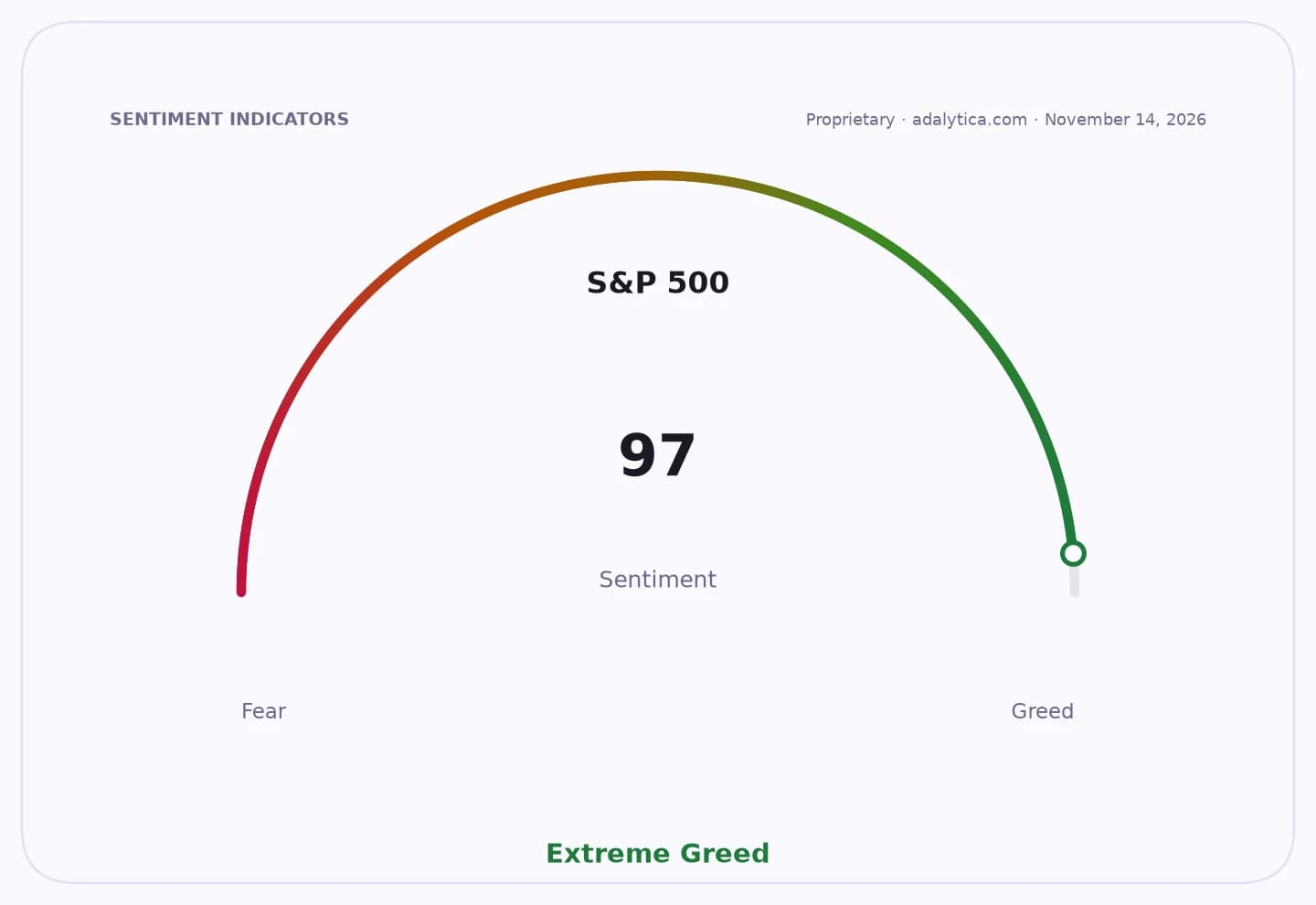
The macro backdrop also helps explain the trade. U.S. equities are flashing extreme greed on Adalytica’s S&P 500 trade signals, while Treasuries are showing extreme fear, a combination that often favors cyclical exposure and penalizes defensive rate-sensitive assets. In that environment, airlines with improving demand and cleaner operating momentum can attract capital faster than banks waiting on a clearer rates or credit catalyst.
Delta’s own tape reinforces the thesis. The stock has held above both its 50-day and 200-day moving averages since mid-October, and the 50-day line has been rising steadily. RSI readings in the high 50s to low 60s suggest strength without a full-blown overbought setup, while MACD remains positive. In plain market terms, Delta is acting like a stock with institutions accumulating on pullbacks rather than distributing into strength.
Bank of America, by contrast, looks like a capital-allocation trim in a sector that has already had its rerating. BAC’s shares have struggled to sustain upside after touching the mid-50s earlier this year, and recent trading around $50 leaves the stock fighting to reclaim its 50-day moving average. That does not make the franchise weak, but it does make the upside harder to underwrite versus Delta’s clearer earnings trajectory.
The investable takeaway is straightforward: Berkshire’s quarterly shuffle points to an asymmetric setup in which the market may still be underappreciating the airlines that have regained pricing power and overestimating the near-term appeal of big banks. If you want exposure to the next leg of the cycle, Delta looks like the cleaner long; if you are looking for a capital source, the big money may be rotating out of banks and into real-economy winners with momentum.
| Entity | Gains | Losses |
|---|---|---|
| Delta Air Lines | ▲Berkshire buying support | ▼Sellers betting on a slowdown |
| Bank of America | ▲Capital reallocation discipline | ▼Near-term upside from Buffett holding |
| Airlines sector | ▲Validation of pricing power | ▼Banks losing relative appeal |
| Long-term investors in DAL | ▲Momentum and institutional backing | ▼Holders of weaker financials |