Berkshire Hathaway said fiscal third-quarter earnings fell even as revenue increased, underscoring a split between its core operating businesses and a volatile investment portfolio that remains a major driver of headline results.
Berkshire Hathaway earnings fall as revenue rises
The decline in reported profit matters because Berkshire’s earnings often function as a read-through on corporate America, industrial demand and consumer spending. When the conglomerate’s top line is still growing, but bottom-line results weaken, investors usually look past the accounting noise and toward the durability of operating income across its insurance, industrial, service and retail units.
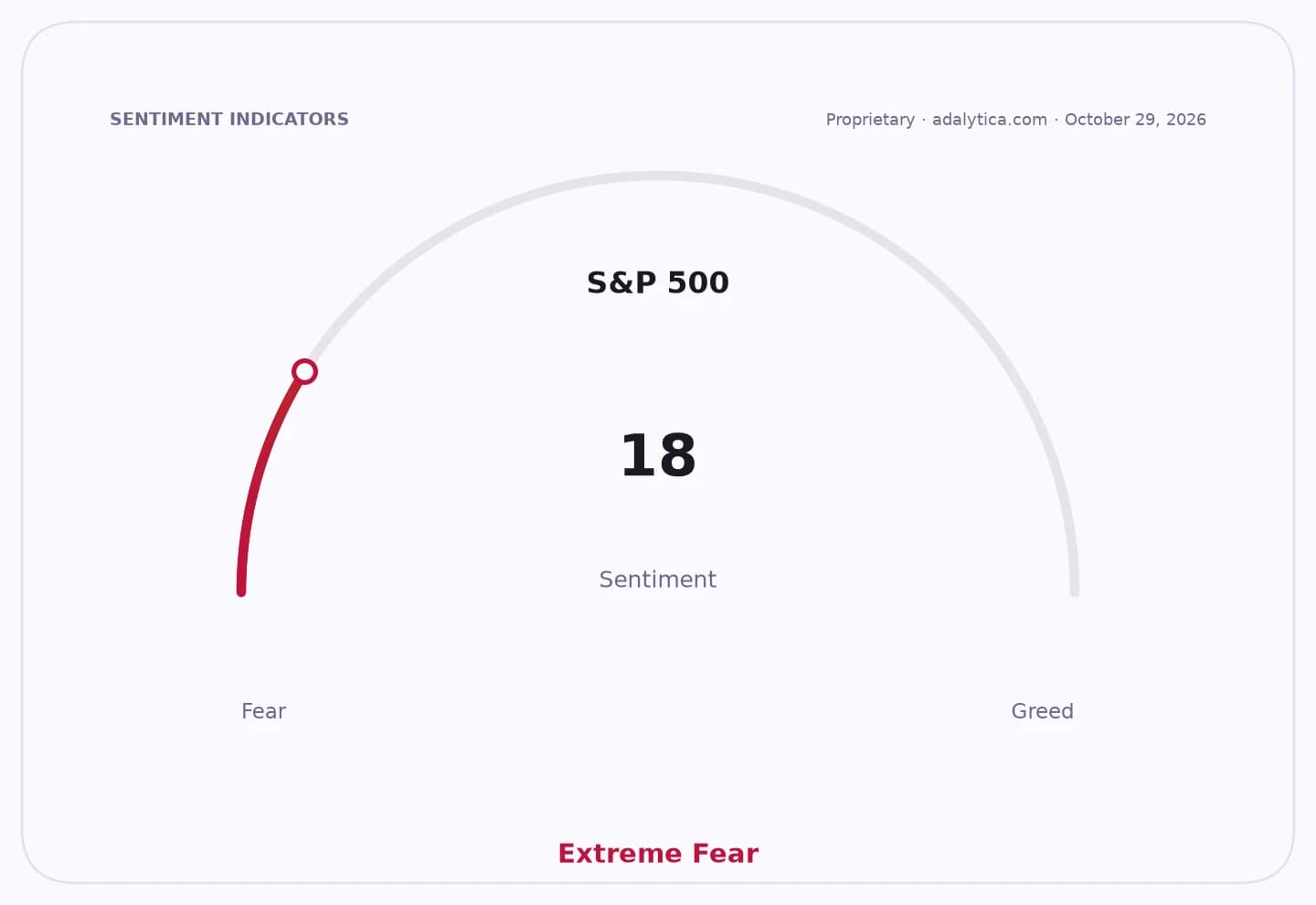
Sentiment Indicators
Berkshire’s latest quarterly filing showed after-tax earnings from manufacturing, service and retailing businesses rose 11.8% in the third quarter from a year earlier, helped by gains in industrial products and service businesses. The company also reported investment income of $930 million, up from $904 million a year earlier, while foreign-exchange and investment results can swing sharply from quarter to quarter.
The figures come after Berkshire reported the quarterly results in a Nov. 7 press release filed with regulators on Nov. 9, keeping the focus on whether Warren Buffett’s sprawling empire can sustain operating momentum as markets move through a more selective earnings season. Berkshire’s Class B shares have been trading near record territory, with the stock closing at $592.94 on Nov. 13, far above its 50-day and 200-day moving averages, though the high RSI readings suggest the shares are extended after a strong run.
For investors, the message is that Berkshire’s businesses continue to generate cash and revenue growth even if consolidated earnings are uneven. That supports the case for the stock as a defensive large-cap holding, but it also raises the bar for future quarters, especially if investment income, insurance results or consumer demand soften.
Market attention now turns to whether the company can keep translating operating strength into steady profit growth in the next quarter, and whether Berkshire’s premium valuation can hold if the broader market cools from its current risk-on mood.
| Entity | Gains | Losses |
|---|---|---|
| Berkshire operating units | ▲Higher after-tax earnings | ▼Less reliance on finance-driven gains |
| Berkshire shareholders | ▲Revenue growth, cash generation | ▼Volatile headline profit |
| Long-term investors | ▲Defensive large-cap exposure | ▼Limited near-term earnings visibility |
| Short-term traders | ▲Stock momentum | ▼Risk of pullback from overbought levels |