Blackstone’s third-quarter profit slipped as higher rates and market volatility stalled the asset sales private-equity managers rely on to turn paper gains into cash.
Blackstone Profit Slips as Exits Slow
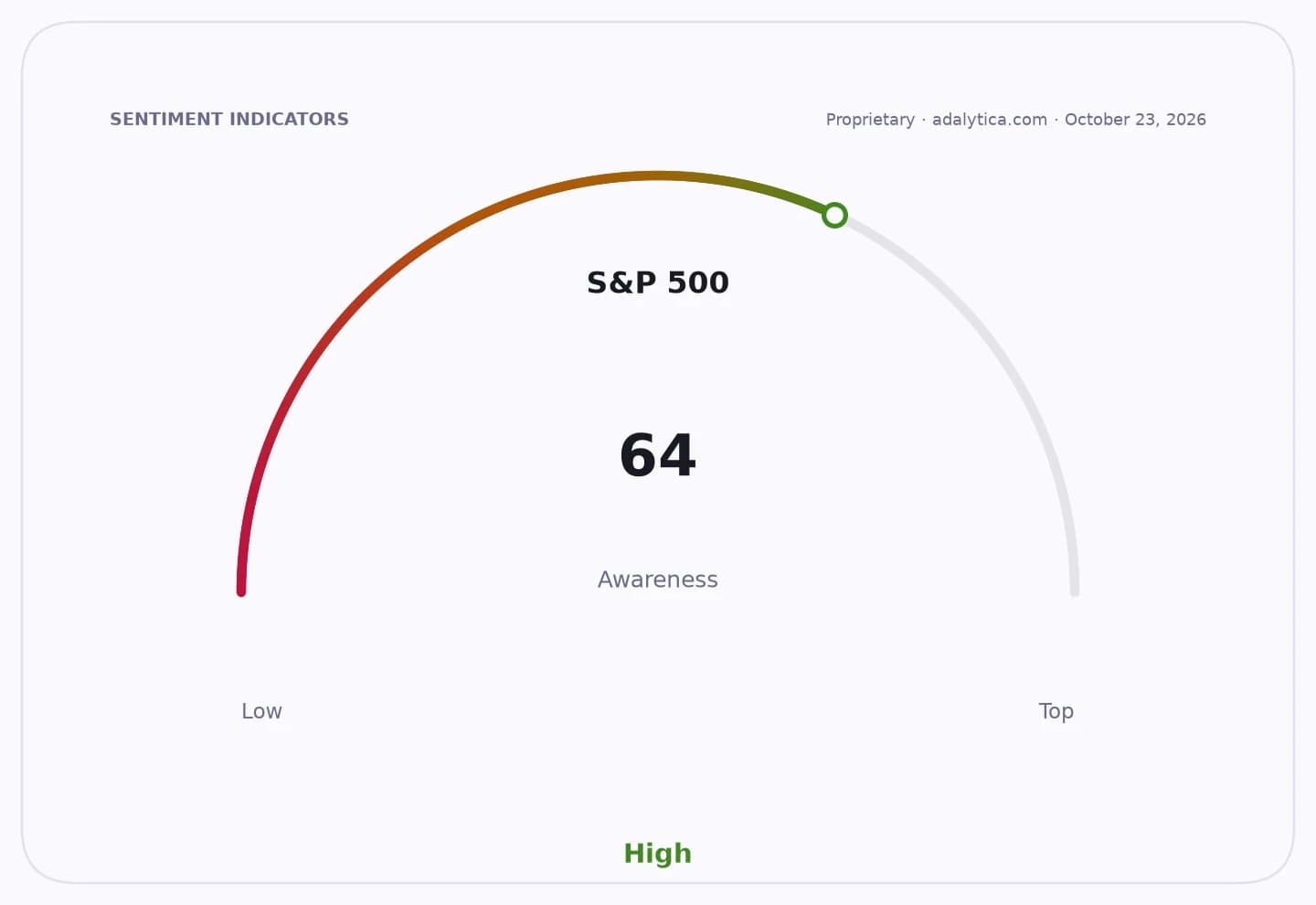
S&P 500
That matters because Blackstone is the bellwether for the alternatives industry, and its numbers show how quickly a harder macro backdrop can choke off realizations even when fundraising remains strong. When buyers step back and IPO windows shut, the entire private-capital machine slows: carried interest is harder to book, fee-related earnings lose momentum, and valuation support becomes more fragile across the sector.
Sentiment Indicators
Distributable earnings fell 13% to $1.32 a share, though that still topped the $1.26 average estimate compiled by LSEG. Net realizations dropped 34% to about $332 million, weighed by a nearly 50% decline in private-equity activity as many transactions were put on hold. Blackstone said global M&A fell 41% from the prior quarter in the third quarter, underscoring how the rise in bond yields and expectations for rates to stay elevated are freezing exit markets.
The stock fell 2.2% in premarket trading after the report, extending a rough year for alternative-asset managers. Blackstone shares have lost nearly 30% this year, even as the S&P 500 has climbed 13% and the S&P 500 financials index is up about 2%. Investors are pricing in a tougher path for alts, where slowing growth, AI-related disruption for portfolio companies and pressure in private credit are all feeding skepticism.
There is still a bullish counterweight in the report: Blackstone drew more than $63 billion of net inflows, lifting assets under management to $1.37 trillion and driving a 6% rise in fee-related earnings. Credit and insurance brought in nearly $36 billion of those inflows, while private equity contributed $12.6 billion. Fee revenue from managing private-equity funds jumped 26% to $619 million, showing the franchise is still gathering assets even as exits slow.
For investors, the story is less about one weak quarter than about timing. Blackstone can keep compounding if rates eventually ease and the IPO and M&A pipelines reopen, because its fundraising engine is still firing. But near term, the market is right to focus on realizations: without a cleaner exit environment, earnings will remain more volatile, and the sector’s best upside may come from the eventual snapback in deal activity rather than from current cash flows.
| Entity | Gains | Losses |
|---|---|---|
| Blackstone | ▲Strong inflows, fee growth | ▼Lower realizations, weaker profit |
| Private-equity peers | ▲Fundraising support | ▼Slower exits and carry |
| Buyers of risky assets | ▲Better pricing power | ▼Fewer deals to close |
| Investors in BX shares | ▲Potential long-term rebound | ▼Near-term earnings volatility |