Cisco Systems is trading like a mature hardware vendor, but the numbers behind its latest quarter and its AI backlog suggest the market may still be underestimating how much the networking business can grow over the next four years.
Cisco AI Backlog and Margin Pressure

The stock is up 44% year to date at about $106.71, yet Wall Street’s consensus target of $136 implies only another 25% upside from here. A more aggressive path to $200 by 2030 would require roughly 84% gains and earnings per share compounding at about 9% a year, a hurdle that now depends on whether Cisco can turn a wave of AI spending into durable profit growth.
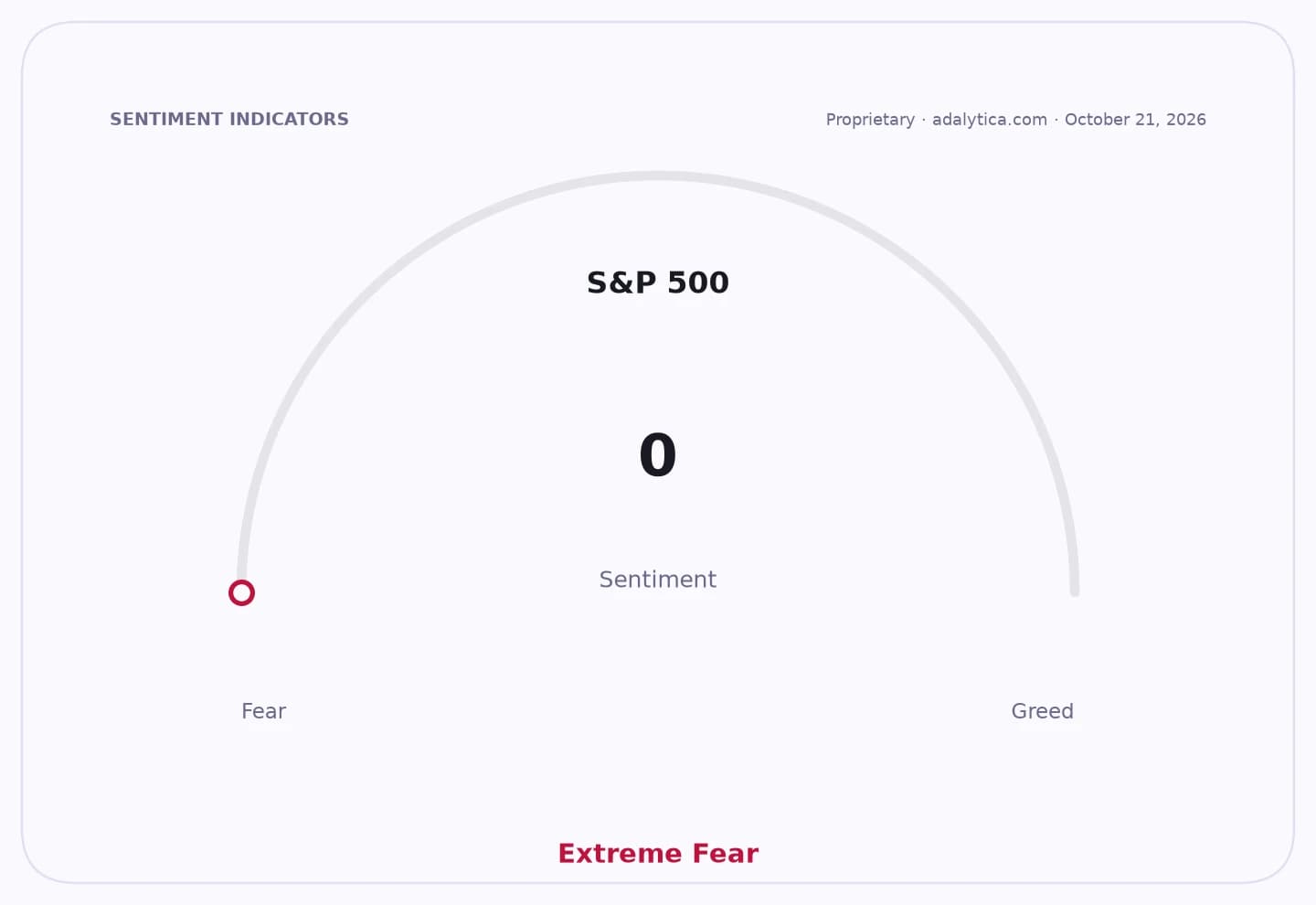
Sentiment IndicatorsⓘProprietary · adalytica.com · October 21, 2026
This is a snapshot — live sentiment, awareness and momentum for 130+ markets update continuously in the dashboard.Open AlphaPulse

That case rests on real momentum. In the latest quarter, product revenue rose 24% to $13.46 billion, networking revenue climbed 28% to $9.79 billion and AI orders reached $9.3 billion in fiscal 2026. Chief Executive Chuck Robbins said the company is “only at the beginning of this super cycle,” arguing that the buildout of AI infrastructure is still early.
For investors, the debate is no longer about whether Cisco can benefit from AI, but how much margin it can keep while doing it. Non-GAAP gross margin fell to 66.3% from 68.4% as lower-margin AI hardware took a larger share of sales, and management also flagged memory costs and uneven hyperscaler ordering. That mix matters because Cisco’s upside case depends not just on revenue growth, but on whether it can preserve enough profitability to compound earnings fast enough to justify a much higher valuation.
The stock’s recent trading pattern shows that tension. Cisco has slipped below its 52-week high of $129.38 and the shares have been volatile, with a 7.3% drop over the past week at one point and an RSI reading near 49, a sign the rally has cooled after a sharp run-up. The stock also remains well above its 200-day moving average, reflecting that the broader trend is still intact even as near-term enthusiasm fades.
The biggest risk to the bull case is simple: if hyperscaler capex slows, Cisco’s AI order flow could flatten before the earnings power does. That would leave the stock looking more like a cyclical networking name than a long-duration AI infrastructure winner, and it would make the march to $200 by 2030 much harder to defend.
| Entity | Gains | Losses |
|---|---|---|
| Cisco bulls | ▲AI-driven earnings upside | ▼Margin compression risk |
| Hyperscalers | ▲More networking capacity | ▼Higher capex burden |
| Wall Street bears | ▲Near-term valuation caution | ▼Missed long-term upside |
| Cisco shareholders | ▲Super-cycle exposure | ▼Slower hyperscaler spending |