Bitcoin’s newest foothold in traditional finance is arriving just as the token struggles to hold a near-term support zone, underscoring the gap between institutional adoption and immediate price direction.
Bitcoin Backed Loans Start at Jeonbuk Bank

Jeonbuk Bank, part of JB Financial Group, has started offering won-denominated loans backed by bitcoin to corporate clients, a move that marks one of the clearest signs yet that lenders are willing to treat BTC as pledgeable collateral rather than a pure trading asset. The rollout is limited for now and the bank has not disclosed loan-to-value ratios or borrowing costs, but the structure itself matters: bitcoin is being pulled further into the credit system, where it can be monetized without being sold.
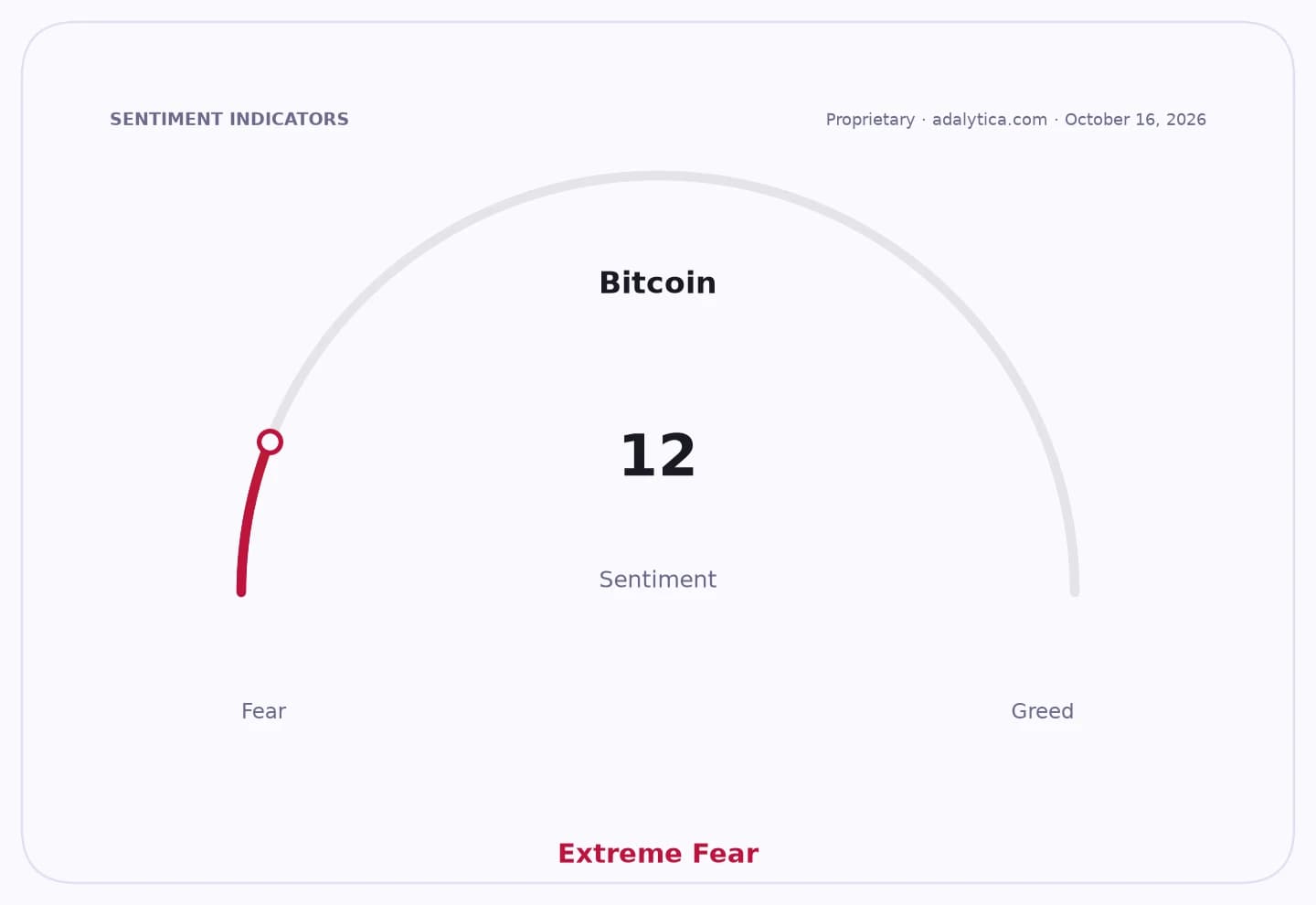
Sentiment IndicatorsⓘProprietary · adalytica.com · October 15, 2026
This is a snapshot — live sentiment, awareness and momentum for 130+ markets update continuously in the dashboard.Open AlphaPulse

That has two economic implications. First, it broadens the use case for bitcoin beyond speculation and treasury allocation, potentially deepening demand from businesses that want liquidity while retaining price exposure. Second, it introduces a new channel of leverage into the market. If BTC is increasingly accepted as collateral, price swings matter not only for traders but also for lenders, borrowers and custodians who must manage margin risk and recovery procedures.
For investors, the announcement is supportive for bitcoin’s long-run institutional story but not an immediate catalyst for a breakout. BTC was changing hands around $81,476, after bouncing from the $80,300-$80,400 area and still nursing a roughly 3% weekly loss. The token remains below the $84,000 resistance band traders have been watching, while the 50-day moving average at about $81,163 and the 200-day moving average near $72,205 suggest the medium-term trend has stabilized but not turned decisively higher. RSI readings in the low-40s and a still-negative MACD point to a market that has recovered from oversold conditions but has not yet regained strong momentum.
That caution matters because the latest move comes against a backdrop of fragile risk appetite. Adalytica’s S&P 500 trade signals show neutral sentiment but extreme fear in awareness, while the US dollar remains firm enough to keep pressure on speculative assets. Upcoming US inflation data could still reshape rate expectations and cross-asset positioning, which has often mattered more for bitcoin’s short-term direction than adoption headlines.
The bull case is straightforward: if more banks follow Jeonbuk’s lead, bitcoin could gain a second life as a productive balance-sheet asset, supporting broader institutional use even when spot demand is uneven. The bear case is equally clear: collateralization can amplify stress during drawdowns, turning a financial innovation into a source of forced selling if borrowers fail to meet requirements.
For now, the key takeaway for crypto investors is that the banking system is learning how to lend against bitcoin faster than the market is learning how to price that change. That makes Jeonbuk Bank’s move a structural positive, but not a guarantee that BTC will reclaim $85,000 without help from macro data and stronger spot inflows.
| Entity | Gains | Losses |
|---|---|---|
| Jeonbuk Bank / JB Financial | ▲New fee income, client demand | ▼BTC price and collateral risk |
| Corporate borrowers | ▲Liquidity without selling BTC | ▼Higher leverage, margin calls |
| Bitcoin holders | ▲Broader institutional use case | ▼Forced selling risk if loans sour |
| Existing lenders / rivals | ▲Template for new products | ▼Competitive pressure to follow |