US spot Bitcoin exchange-traded funds are facing their heaviest redemptions since launching in 2024, underscoring how quickly institutional enthusiasm for the trade can unwind when macro and geopolitical stress intensify.
Bitcoin ETFs See Heaviest Outflows Since Launch

Over the past 30 trading days, the funds have seen net outflows of more than $6.4 billion, according to Galaxy Research, while Bitcoin has dropped about 17.4% in the same period. The selling has now stretched to a sixth straight week, cutting cumulative net inflows in the US Bitcoin ETF complex to about $53.4 billion from a peak near $63 billion in October 2025.
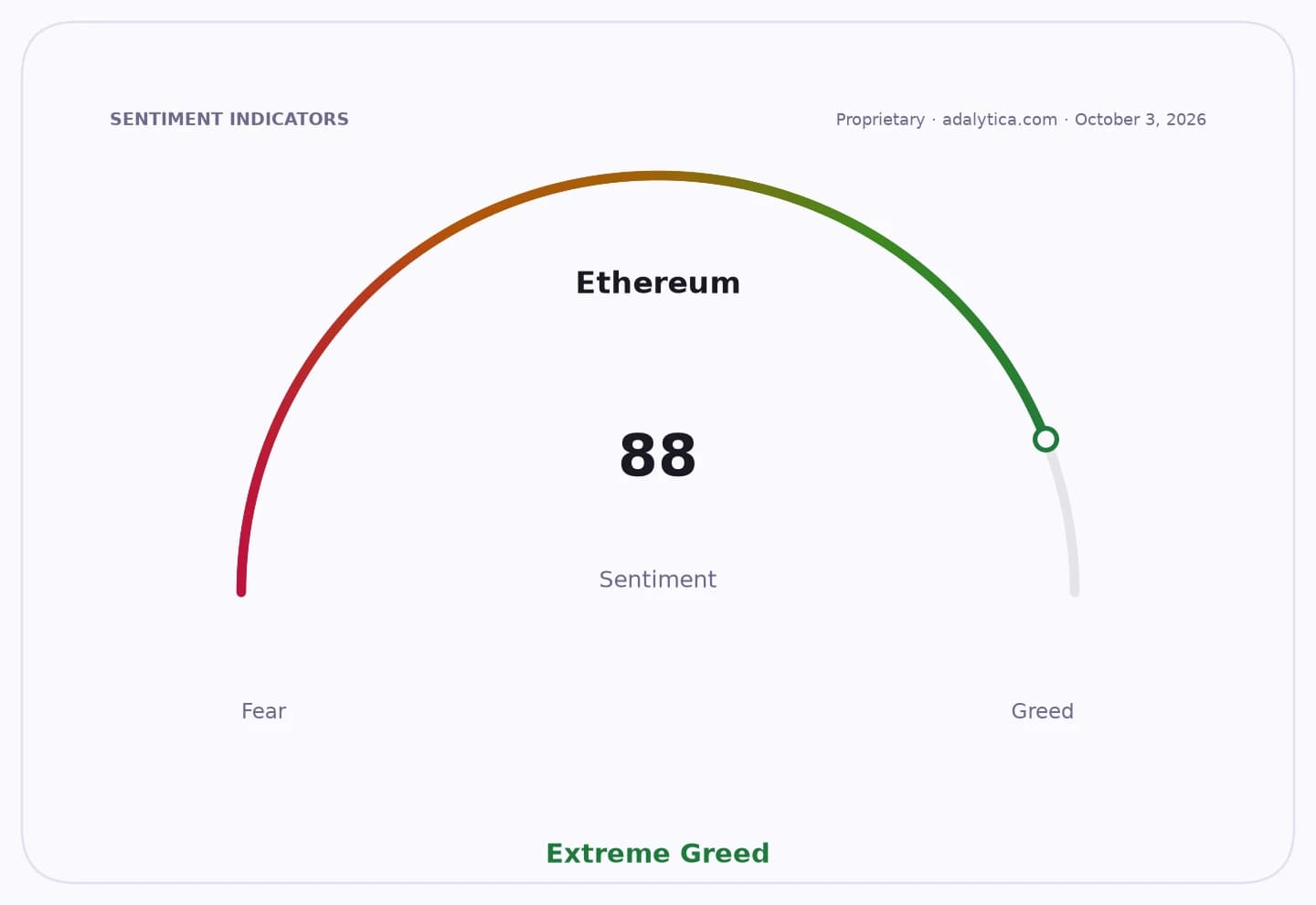
Sentiment IndicatorsⓘProprietary · adalytica.com · October 5, 2026
This is a snapshot — live sentiment, awareness and momentum for 130+ markets update continuously in the dashboard.Open AlphaPulse

That matters because the ETFs were supposed to be the cleanest way for mainstream investors to access Bitcoin without handling the token directly. When flows reverse this sharply, it signals not just weaker demand for a volatile asset, but a broader reduction in risk appetite across crypto-linked portfolios. It also removes a key source of incremental demand for Bitcoin itself, which can deepen price declines and force a more defensive stance from traders who had been leaning on ETF inflows as evidence of structural adoption.
The timing is important. Bitcoin’s slide has come as US inflation worries and escalating geopolitical tensions, including the conflict between the US and Iran, have pressured speculative assets. Adalytica’s Global Stability Sentiment gauge is sitting in “Extreme Fear,” reflecting the kind of stress environment in which investors tend to cut exposure to higher-beta assets first. In that backdrop, ETF redemptions become both a symptom and a transmission mechanism: outflows feed price weakness, and price weakness invites more selling.

Still, not all outflows are a pure vote against Bitcoin. Jay Jacobs, head of US equity ETFs at BlackRock, said daily flow data can be distorted by investors moving between products rather than exiting the asset class altogether. Some holders of BlackRock’s IBIT, for example, may be rotating into other BlackRock funds or rebalancing within portfolios. BlackRock continues to frame Bitcoin as a long-term alternative asset that is decentralized and independent of any single government.
The market’s own price action suggests pressure remains heavy. IBIT, Fidelity’s FBTC and Grayscale’s GBTC have all been volatile, with recent technical readings showing oversold and then partially stabilizing conditions, but not enough to restore a convincing uptrend. IBIT’s 14-day RSI had fallen to 7.6 in February before recovering sharply, while more recent readings around the low-60s point to a rebound that is still vulnerable if flows keep weakening. GBTC and FBTC have shown similar swings, consistent with a market still trying to find a floor after a broad de-risking move.
For investors, the key question is whether this is a temporary deleveraging episode or the start of a more durable fade in ETF demand. The bull case is that ETF flows eventually stabilize once macro fears ease, allowing regulated wrappers to resume their role as the dominant on-ramp for institutions. The bear case is that Bitcoin’s recent weakness breaks confidence in the “ETF adoption” narrative and keeps capital rotating into safer assets.
For now, the story is less about one week of selling than about the fragility of the institutional crypto bid when macro conditions deteriorate. If outflows persist, Bitcoin’s ability to hold its recovery will likely depend less on enthusiasm for the ETF product itself and more on whether risk assets broadly can regain traction.
| Entity | Gains | Losses |
|---|---|---|
| Cash / defensive assets | ▲Capital preservation demand | ▼Crypto allocation flows |
| Bitcoin ETF sellers | ▲Near-term liquidity | ▼Exposure to further downside |
| Long-term Bitcoin holders | ▲Potential better entry levels | ▼Portfolio mark-to-market losses |
| BlackRock / ETF sponsors | ▲Trading volumes | ▼Narrative of uninterrupted adoption |