Bitcoin slipped below $76,000 as a bruising selloff in U.S. technology stocks spilled into digital assets, reminding investors that crypto still trades like a high-beta risk asset when markets turn defensive.
Bitcoin Falls Below $76,000 as Tech Stocks Sell Off
The biggest cryptocurrency fell as much as 4.6% in the latest 24 hours and briefly dropped under the $76,000 mark before trading at $76,241 later in the session, according to CoinMarketCap. Ethereum lost 6.1% to $2,258, while the total value of the global crypto market shrank 4.22% to $2.56 trillion. For long-term investors, that matters because broad crypto declines are rarely just about one coin — they usually reflect a shift in liquidity, risk appetite and institutional positioning across the entire market.
Sentiment Indicators
The trigger was not unique to crypto. U.S. stocks sold off sharply after the elections, with the Dow Jones Industrial Average down nearly 3% at one point and the S&P 500 and Nasdaq both falling more than 3% and 4%, respectively. In this kind of tape, bitcoin tends to behave less like “digital gold” and more like a leveraged proxy for speculative growth. When money rushes out of AI, data center and other momentum names, it often hits crypto too.
That linkage is exactly why this move matters economically. A weaker bitcoin price can tighten conditions for miners, pressure crypto treasury holders and make it harder for new capital to enter the asset class. It also reinforces the idea that crypto is still deeply tied to the same macro forces that move equities: interest-rate expectations, regulation and investor confidence in risk assets. For investors building portfolios over years, not days, the lesson is simple — bitcoin’s long-term story may still be intact, but its path is still dictated by the market’s appetite for risk.
There is also a policy angle that investors cannot ignore. The election outcome has raised uncertainty around the future of digital-asset regulation, including the long-awaited CLARITY Act, which had been expected to create a clearer framework for the industry. If that legislation loses momentum, the sector could face another period of ambiguity just when it most needs institutional clarity. Regulation does not usually determine bitcoin’s day-to-day price, but it can shape who buys, who holds and how much capital flows into the ecosystem.
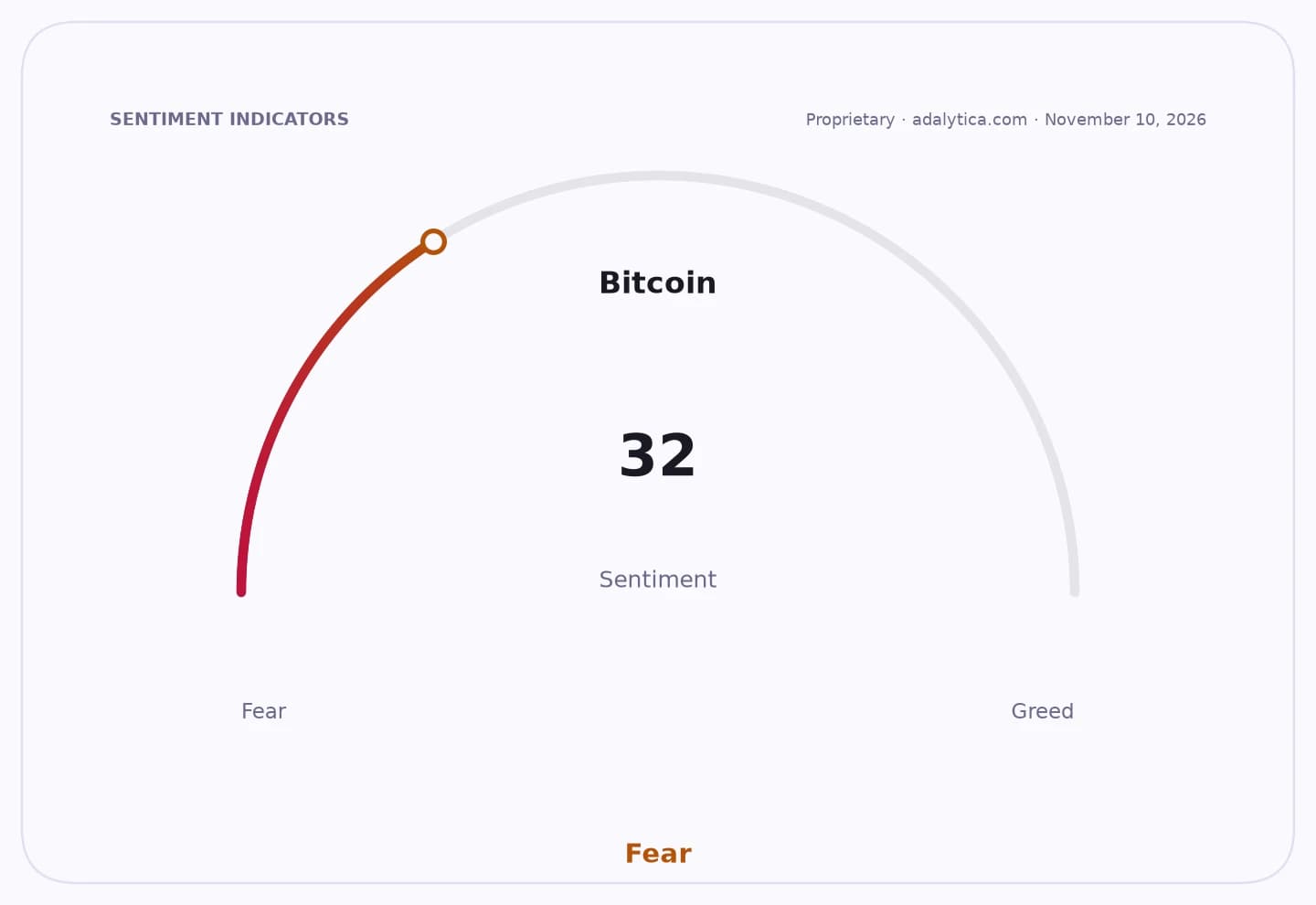
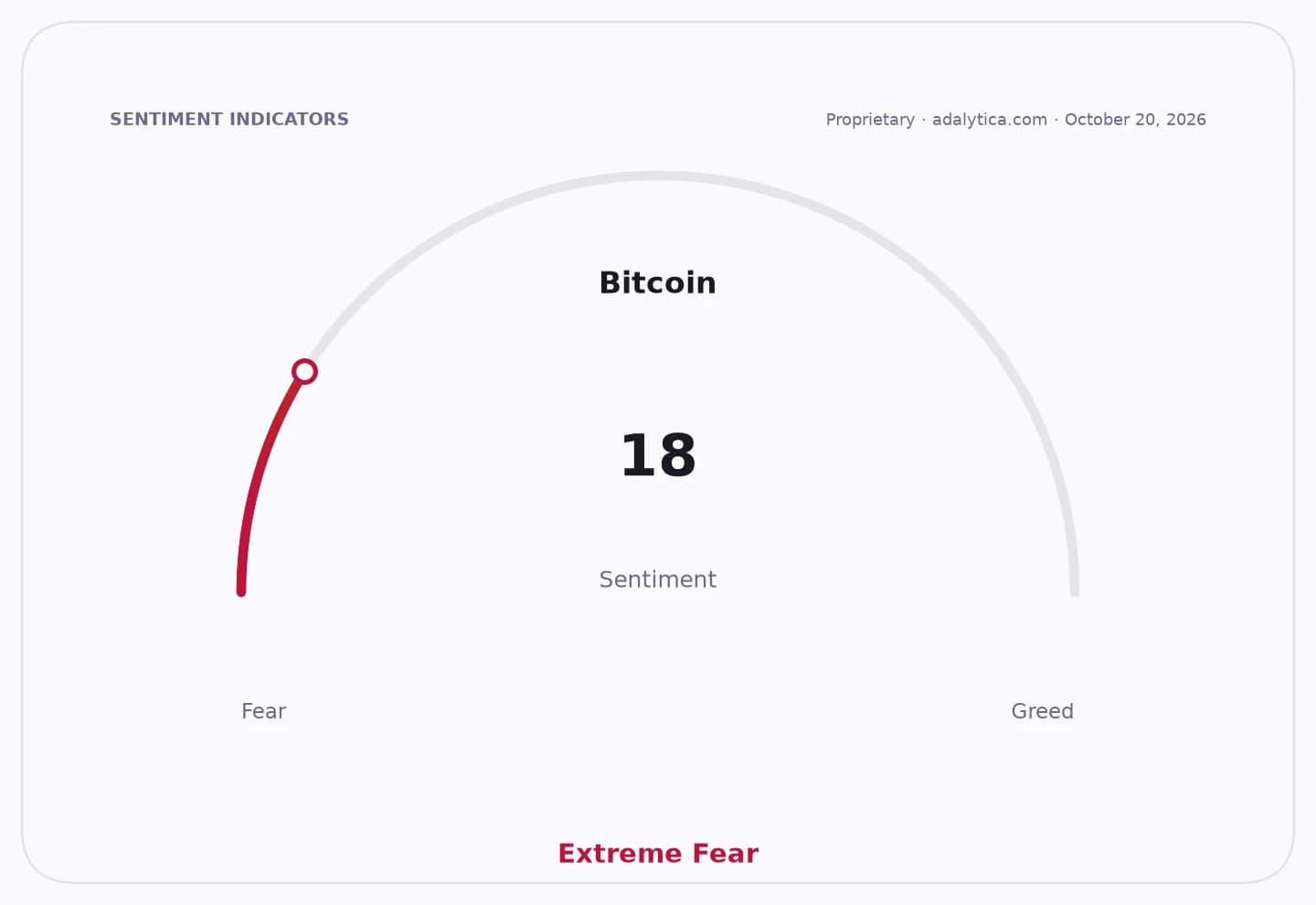
Technically, the pullback has also weakened bitcoin’s near-term setup. The token is now trading below both its 50-day and 200-day moving averages, while the RSI has fallen into oversold territory, underscoring how quickly sentiment has deteriorated. Adalytica’s Bitcoin Fear & Greed Index still sits in neutral territory, but the direction has turned lower alongside the broader selloff. That combination usually tells investors the market is not panicking yet — but it is repricing risk fast.
For patient investors, the key question is not whether bitcoin can bounce from oversold levels; it is whether the next few quarters bring stronger macro stability, clearer regulation and renewed demand from institutions. If those pieces come together, this kind of decline can prove to be noise within a longer secular trend. If they do not, crypto could remain highly vulnerable to every new leg down in stocks. For now, bitcoin belongs on the watchlist, not because the story has broken, but because the market is once again forcing investors to respect volatility.
| Entity | Gains | Losses |
|---|---|---|
| Cash holders | ▲Lower entry prices | ▼Missed upside if rebound follows |
| Bitcoin buyers on weakness | ▲Better long-term valuation | ▼Near-term drawdown risk |
| Crypto miners | ▲None | ▼Lower token prices and margins |
| Regulated exchanges | ▲Trading volume spike | ▼Weak asset prices and sentiment |