Ethereum’s latest selloff is less about the network’s long-term utility than the market’s short-term refusal to pay up for it, and that matters because ETH is now being repriced as a high-beta macro asset rather than a standalone crypto leader. With the token down about 21.5% in 2025 and analysts warning that $2,000 could give way to $1,800, the message for investors is clear: until Bitcoin stabilizes, Ethereum’s “ecosystem premium” is being stripped away.
Ethereum Falls Toward $1,800 as Bitcoin Weakens
That disconnect is the real story. Ethereum still sits at the center of crypto infrastructure, but the token has not consistently captured that role in price. Over the past four years, ETH has posted only two new all-time highs, and the latest cycle fell short of the widely expected push above $5,000. The market had been looking for a stronger year in 2025; instead, ETH is heading into February with momentum broken, risk appetite fading and the possibility of a deeper drawdown growing more visible.
Sentiment Indicators
Ethereum
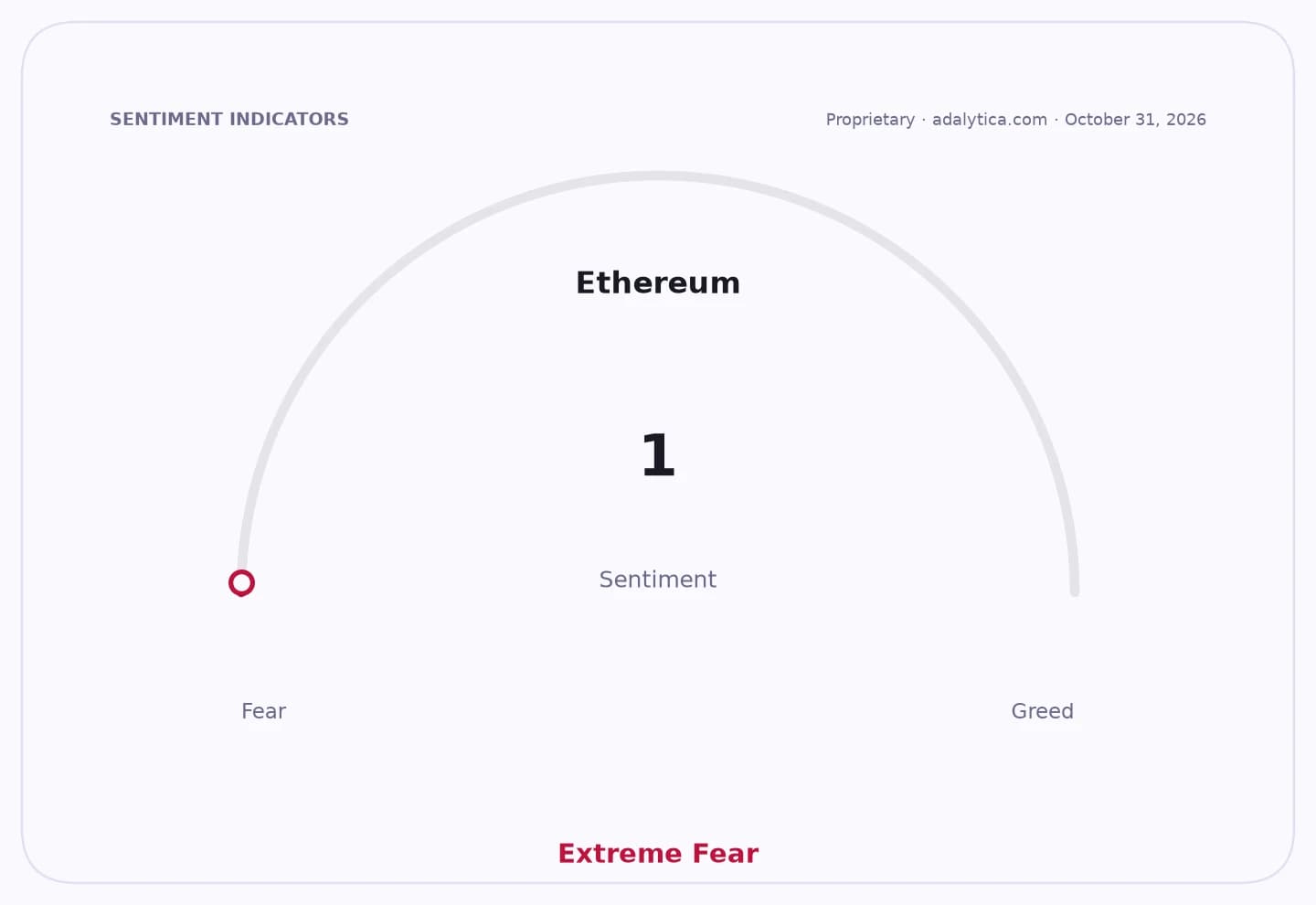
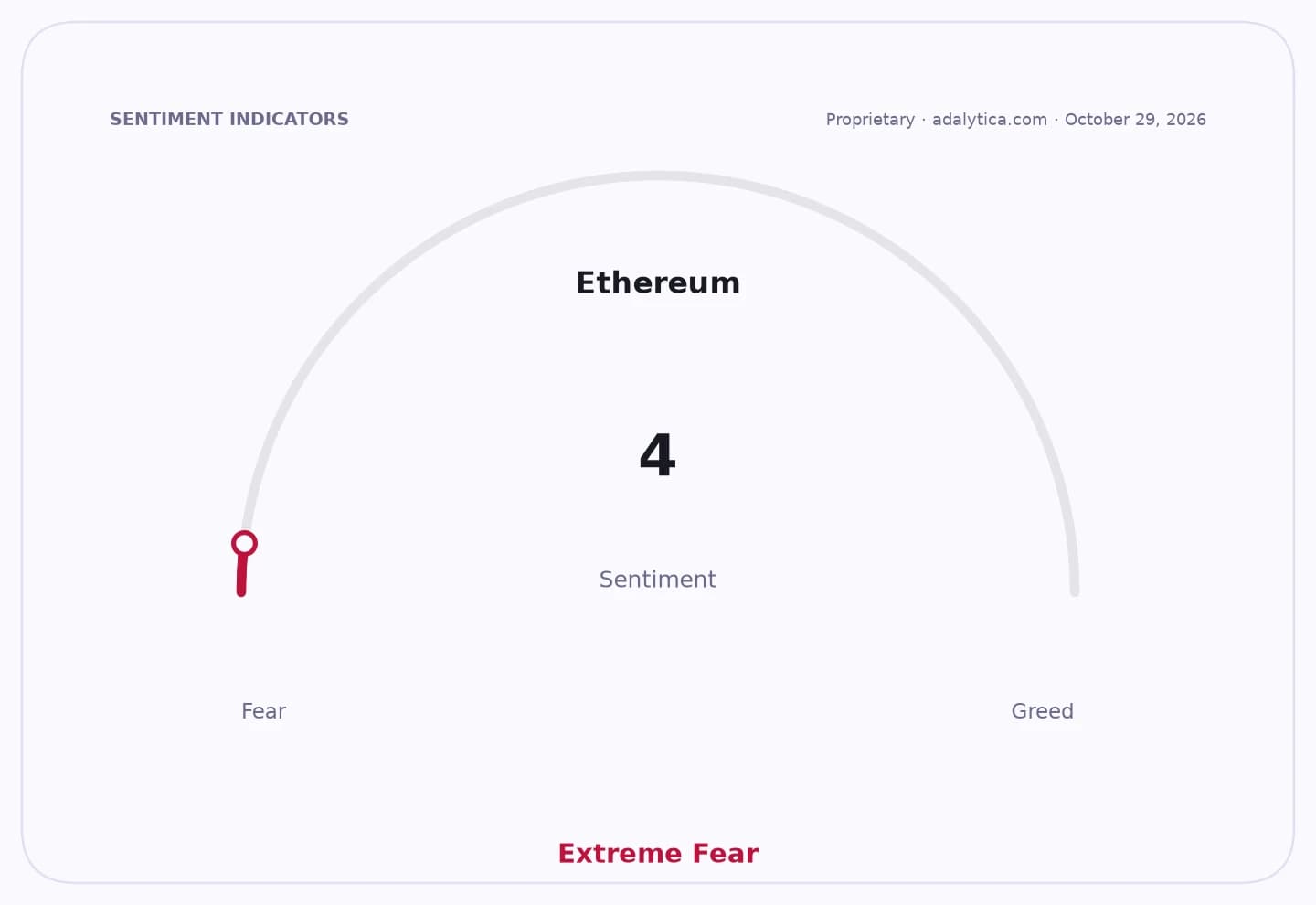
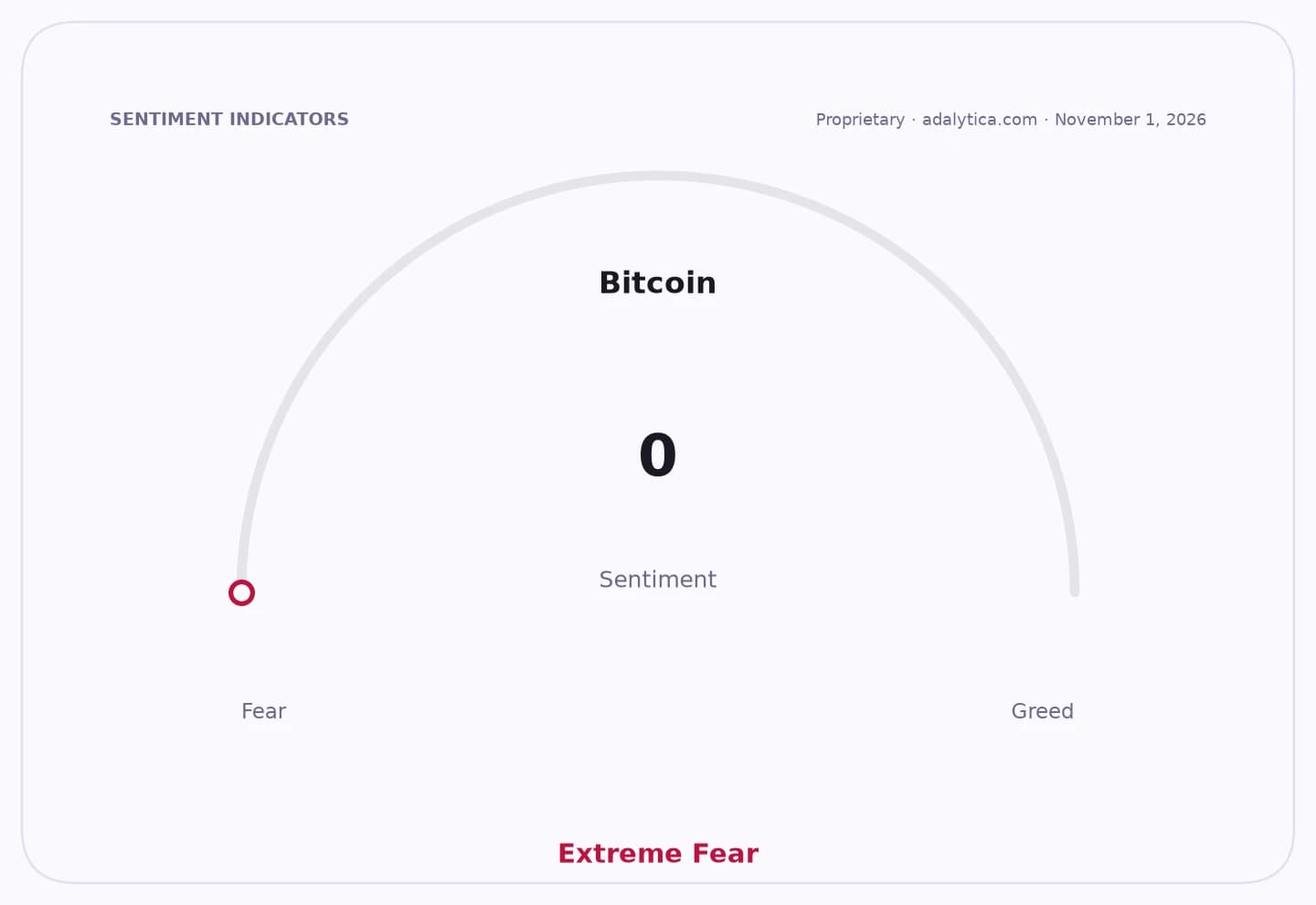
The price action confirms the damage. ETH briefly traded above $3,300 in January before losing ground sharply, and it recently touched $1,821.68, well below the 50-day moving average around $2,944.67 and under the lower Bollinger Band near $1,937.69, a classic sign of stretched downside pressure. The relative strength index sank to 16.8 at the February low, a level that points to extreme oversold conditions rather than healthy accumulation. On the sentiment side, Adalytica’s Ethereum Fear & Greed Index shows “Extreme Fear” at 7, while Bitcoin’s reading sits at 3, underscoring how broad and emotional the washout has become.
What makes this especially important for investors is that Ethereum is no longer trading in isolation. The market is treating BTC as the reserve asset of crypto and ETH as a second-order expression of the same macro trade. When Bitcoin weakens, liquidity drains across the complex, and Ethereum typically underperforms because it carries more volatility and less direct store-of-value appeal. That is why analysts are focusing so heavily on Bitcoin’s next move: if BTC cannot regain footing, ETH is vulnerable to a test below $2,000 and potentially toward the $1,800 area that some traders now consider plausible.
There is also a larger cross-asset backdrop at work. Global markets are under pressure from a sharp selloff in AI-related technology stocks, recession fears and geopolitical uncertainty, and crypto is absorbing that risk-off tone in real time. In a market where investors are reducing exposure to high-duration growth stories, Ethereum is being lumped into the same valuation bucket as speculative tech: promising, structurally important, but still vulnerable when liquidity tightens. That dynamic helps explain why a network with strong institutional relevance can still have a weak token price.
Yet this is exactly where the asymmetric opportunity begins to emerge. The market underestimates how often crypto leadership rotates after capitulation, and Ethereum has repeatedly been the beneficiary once Bitcoin finds a durable bottom. The investment case is not that ETH looks healthy today; it is that the current washout may be setting up a later-cycle rebound if macro conditions stabilize and on-chain demand continues to expand. That would favor investors positioned for a recovery in core crypto infrastructure rather than those chasing late-cycle momentum.
For now, patience is the trade. Ethereum may remain under pressure this month, and a V-shaped rebound looks unlikely while Bitcoin is still trying to reclaim control. But for long-term investors, the selloff is also a reminder that the best entry points in crypto rarely feel comfortable. If ETH can hold near the $1,800-to-$2,000 zone and Bitcoin steadies, the market may eventually stop pricing Ethereum as a distressed beta asset and start pricing it again as the backbone of the on-chain economy. That is the setup to watch, and it argues for preparing capital before sentiment turns, not after.
| Entity | Gains | Losses |
|---|---|---|
| Bitcoin whales | ▲Accumulate weakness | ▼Smaller holders |
| Ethereum long-term builders | ▲Lower entry valuations | ▼Near-term ETH bulls |
| Privacy coins | ▲Relative inflows | ▼Large-cap altcoins |
| ETH buyers at $1,800-$2,000 | ▲Potential rebound leverage | ▼Late buyers chasing strength |