Ethereum is sitting at a make-or-break level near $2,300, and the bigger story is not the dip itself but whether this flush sets up the kind of reversal traders have been waiting for after one of the sharpest sentiment collapses of the cycle. The market is pricing in fear, not conviction, and that is exactly when aggressive buyers start looking for asymmetry.
Ethereum Holds Near $2,300 as Fear Reaches Extreme
Ethereum
That is the setup Michaël van de Poppe highlighted on X, saying he would “max bid everything” below $2,300 for a quick reversal. Ethereum is now trading below both its 50-day moving average at $2,531.19 and its 200-day moving average at $2,159.49, with RSI at 32.9 and MACD still negative. Price has been pressing the lower Bollinger Band near $2,286, while the upper band sits around $2,533, underscoring a market that has been compressed into a technical squeeze after a steep decline.
Sentiment Indicators
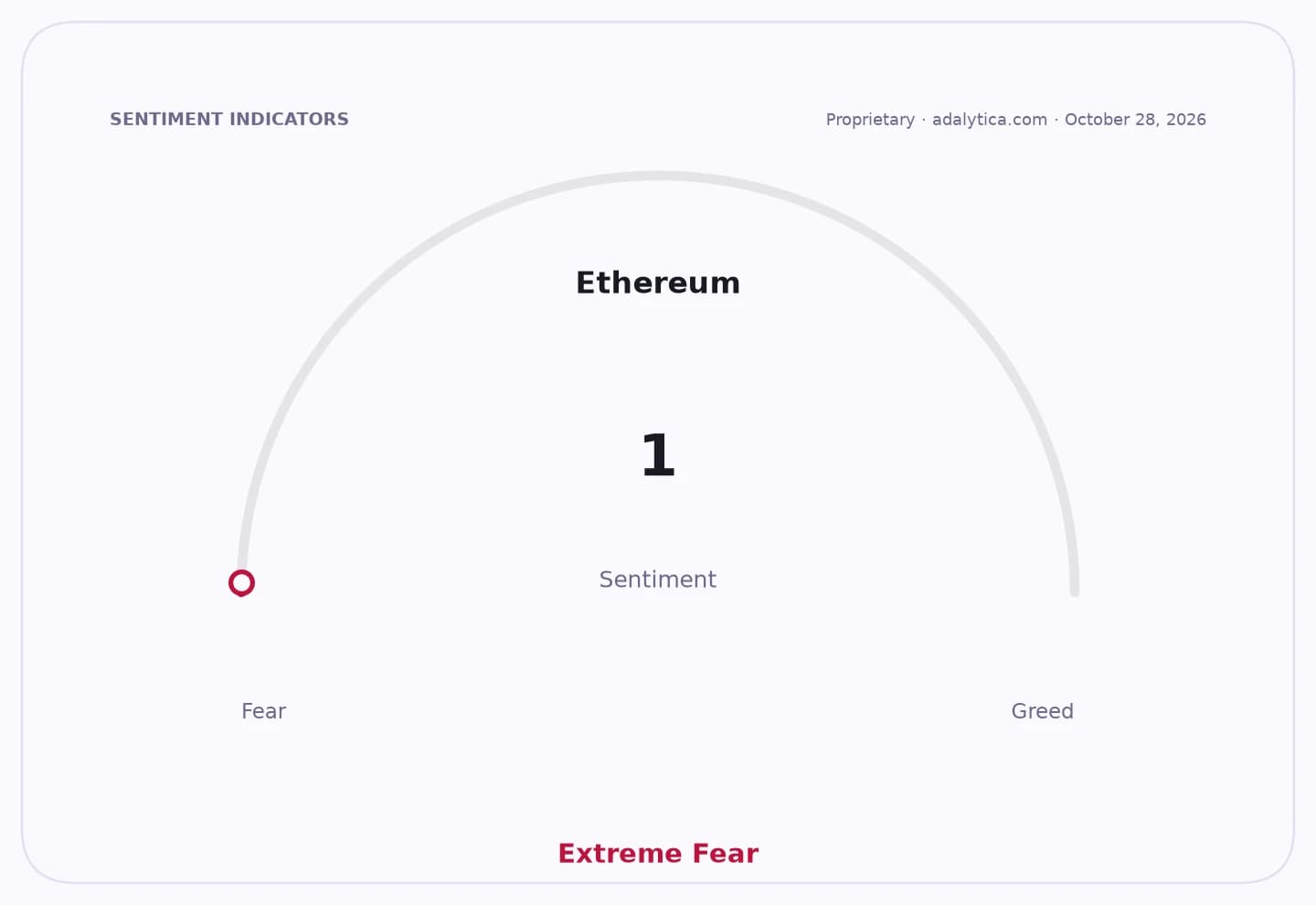
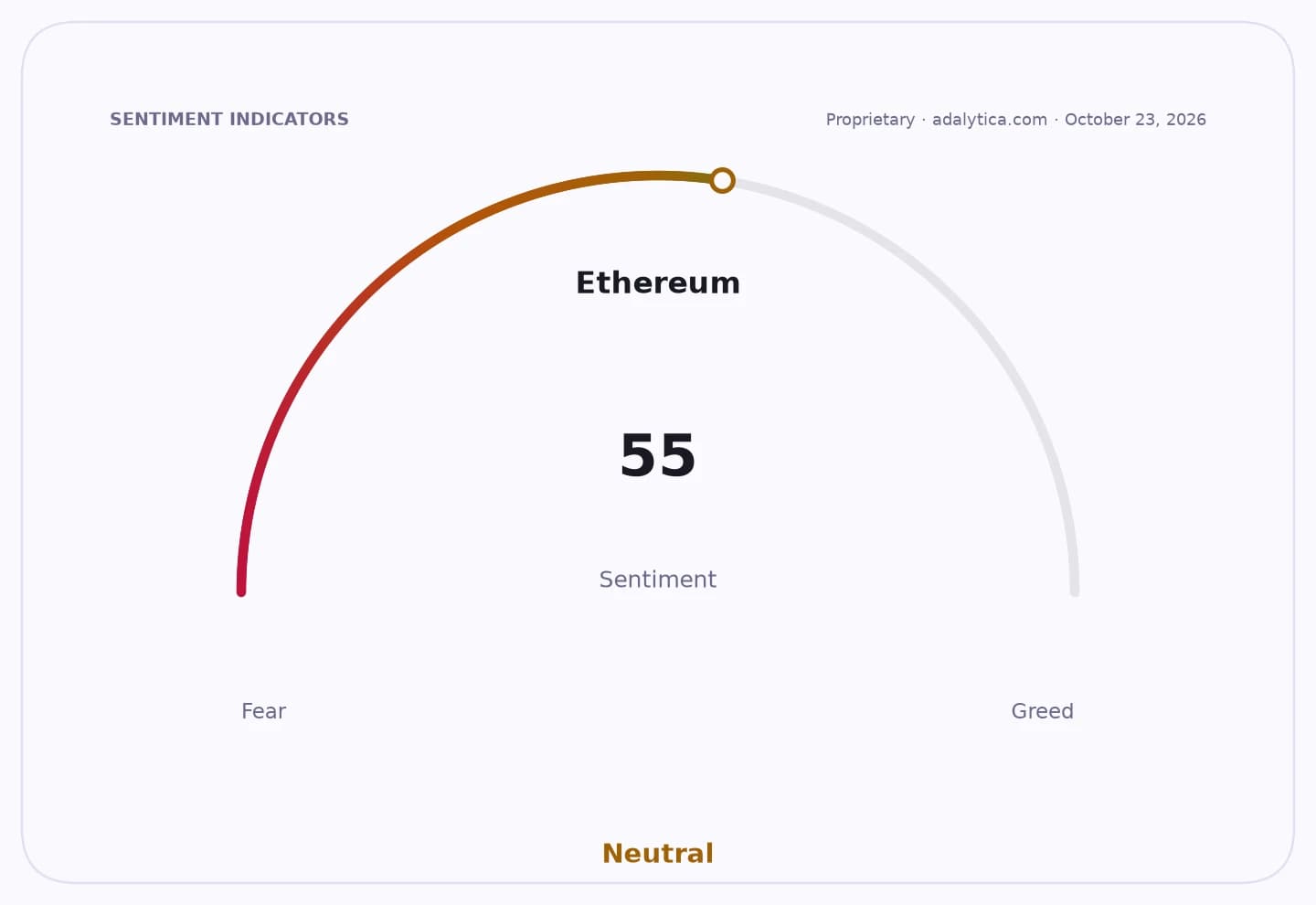
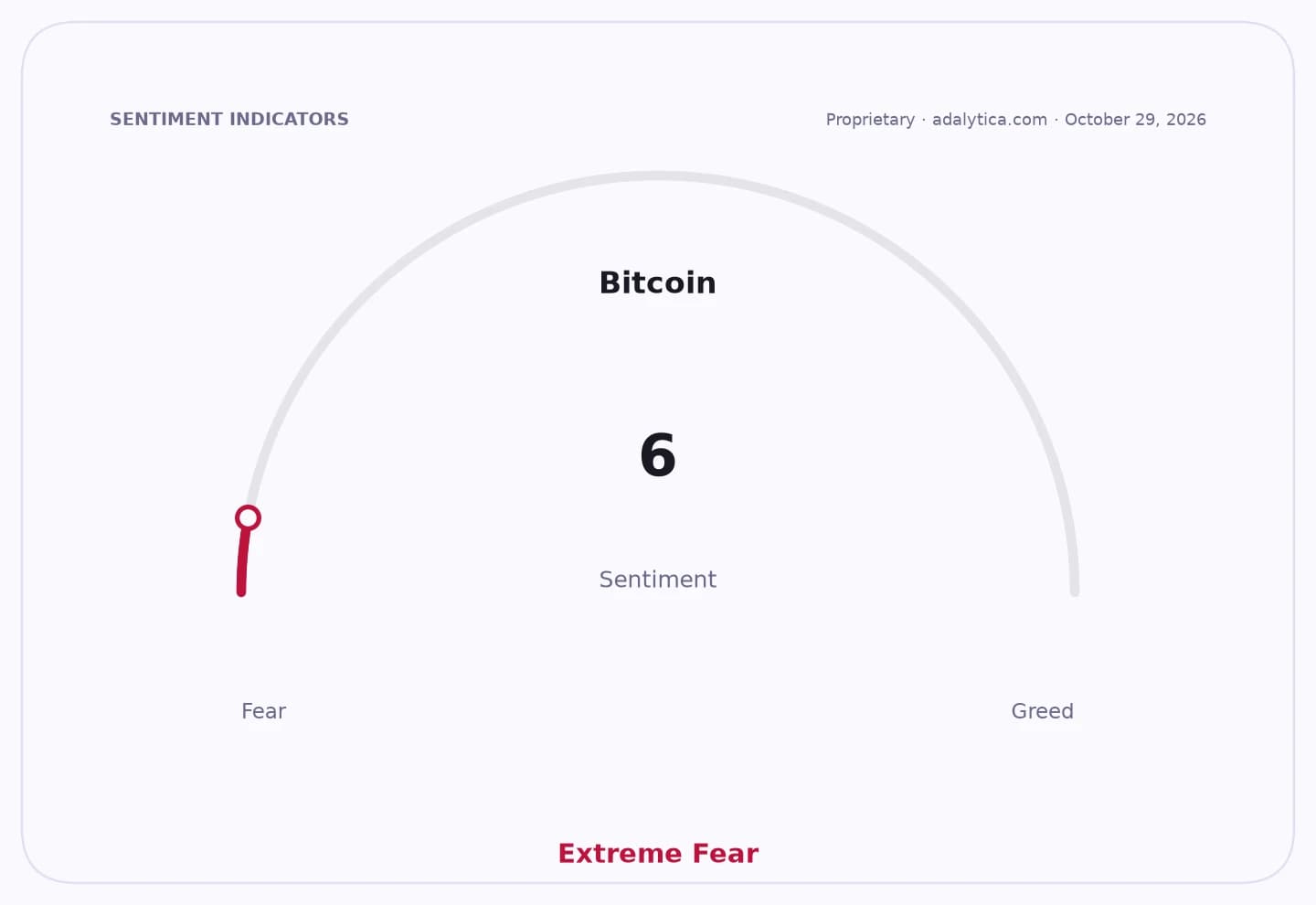
Economically, the move matters because Ethereum is acting as the market’s preferred high-beta read on crypto risk appetite. When ETH weakens this hard, capital tends to retreat from speculative assets more broadly. When it stabilizes, the bounce can be fast and violent because positioning is already washed out. Adalytica’s Ethereum Fear & Greed Index is at 4, or extreme fear, with awareness also at 4, while Bitcoin sits in extreme fear as well. That kind of backdrop often marks the late stage of a liquidation phase, not the beginning of one.
The data also show why bulls are reaching for the reversal trade. Ethereum has lost momentum in a market where $2.9 billion has reportedly flowed out of the chain, BitMine has paused purchases and shifted to buybacks, and a long-dormant holder sold 1,500 ETH after nine years. Those are not the kind of signals that attract fresh dip-buying from the crowd. But they do raise the odds that the marginal seller is getting exhausted, which is the real catalyst traders care about in a technical washout.
Ethereum — 30-day sentimentadalytica.com
Explore this data interactively — full history, time series and cross-market comparisons.
There is also a broader fundamental tension here that investors should not miss. Near-term uncertainty around security risks and delays to the Glamsterdam upgrade is weighing on confidence, yet Ethereum’s long-term investment case remains tied to the expansion of stablecoins and on-chain settlement. If the market is discounting execution risk while ignoring the scale of the stablecoin opportunity, that creates an opening for investors willing to buy when consensus is still defensive.
For traders, the key level is simple: hold above the low-$2,300 area and Ethereum can stage the kind of snapback van de Poppe is targeting; lose it decisively and the next leg down could force more systematic selling. For longer-term investors, this is less about calling the exact bottom and more about recognizing that extreme fear, heavy outflows and technical support tests often produce the best entries in assets with durable network effects. The market is underestimating how quickly sentiment can reverse once the selling pressure clears.
| Entity | Gains | Losses |
|---|---|---|
| ETH buyers below $2,300 | ▲Reversal setup | ▼Near-term volatility |
| ETH holders waiting for support | ▲Bounce potential | ▼Further downside risk |
| Short-term bears | ▲Profits if support breaks | ▼Squeeze if reversal holds |
| Bitcoin and altcoin traders | ▲Risk reset if crypto stabilizes | ▼Contagion if fear deepens |