Bitcoin’s slide below $82,000 is the dominant market event because it is draining risk appetite across crypto just as newer tokens are trying to sell investors on a more selective kind of upside.
Bitcoin Falls Below $82,000 as Crypto Sentiment Weakens
The world’s largest cryptocurrency was trading near $80,500 after a roughly 2.6% drop in the latest session, having hit an intraday high around $83,000. The move has pulled Ethereum toward $2,350 and Solana near $102, reinforcing a broader risk-off tone rather than a single-token problem. In conventional technical terms, Bitcoin is now sitting only slightly above its 50-day moving average around $81,395, with the relative strength index at 32.5, a level that suggests momentum has weakened after a sharp run-up earlier in the year.
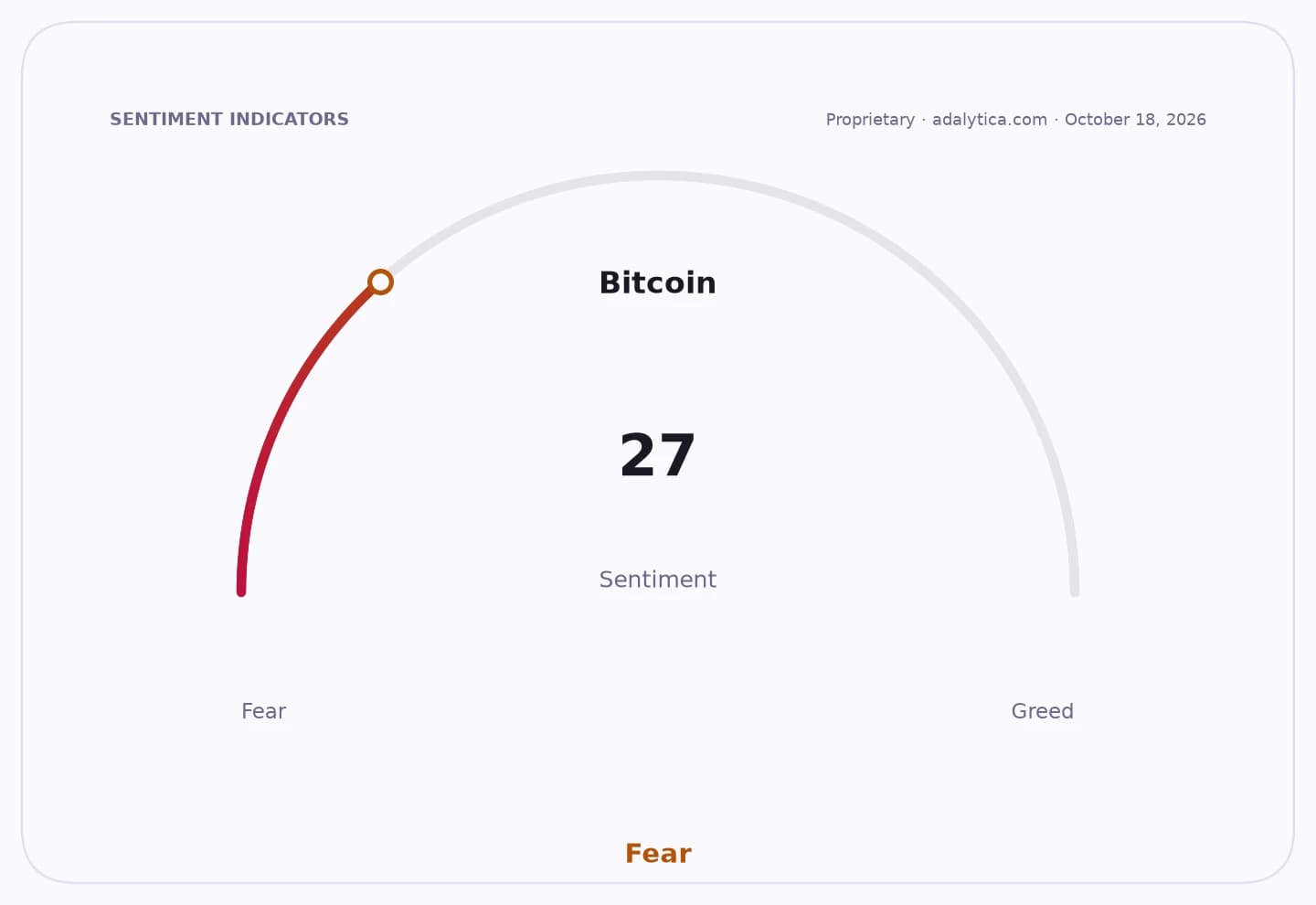
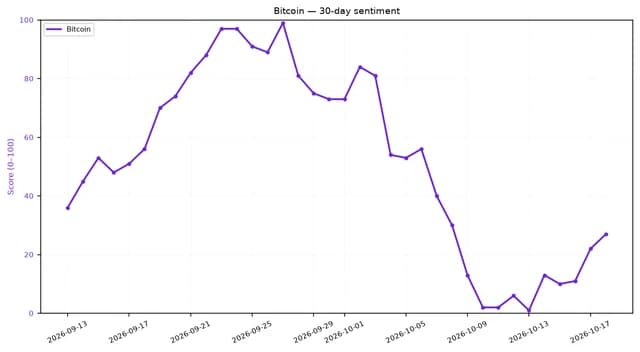
Sentiment IndicatorsⓘProprietary · adalytica.com · October 18, 2026
This is a snapshot — live sentiment, awareness and momentum for 130+ markets update continuously in the dashboard.Open AlphaPulse

That matters economically because Bitcoin’s market value is already above $1.6 trillion, leaving further gains dependent on very large incremental inflows from institutions, funds and corporate treasuries. In a market where investors are still digesting elevated Treasury yields and a Federal Reserve policy rate near 3.7%, crypto remains sensitive to liquidity conditions and risk tolerance. The latest retreat also fits the pattern of a market that is reducing exposure rather than abandoning digital assets outright.
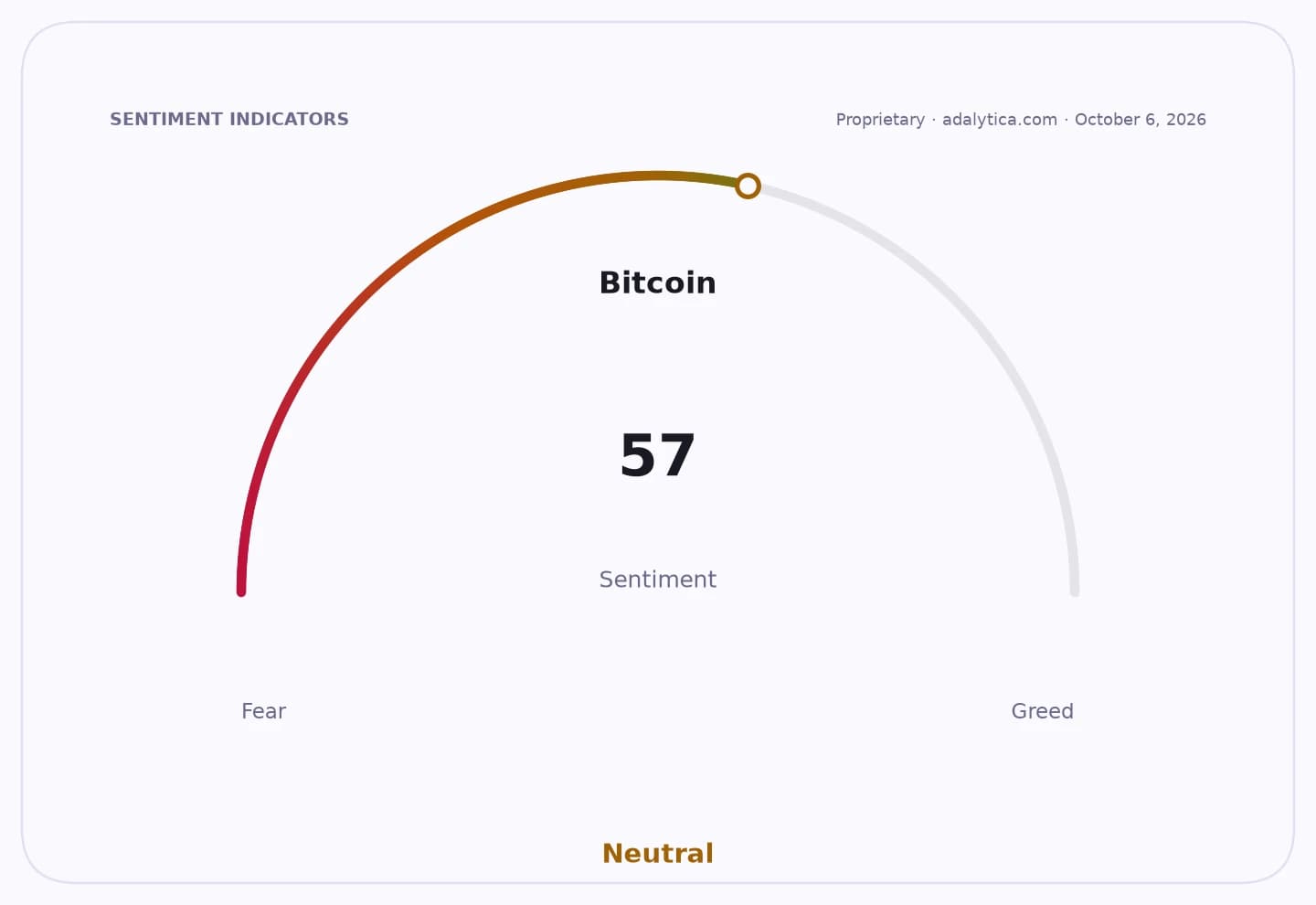
Adalytica’s Bitcoin Fear & Greed Index reflects that caution, with sentiment at 27, in fear territory, even after a small recovery from a deeper reading earlier in the week. The picture is more mixed on positioning in broader markets: the S&P 500 trade-signal snapshot remains neutral, while the U.S. dollar still shows elevated awareness even as its sentiment eases. For crypto investors, that combination usually means traders are demanding a clearer catalyst before committing fresh capital.
That is where Remittix enters the story. RTX is priced at $0.28 in presale, with a planned final tier at $0.46 and a scheduled public debut on Nov. 24. The company says it has completed more than 30 USDT and USDC transfers into compatible euro and dollar bank accounts, with testing across Ethereum, Base, Celo and Polygon through 1,000 invited holders. It also says its Markets product has passed $50 million in processed volume, while the wallet has topped 10,000 iOS downloads.
For investors, the appeal is not that Remittix is bigger than Bitcoin; it is that the upside math is very different. Bitcoin needs hundreds of billions of dollars in additional market value to double from here, while an early-stage payments token can reprice quickly if product usage turns into measurable revenue and exchange liquidity. The bull case is that working corridors, wallet adoption and a credible launch timeline could justify a premium to the presale price. The bear case is that presale enthusiasm can fade fast if adoption does not translate into sustained transaction flow after listing.
Remittix is also trying to connect itself to a large addressable market. International remittances exceed $850 billion a year, and the project argues that payments, trading and wallet activity could support recurring use rather than a one-off speculative trade. That is the narrative investors are being asked to weigh now: a mature crypto market struggling to rebuild momentum versus smaller tokens pitching an operating model before launch.
For now, Bitcoin remains the benchmark for the sector’s risk appetite. If it can reclaim $82,000 and then $85,000, liquidity should improve across altcoins. If not, presales and other early-stage tokens may continue to attract attention simply because they offer more visible percentage upside in a market that is still under pressure.
| Entity | Gains | Losses |
|---|---|---|
| Bitcoin | ▲Long-term institutional holders if support holds | ▼Momentum traders near-term |
| Ethereum and Solana | ▲A BTC rebound and improved liquidity | ▼Risk-off rotation |
| Remittix | ▲Early presale buyers if product traction continues | ▼Late entrants if adoption stalls |
| Crypto investors | ▲Selective upside opportunities | ▼Broad market sentiment under pressure |