Bitcoin’s latest advance is being driven by a familiar institutional gateway, while Remittix is trying to build a separate retail use case around actually moving money in and out of crypto.
Bitcoin ETF inflows and Remittix PayFi usage
That split matters because the market is no longer just trading Bitcoin as a speculative asset; it is also testing whether crypto can become a payments rail. US spot Bitcoin ETFs recorded aggregate net inflows on Oct. 1 and 2, reinforcing demand from investors using conventional brokerage accounts and helping keep BTC near $86,000. At the same time, Remittix is pitching a PayFi product that lets users send supported crypto and receive fiat into a bank account, a workflow aimed at contractors, remittance senders and other users who care more about settlement than price charts.
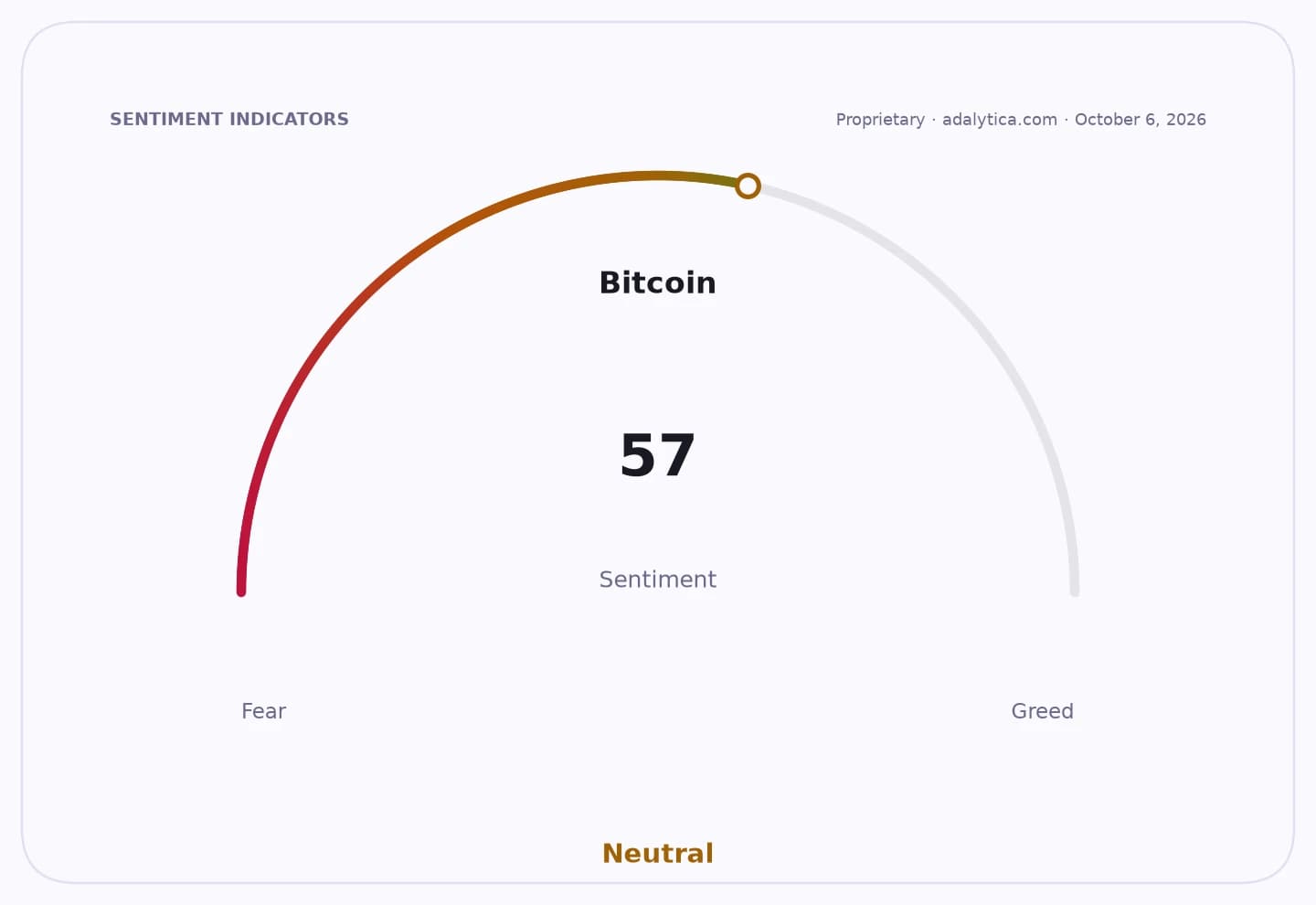
Sentiment IndicatorsⓘProprietary · adalytica.com · October 6, 2026
This is a snapshot — live sentiment, awareness and momentum for 130+ markets update continuously in the dashboard.Open AlphaPulse
For Bitcoin, ETF inflows remain the most important proof point of institutional adoption. They give pension funds, advisers and other allocators a regulated wrapper around BTC exposure, and positive flow streaks tend to support both liquidity and sentiment. That has been visible in the tape: BTC traded around $86,000, with technicals still constructive even after recent volatility, including a price above the 50-day moving average and a neutral reading on the Bitcoin Fear & Greed gauge from Adalytica.com. The broader message is that institutions continue to treat Bitcoin as a portfolio asset rather than a niche trade.
Remittix is trying to address a different market entirely. Its pitch is not store-of-value exposure but utility — crypto in, fiat out — which is a more direct challenge to traditional remittance and payment services. The company says 1,000 invited testers from more than 40,000 presale participants have been given access to early EUR and USD options, while its iOS wallet has surpassed 10,000 downloads and its Markets platform has handled more than $50 million in cumulative volume. It has also said more than $32 million has been raised toward a $36 million cap ahead of a planned Nov. 24 token debut, with RTX priced at a final presale tier of $0.46.
The economic significance is straightforward: if Bitcoin ETFs continue to absorb capital, they can keep institutional demand propping up the asset class even in a volatile tape. If Remittix can convert presale interest into repeated PayFi usage, it could tap into a far larger transaction market. The World Bank estimated global remittance flows at $856 billion in 2024, underscoring how quickly even a small share of recurring transfers could become meaningful if a crypto-to-bank workflow proves reliable and sticky.
Investors should view the two stories as complementary rather than competing. Bitcoin ETF flows speak to balance-sheet demand and macro allocators; Remittix speaks to whether crypto can earn a place in daily payments. The bull case for RTX is that wallet usage, Markets activity and PayFi transfers reinforce each other before the token launches. The bear case is that presale momentum does not always translate into recurring product demand, especially in a sector where execution risk is high and user adoption can be shallow.
For BTC, the near-term catalyst remains whether ETF inflows can stay positive enough to offset profit-taking and macro swings. For Remittix, the key question is whether the first 1,000 testers create evidence of repeat use rather than one-off curiosity. If both trends hold, crypto could be building a two-track demand story: institutional capital through ETFs and retail utility through payments.
| Entity | Gains | Losses |
|---|---|---|
| Bitcoin ETF buyers | ▲Regulated BTC exposure | ▼Missed upside if inflows slow |
| Bitcoin | ▲Institutional demand | ▼Sellers in volatile pullbacks |
| Remittix | ▲Early product validation | ▼Presale-only speculation |
| Traditional remittance firms | ▲— | ▼Potential fee pressure if PayFi scales |