Bitcoin slid to $77,678 after Jerome Powell’s remarks from Jackson Hole revived doubts about how quickly the Federal Reserve can ease policy, underscoring how tightly the world’s largest cryptocurrency is still tied to US rates and dollar liquidity.
Bitcoin Falls to $77,678 After Powell Remarks

The drop matters because Bitcoin’s latest rally has been built less on crypto-native fundamentals than on expectations for easier financial conditions. When investors hear a less dovish Fed, they typically reassess leverage, duration risk and speculative positioning across markets — and Bitcoin, despite its reputation as a hedge, remains one of the first assets to absorb that shift.
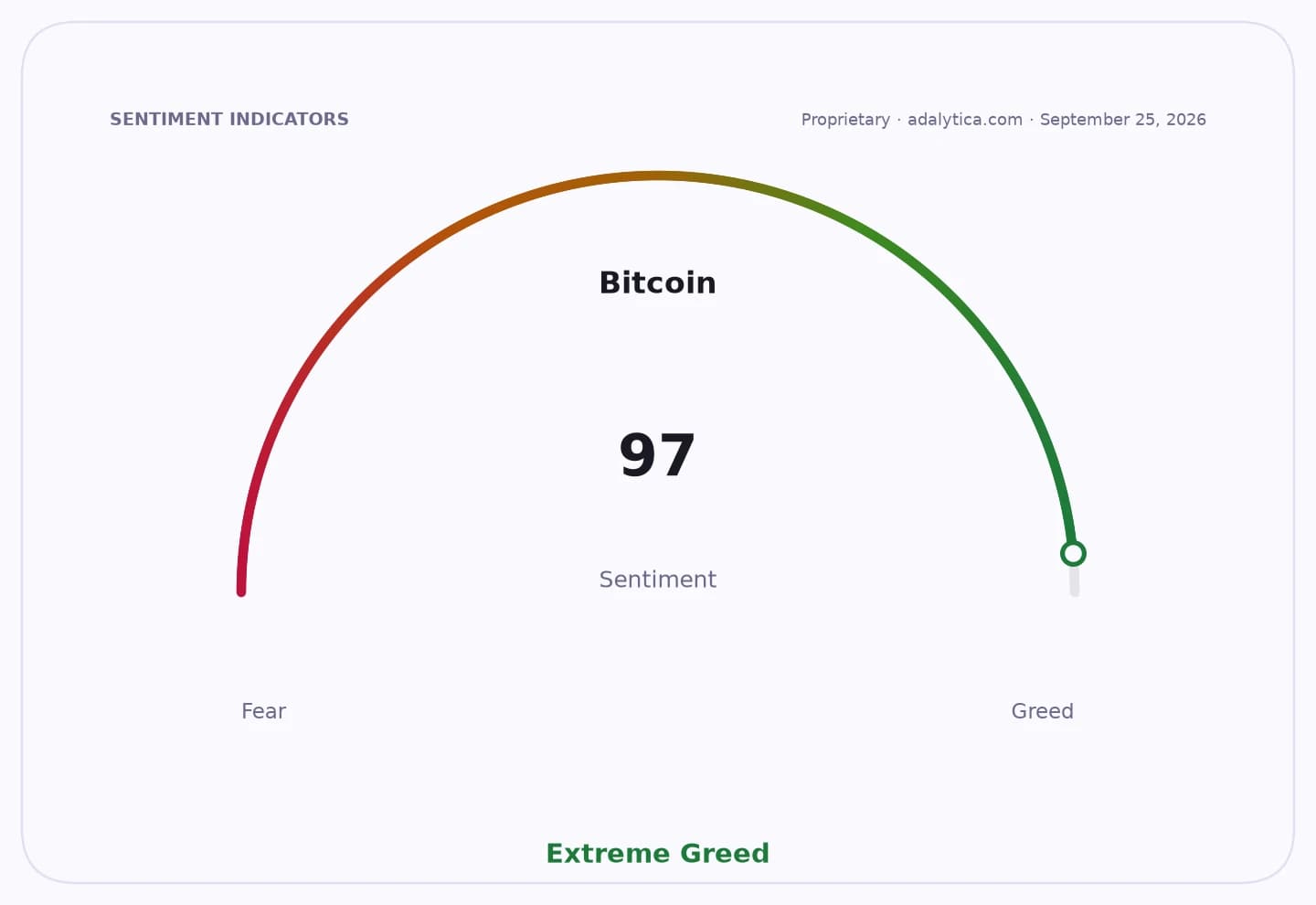
Sentiment IndicatorsⓘProprietary · adalytica.com · August 30, 2026
This is a snapshot — live sentiment, awareness and momentum for 130+ markets update continuously in the dashboard.Open AlphaPulse
That sensitivity was visible in the latest trading data. Bitcoin had been grinding higher into the meeting, with the price recently above $80,000, but the pullback to the high-$70,000s came alongside an uptick in volatility and signs of froth. Standard technical indicators show the token still well above both its 50-day and 200-day moving averages, yet the relative strength index has been elevated, pointing to an overheated near-term market rather than a clean breakout.
The macro backdrop is not offering much support for a prolonged risk-on move. The Fed funds rate is still at 3.63%, and the 10-year Treasury yield is around 4.67%, levels that keep real-money investors focused on carry and cash alternatives rather than unhedged speculation. Even with expectations that the policy rate may edge slightly lower next month, Jackson Hole reminded markets that the Fed is not in a hurry to slash borrowing costs.
That leaves Bitcoin trading on the same playbook that has driven much of this year’s move: expectations of easier money, a softer dollar and persistent demand from institutions seeking exposure through exchange-traded products and crypto equities. Adalytica’s Bitcoin fear-and-greed gauge remains in “Extreme Greed,” a sign that sentiment has not fully reset even after the pullback.
For investors, the key question is whether Bitcoin can hold support above the mid-$70,000s. A sustained break lower would likely feed into Coinbase, MicroStrategy and crypto miners, all of which have shown high beta to the token’s direction. COIN has already come off recent highs, while MSTR and mining stocks remain vulnerable to any unwind in leverage or a further cooling of speculative appetite.
The bullish case is that Bitcoin’s structural bid from ETFs, corporate treasury holders and broader de-dollarization themes keeps dips shallow. The bearish case is that the asset is still behaving like a liquidity proxy, and if the Fed pushes back against rate-cut expectations, the latest surge may prove another crowded rally vulnerable to profit-taking.
For now, Jackson Hole has not changed Bitcoin’s longer-term adoption story, but it has reinforced a more immediate one: macro policy remains the dominant driver of crypto prices, and investors are still paying up — or down — for every change in the Fed’s tone.
| Entity | Gains | Losses |
|---|---|---|
| Cash and Treasury buyers | ▲Higher yield appeal | ▼Less urgency to chase Bitcoin |
| Bitcoin longs | ▲Structural ETF demand | ▼Jackson Hole-driven profit taking |
| Coinbase and miners | ▲Trading volume spikes | ▼Lower token prices, weaker beta |
| Fed hawks | ▲Credibility on inflation fight | ▼Easier financial conditions delayed |