Bitcoin’s ability to hold above $76,000 after the Federal Reserve lifted rates to 4% is the key market signal, because it shows the largest cryptocurrency is no longer trading purely as a liquidity proxy but as a macro asset with its own institutional bid.
Bitcoin Holds $76,000 After Fed Rate Hike

The Fed’s first rate increase since July 2023 added another layer of pressure to a market already digesting tighter financial conditions, yet BTC finished the latest session around $81,400 after briefly dipping to the mid-$76,000s earlier in the week. That resilience matters more than the absolute price move: the cryptocurrency is stabilizing near a level that traders now see as important support, while technical indicators have improved from oversold readings earlier in the month. Bitcoin’s relative strength index rebounded to the mid-50s from 29.5 two days earlier, and price is back above both its 50-day and 200-day moving averages.
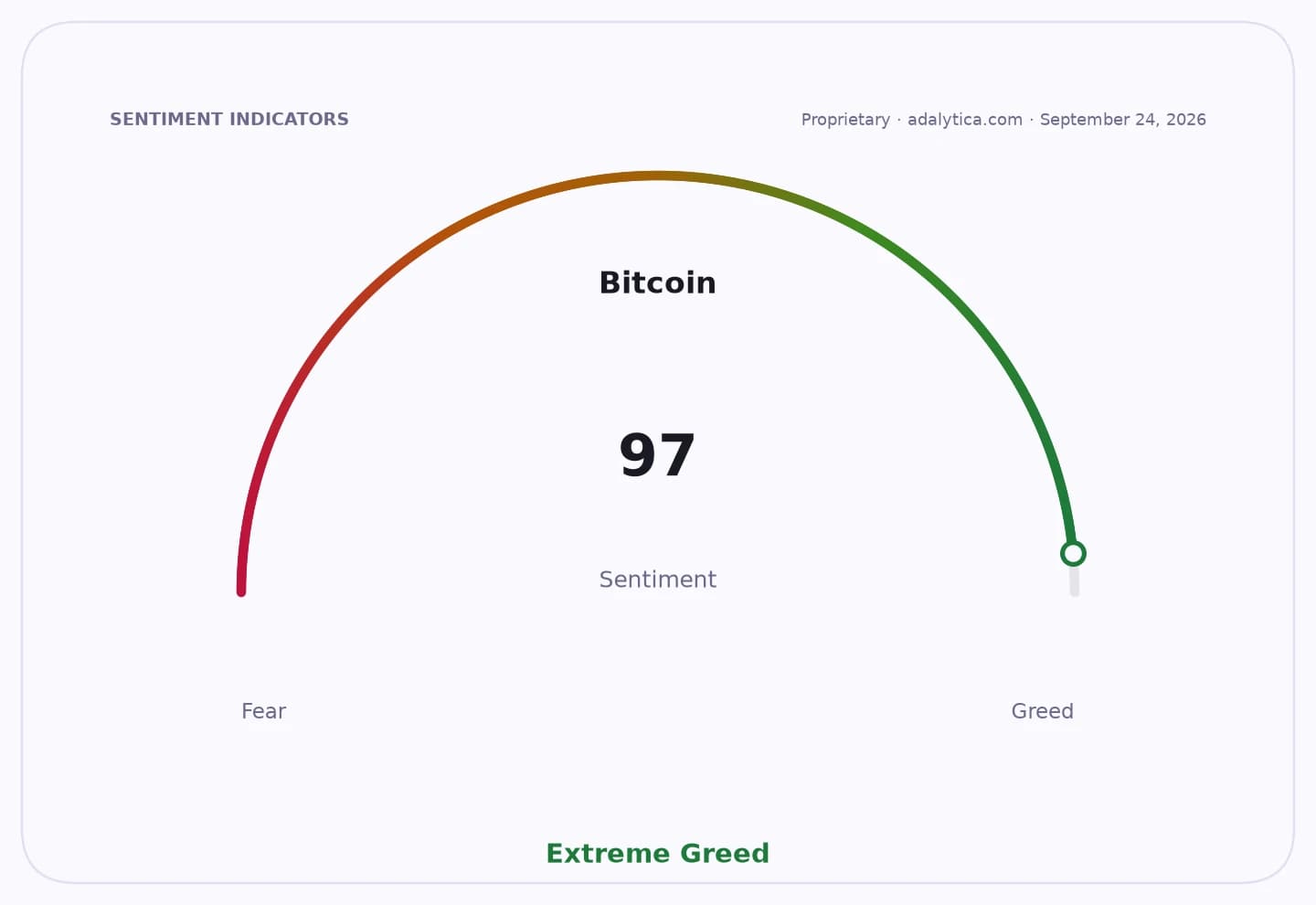
Sentiment IndicatorsⓘProprietary · adalytica.com · September 19, 2026
This is a snapshot — live sentiment, awareness and momentum for 130+ markets update continuously in the dashboard.Open AlphaPulse

The macro backdrop is not especially friendly. U.S. two-year yields were around 4.7% and the 10-year near 5%, reflecting a market that still expects restrictive policy to persist. Yet Bitcoin’s response suggests investors are increasingly treating it as a balance-sheet and monetary hedge rather than a simple risk-on trade. That is reinforced by the Adalytica Bitcoin Fear & Greed Index, which sits at neutral, even as awareness has climbed — a sign the market is watching Bitcoin closely but not showing speculative euphoria.
Institutional demand is helping absorb the pressure. Strive said it bought 469 BTC at an average of $77,954 a coin, lifting its treasury to exactly 25,000 BTC after a rapid buying streak that included 1,800 BTC at the end of August and 1,375 the following week. For corporate buyers, the message is clear: weakness around the mid-$70,000s is being treated as an accumulation zone, not a capitulation signal.
That matters for investors because Bitcoin’s path from here may be less about a blowoff rally and more about a grinding re-rating. Bernstein’s $125,000 year-end target and Standard Chartered’s $100,000 view still imply upside, but the market is no longer pricing in an easy straight line higher. The bigger question is whether fresh rate hikes and a stronger dollar can keep capping upside, or whether recurring treasury buying, ETF demand and scarcity dynamics continue to tighten supply. The dollar’s own trade signals, which show extreme greed and very low awareness, underscore how crowded the greenback trade has become — another reason alternative stores of value remain in focus.
For listed crypto equities, the rebound in Bitcoin is constructive but not yet decisive. Strategy and Coinbase both remain highly sensitive to Bitcoin direction, while miners and crypto infrastructure names still face a tougher funding and regulatory backdrop. A sustained break above $78,000 would improve the near-term chart for BTC and likely extend the relief rally across the sector; failure to hold the low-$76,000 area would revive the argument that higher rates are still compressing crypto valuations.
The broader narrative is that Bitcoin is entering this tightening cycle with a stronger institutional base than in past selloffs. That does not eliminate volatility, but it does change the market structure: buyers are showing up earlier, treasuries are adding exposure, and investors searching for alternatives to cash and duration are increasingly using Bitcoin as the first stop rather than the last resort.
| Entity | Gains | Losses |
|---|---|---|
| Bitcoin bulls | ▲Support above $76,000 | ▼Rate-hike pressure |
| Strive | ▲Treasury accumulation | ▼Cash deployment risk |
| Alternative assets | ▲Demand from rate-sensitive investors | ▼Strong-dollar liquidity |
| Crypto bears | ▲Lower entry volatility | ▼Institutional buying support |