Bitcoin’s latest push toward $79,000 is being supported less by its biggest holders and more by slower exchange selling, a combination that leaves the rally vulnerable if demand fades further.
Bitcoin exchange inflows fall as rally nears $79,000
Since early August, Bitcoin has risen about 25% from roughly $63,000 to near $79,000, while mid-sized coin deposits to Binance, Coinbase Pro and Coinbase Prime fell an estimated 15.5%. The drop in exchange inflows matters because fewer coins entering trading venues usually means less immediate sellable supply, helping to cushion price gains. But the more important signal is what is missing: whales have not been accumulating materially, and the bulk of the advance appears to have come from retail and institutional buyers rather than the deepest-pocketed holders.
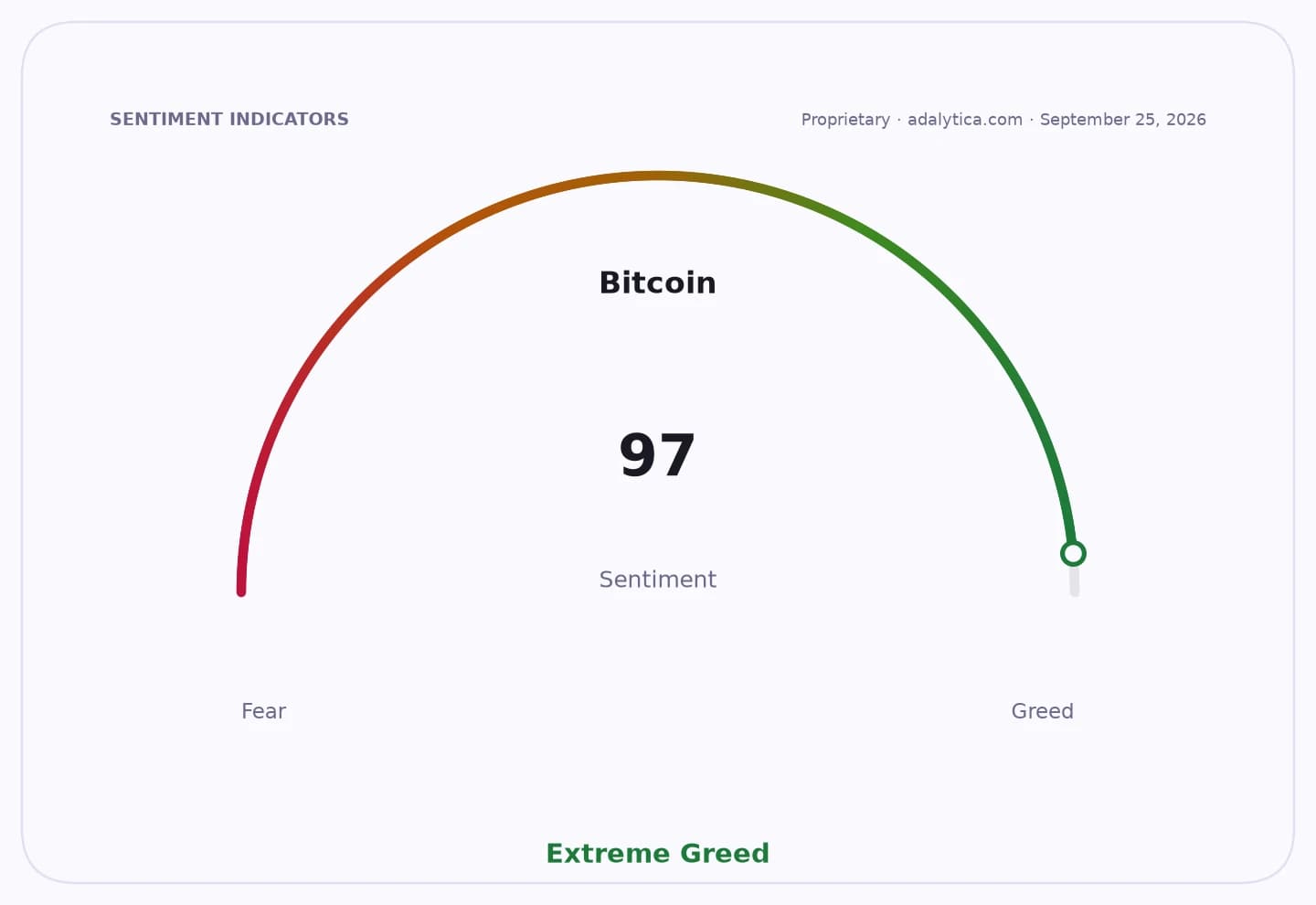
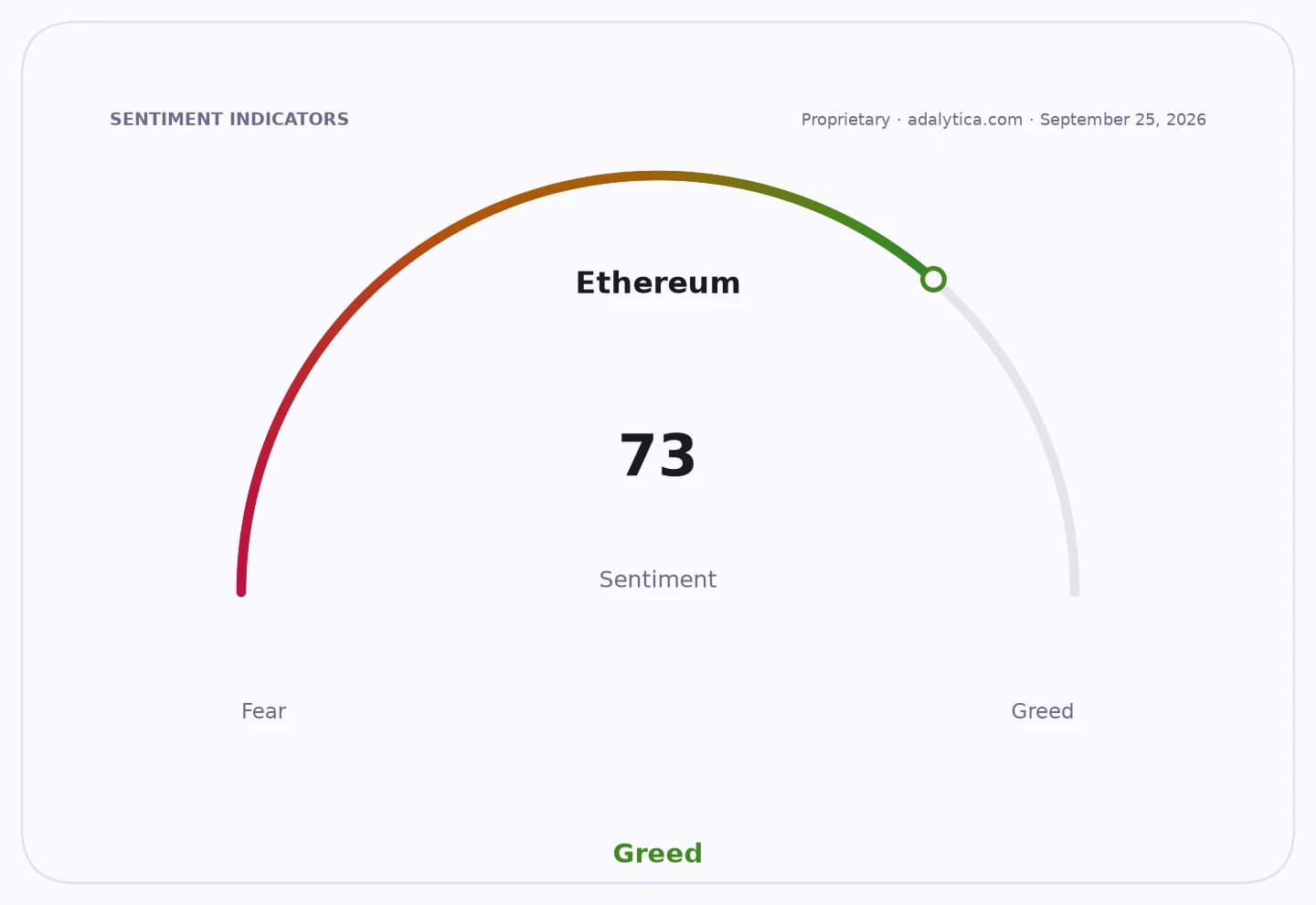
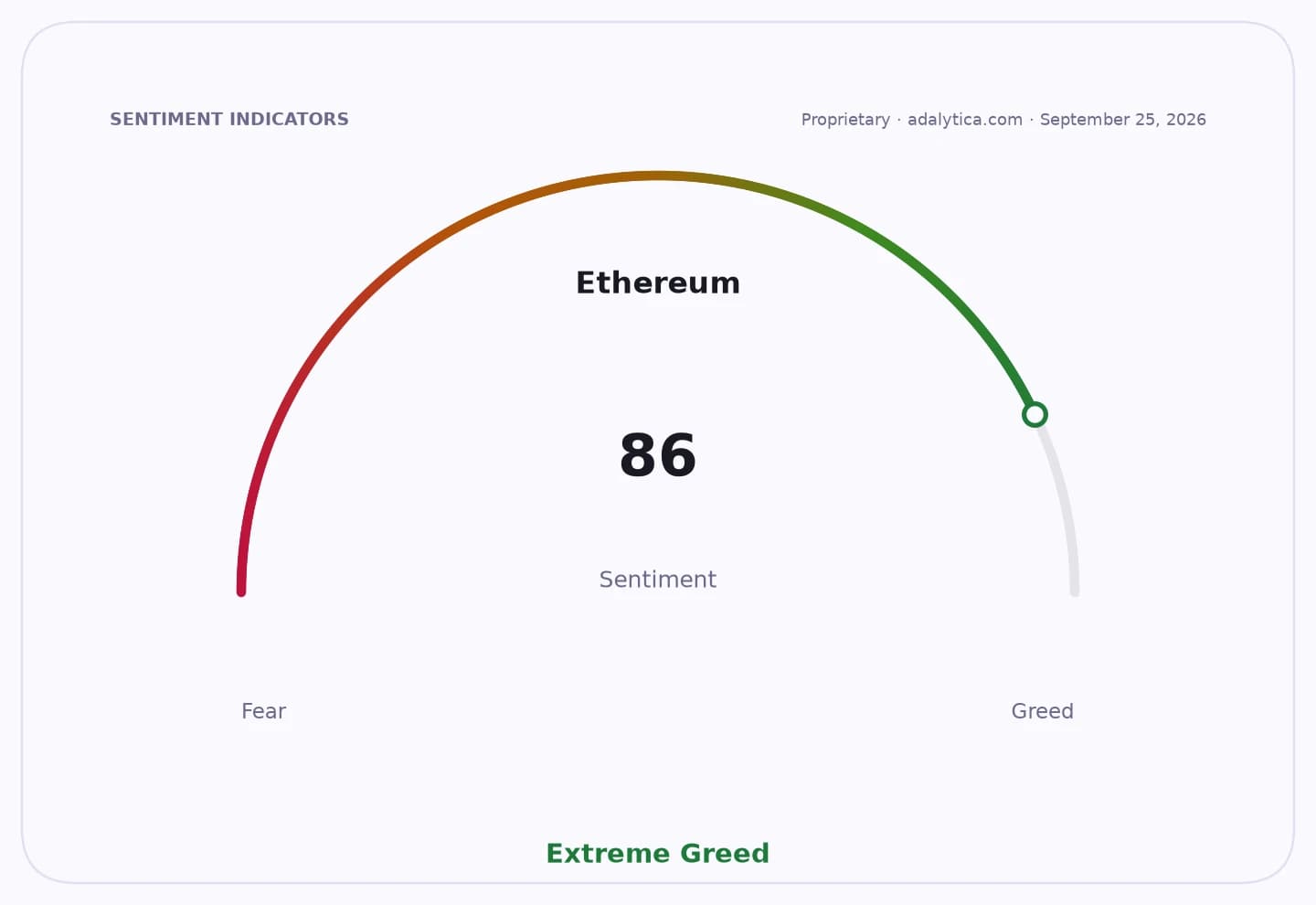
Sentiment IndicatorsⓘProprietary · adalytica.com · September 13, 2026
This is a snapshot — live sentiment, awareness and momentum for 130+ markets update continuously in the dashboard.Open AlphaPulse
Binance saw the sharpest shift, with mid-sized coins sent to the platform down almost 30% from 4,390 BTC to 3,080 BTC, a swing of 1,160 BTC versus other venues. That suggests investors who normally use exchanges to distribute supply are choosing to hold through the rally instead. It is supportive for spot prices in the near term, but it is not the same as strong new demand. Without fresh whale buying, Bitcoin’s move higher has less conviction behind it and more dependence on continued inflows from marginal buyers.
That distinction matters for both the market structure and investor positioning. Reduced exchange deposits can slow selling pressure, but Bitcoin still needs persistent demand to extend gains beyond the recent highs. Exchange-traded funds are already showing signs of hesitation near that level, with investors pulling $46.65 million on Sept. 8 and another $120.24 million the next day, trimming net assets from $99.52 billion to $99.33 billion. September ETF flows remain positive overall at $622.7 million, but the recent outflows suggest buyers are becoming more selective as price approaches resistance.
Technical indicators point to a market that is still constructive but increasingly fragile. Bitcoin is trading above its 50-day and 200-day moving averages, while the 14-day RSI is around 46.5, consistent with a cooling trend rather than an overextended one. At the same time, the Adalytica Bitcoin Fear & Greed Index shows extreme fear, underscoring how quickly sentiment has deteriorated even as price stabilizes near $77,000. That combination often leaves room for a rebound, but also signals that investors are waiting for a catalyst rather than aggressively chasing strength.
The macro backdrop remains part of the story. Softer inflation or a looser policy outlook could revive accumulation and bring whales back into the market, while firmer inflation would likely prolong caution across risk assets. For now, the key question for investors is whether Bitcoin can turn lower exchange inflows into a durable supply squeeze, or whether the rally stalls without the participation of its largest holders.
| Entity | Gains | Losses |
|---|---|---|
| Bitcoin bulls | ▲Easier supply conditions | ▼Lack of whale confirmation |
| Mid-sized holders | ▲Higher prices, less selling pressure | ▼Missed upside if rally extends |
| Binance/Coinbase exchange sellers | ▲Potentially better exit levels | ▼Lower deposit-driven volume |
| ETF buyers | ▲Recent rally exposure | ▼Near-term outflow risk near resistance |