Bitcoin’s year-to-date drop has been painful, but it is still far milder than the historic 70% to 80% collapses that used to define crypto winters, a sign that institutional ownership is softening the downside even as risk appetite cools.
Bitcoin holds low $80,000s as institutional ownership grows
That matters because Bitcoin is no longer trading as a largely retail, reflexive momentum asset. More of the float is now held through exchange-traded funds and corporate treasury vehicles, creating steadier two-way flows that can absorb selling and reduce the kind of liquidity vacuum that triggered previous drawdowns. The market is still volatile, but the structure of demand has changed.
Bitcoin was last quoted at $82,314.33 on Oct. 8, down from a peak near $121,000 this year, or roughly 32% below that high. The decline is sharp enough to squeeze leveraged traders and damage confidence, but not so deep as to force the kind of broad capitulation that once wiped out most speculative positioning. Bitcoin’s 50-day moving average at $80,541.03 remains above its 200-day average at $71,801.33, a sign the broader uptrend has not fully broken, even if momentum has weakened. The RSI reading of 39.4 points to subdued demand rather than panic.
The relative resilience also shows up in the way related assets have traded. Coinbase Global, the main listed proxy for crypto activity in the US, has held at $178.45, well above its 200-day average of $184.49 but below shorter-term levels, suggesting investors expect trading and custody revenue to remain supported even as spot prices soften. MicroStrategy, the largest corporate Bitcoin holder, is down to $153.37, but it too remains far above the lows seen earlier in the year, underscoring that treasury exposure has become a mainstream part of the market rather than an isolated bet.
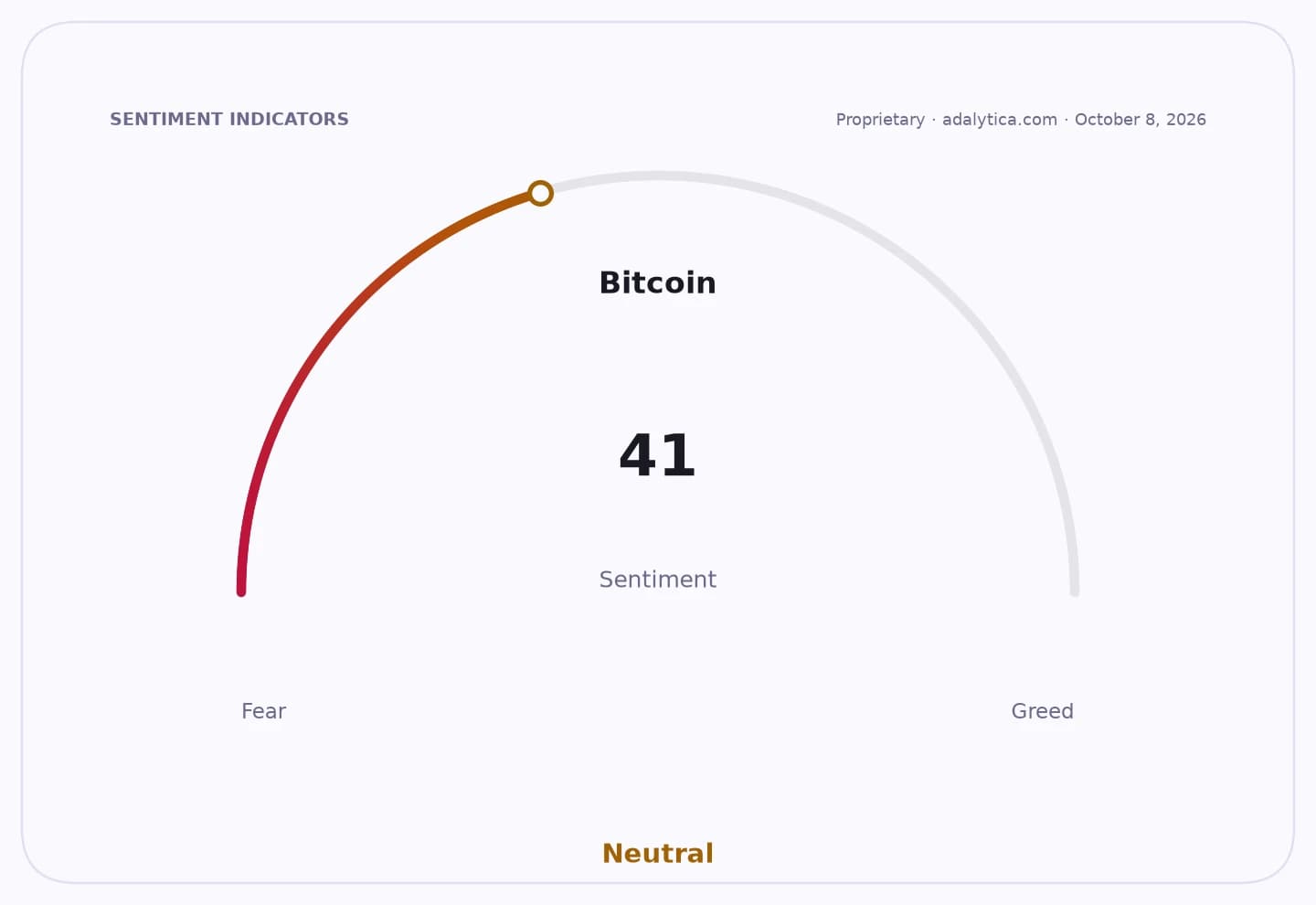
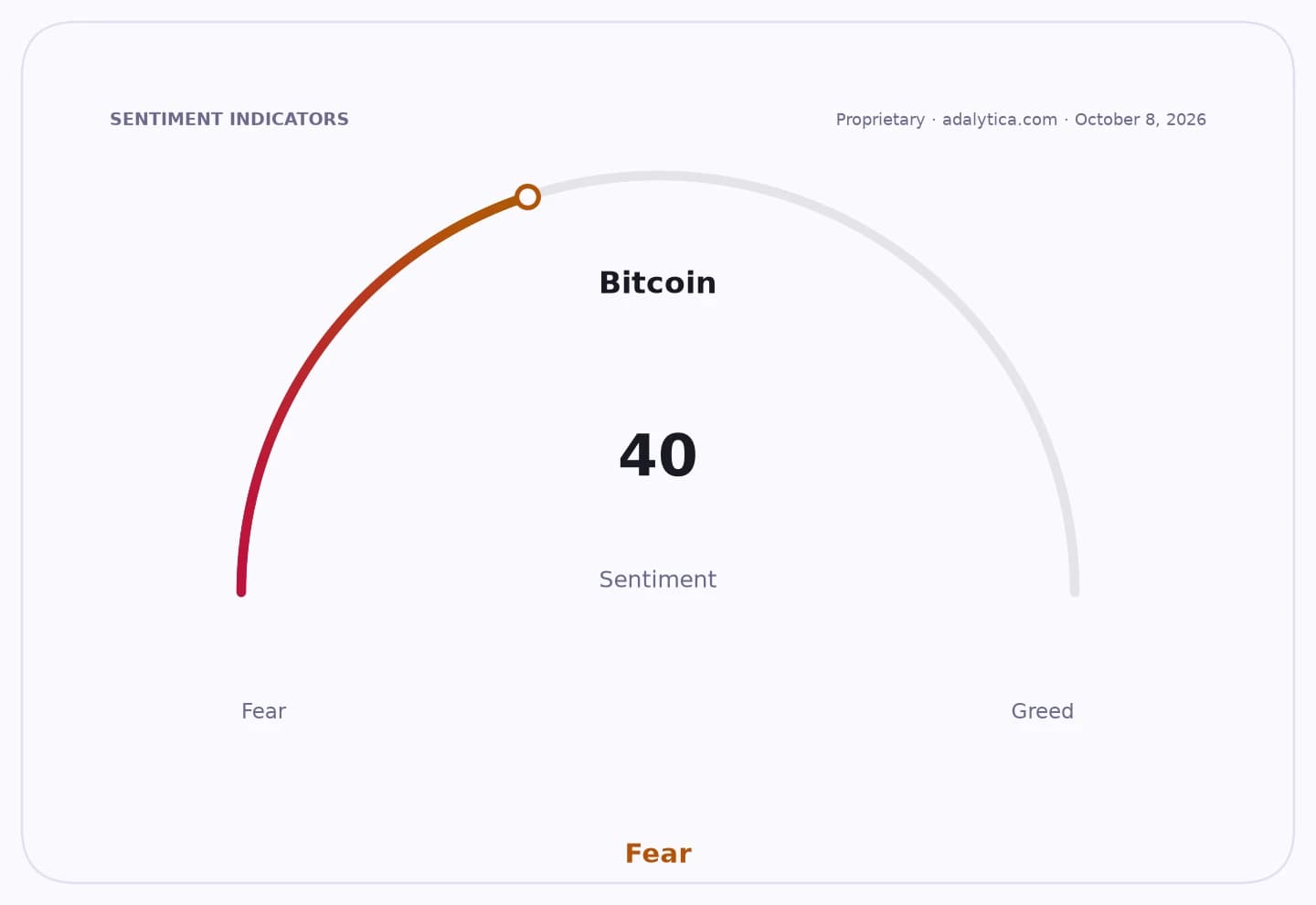
The difference from prior cycles is partly mechanical. Bitcoin now sits inside more traditional market channels, where institutional allocators rebalance rather than liquidate everything at once. That can intensify short-term swings — especially when sentiment sours, as reflected in Adalytica’s Bitcoin Fear & Greed snapshot, which shows “Neutral” sentiment but “Extreme Fear” awareness — yet it also reduces the odds of a disorderly collapse. Market participants are more likely to hedge, trim or rotate than to abandon the asset altogether.
The macro backdrop still matters. A stronger dollar and weaker risk appetite can pressure Bitcoin just as they do other speculative assets, and the move from $85,557 on Oct. 6 to $82,314 two days later suggests buyers remain cautious. But the presence of larger, more price-insensitive holders has changed the distribution of losses. Instead of the classic crypto bust — where falling prices triggered forced selling, which then triggered more forced selling — the market now has buffers.
For investors, that cuts both ways. The new structure likely reduces tail risk, making Bitcoin less prone to 80% drawdowns. But it may also cap the speed of recoveries, because institutional demand tends to be incremental rather than euphoric. The bull case is that this is evidence of maturation: Bitcoin is becoming a macro asset with deeper liquidity and broader ownership. The bear case is that the asset still behaves like a high-beta trade, only with more sophisticated holders who are slower to panic but just as quick to take profits.
What to watch next is whether Bitcoin can hold the low-$80,000 area and reclaim its 50-day average. If it does, the market will likely treat the current slide as a correction inside a still-intact cycle rather than the start of a full-blown crash. If it cannot, the question will shift from why Bitcoin fell only 32% to whether institutionalization has merely made the next downturn slower, not smaller.
| Entity | Gains | Losses |
|---|---|---|
| ETF and institutional holders | ▲Deeper liquidity | ▼Less explosive upside |
| Bitcoin bears | ▲Softer, tradable pullback | ▼No capitulation washout |
| Coinbase and crypto brokers | ▲Steady trading volumes | ▼Lower spot prices |
| MicroStrategy longs | ▲Treasury thesis intact | ▼Mark-to-market losses |