Bitcoin is still being treated as a speculative asset by Wall Street’s biggest traditional bank, even as JPMorgan Asset Management says the token could deliver 10% annualized returns over the next decade and outpace stocks, bonds and gold.
Bitcoin: JPMorgan Sees 10% Annualized Return

That’s the real market signal here: Bitcoin is increasingly being modeled as a legitimate long-duration asset, but not yet as something conservative portfolios should own. For investors, that divide matters because it keeps the trade polarized between believers chasing asymmetric upside and institutions that are happy to acknowledge the asset’s potential without formally endorsing it. In other words, Bitcoin is gaining credibility without losing its volatility discount.
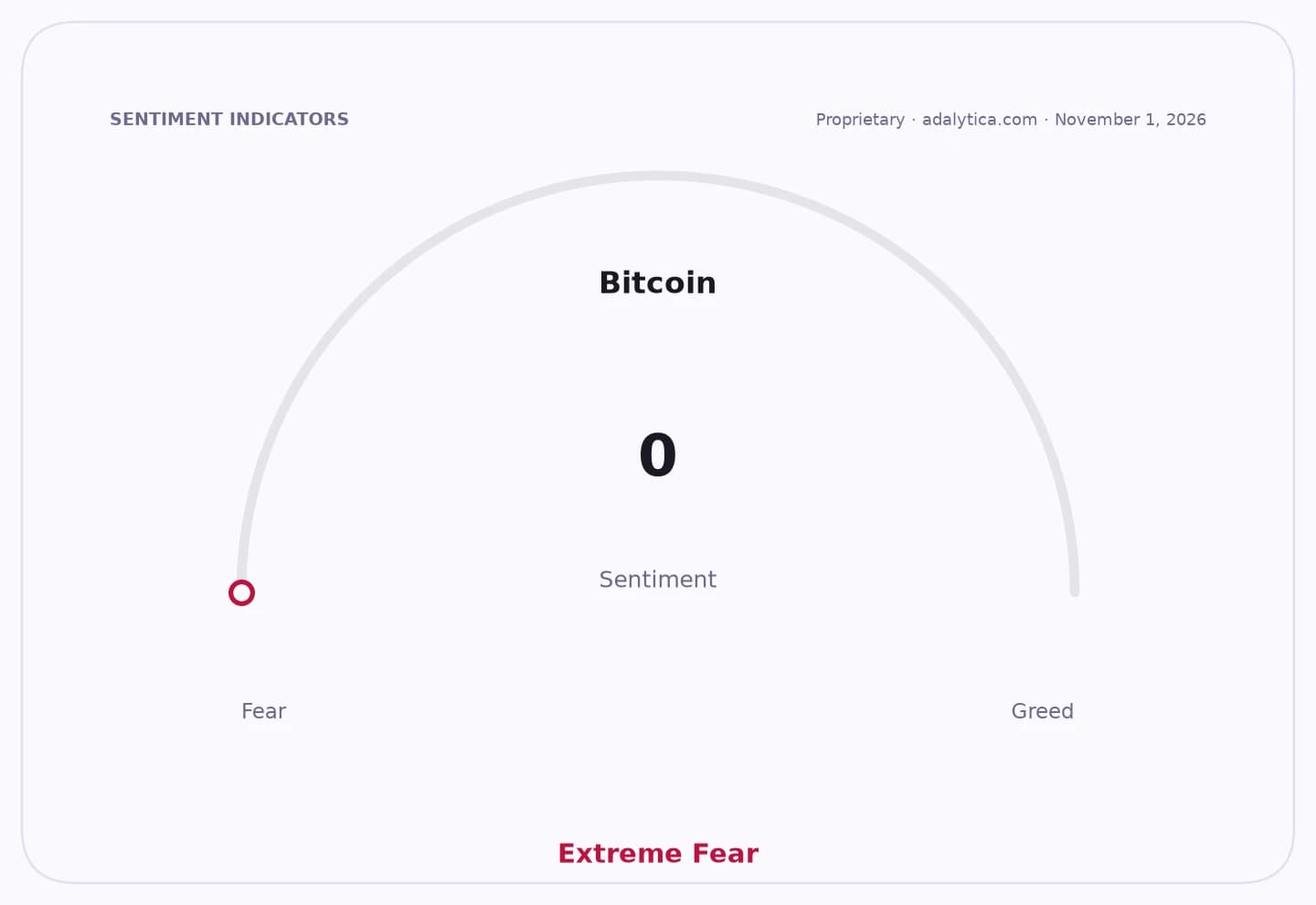
Sentiment Indicators

JPMorgan’s forecast puts Bitcoin ahead of its own return assumptions for large-cap equities at 7.5%, gold at 5.5% and Treasury bonds at 5.6%. Yet the bank’s analysts still stopped short of recommending a purchase, saying they do not see a case for Bitcoin as a portfolio diversifier because of unstable correlations. They described it as a speculative asset and a hedge against monetary easing, which is exactly the kind of framing that keeps capital flowing toward Bitcoin in risk-on periods while limiting how much serious allocators can own through a strategic mandate.
That tension is why the report matters economically. A 10% annualized return assumption from a firm of JPMorgan’s scale helps normalize Bitcoin in the same discussion as broad asset classes, not just crypto-native speculation. But the caution attached to that view is just as important: mainstream capital is still wrestling with whether Bitcoin behaves more like digital gold, a liquidity-sensitive macro trade, or a high-beta risk asset that can be cut in half when sentiment sours.
The price action underscores the problem. Bitcoin was trading around $77,856 on the latest data after a bruising slide from its record highs, and technical readings show the token still below its 50-day moving average, with RSI in the low 30s and MACD below its signal line — all signs that momentum remains fragile after the selloff. Coinbase and MicroStrategy have also been dragged lower, a reminder that Bitcoin’s pullbacks still ripple through the listed equity channel that many investors use for exposure.
That’s where the investable narrative gets more interesting. JPMorgan’s view does not make Bitcoin a clean buy recommendation, but it does strengthen the case for selective exposure to the ecosystem that monetizes turnover, custody, volatility and trading activity. Coinbase remains the most direct public-market proxy for crypto participation, while MicroStrategy remains a leveraged Bitcoin play with all the upside — and all the balance-sheet risk — that come with it. If Bitcoin stabilizes and resumes a long-term uptrend, those are the names that can move fastest.
The deeper takeaway is that Bitcoin is crossing a threshold from taboo asset to tolerated macro allocation. JPMorgan’s own shift matters because it reflects a broader institutional reality: banks can now frame Bitcoin as investable even while still refusing to call it prudent. For investors, that creates an asymmetric setup. The market may not be ready to treat Bitcoin like a core holding, but it is increasingly willing to treat it like a permanent part of the portfolio conversation. That is how assets become institutionalized before they become consensus.
| Entity | Gains | Losses |
|---|---|---|
| Bitcoin bulls | ▲Validation from JPMorgan | ▼Continued volatility |
| JPMorgan | ▲Broader crypto credibility | ▼No clear buy call |
| Coinbase | ▲Trading-volume upside | ▼Crypto selloffs |
| MicroStrategy | ▲Leveraged Bitcoin exposure | ▼Balance-sheet risk |