Bitcoin’s push into corporate treasury management is gaining credibility as executives move beyond speculation and treat the token as a reserve asset, even as its recent price weakness underscores the risks of making it a balance-sheet staple.
Bitcoin Treasury Adoption Grows Among Public Companies

That shift matters because it reframes bitcoin from a trading vehicle into a potential store of value for companies facing the slow erosion of idle cash. Alan Helm, co-founder of Bitcoin for Corporations, said institutional discussions have moved from theory to allocation, with banks and asset managers now exploring products for pensions, endowments and other large pools of capital. His argument is simple: cash is losing purchasing power, and companies with excess liquidity should consider a small bitcoin allocation rather than watch reserves shrink in real terms.
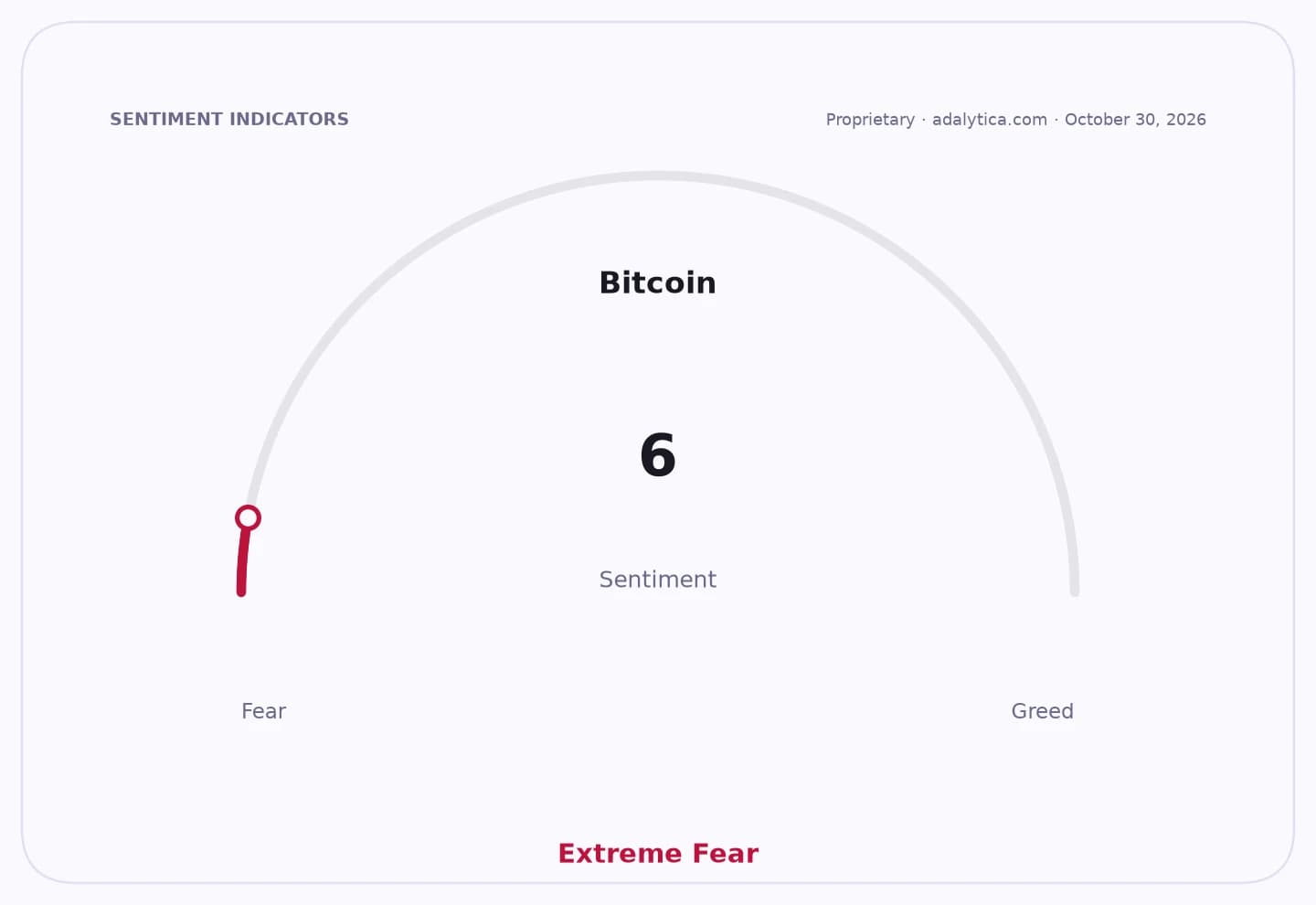
Sentiment Indicators
Helm’s preferred entry point is modest — 1% to 2% of cash holdings — a far cry from Strategy’s more aggressive accumulation model. That caution reflects the other side of the trade. Bitcoin remains volatile, and the token was trading around $77,143 on Oct. 31, down from $81,272 a month earlier and well below its 50-day moving average of about $81,890. Its relative strength index near 32 suggests the asset has been oversold, but not yet stabilized. For treasury chiefs, that means bitcoin remains an asymmetric bet: potentially protective against monetary debasement over a full cycle, but still vulnerable to sharp drawdowns in the short run.
The macro backdrop helps explain why the pitch is getting traction. The U.S. 10-year Treasury yield was near 5%, while the federal funds rate sat around 3.75%, leaving cash instruments far more attractive than they were during the zero-rate era. Yet Helm’s “melting ice cube” framing reflects a longer horizon: if inflation persists and rates eventually fall, corporate cash that looked safe today may deliver weak real returns tomorrow. That is why bitcoin is being marketed less as a speculative asset and more as a strategic reserve with optionality.
For investors, the implication is that corporate adoption could broaden bitcoin’s demand base beyond retail traders and short-term momentum flows. Spot bitcoin ETFs have already given institutions an easier entry point, and Helm argued those products could gradually normalize smaller treasury allocations. That could support a structural floor for demand, especially if more companies follow the early adopters rather than sit entirely in cash.
The second-order effect may be consolidation. Helm said roughly 173 public companies now hold bitcoin, but only a handful have built sophisticated digital credit businesses. Smaller treasury firms, he warned, risk dilution as valuations fall toward or below the value of their coin holdings, making capital raises harder. That dynamic favors scale players such as Strategy, Strive and Metaplanet, while weaker names may be forced into mergers or liquidation-like outcomes if bitcoin weakens or funding costs rise.
Security and market plumbing remain a counterweight to the adoption thesis. The latest headlines around exchange thefts and repeated concerns over crypto market infrastructure remind investors that institutional acceptance does not eliminate operational risk. At the same time, global capital markets are becoming more interconnected, and Helm pointed to 24/7 trading, tokenized assets and AI-driven infrastructure as catalysts that could eventually make bitcoin a standard corporate asset rather than a niche treasury experiment.
For now, the bull case is that bitcoin gradually becomes a small but persistent allocation in corporate balance sheets. The bear case is that volatility, dilution and security concerns keep most treasurers on the sidelines. The market will likely decide between those paths as ETF flows, corporate purchases and the next major drawdown test whether bitcoin can graduate from a speculative reserve to a mainstream one.
| Entity | Gains | Losses |
|---|---|---|
| Bitcoin adopters | ▲Portfolio diversification | ▼Cash yield certainty |
| Strategy and peers | ▲Treasury premium | ▼Smaller rivals |
| Bitcoin ETFs | ▲More inflows | ▼Pure cash holdings |
| Conservative treasurers | ▲Liquidity optionality | ▼Short-term mark-to-market risk |