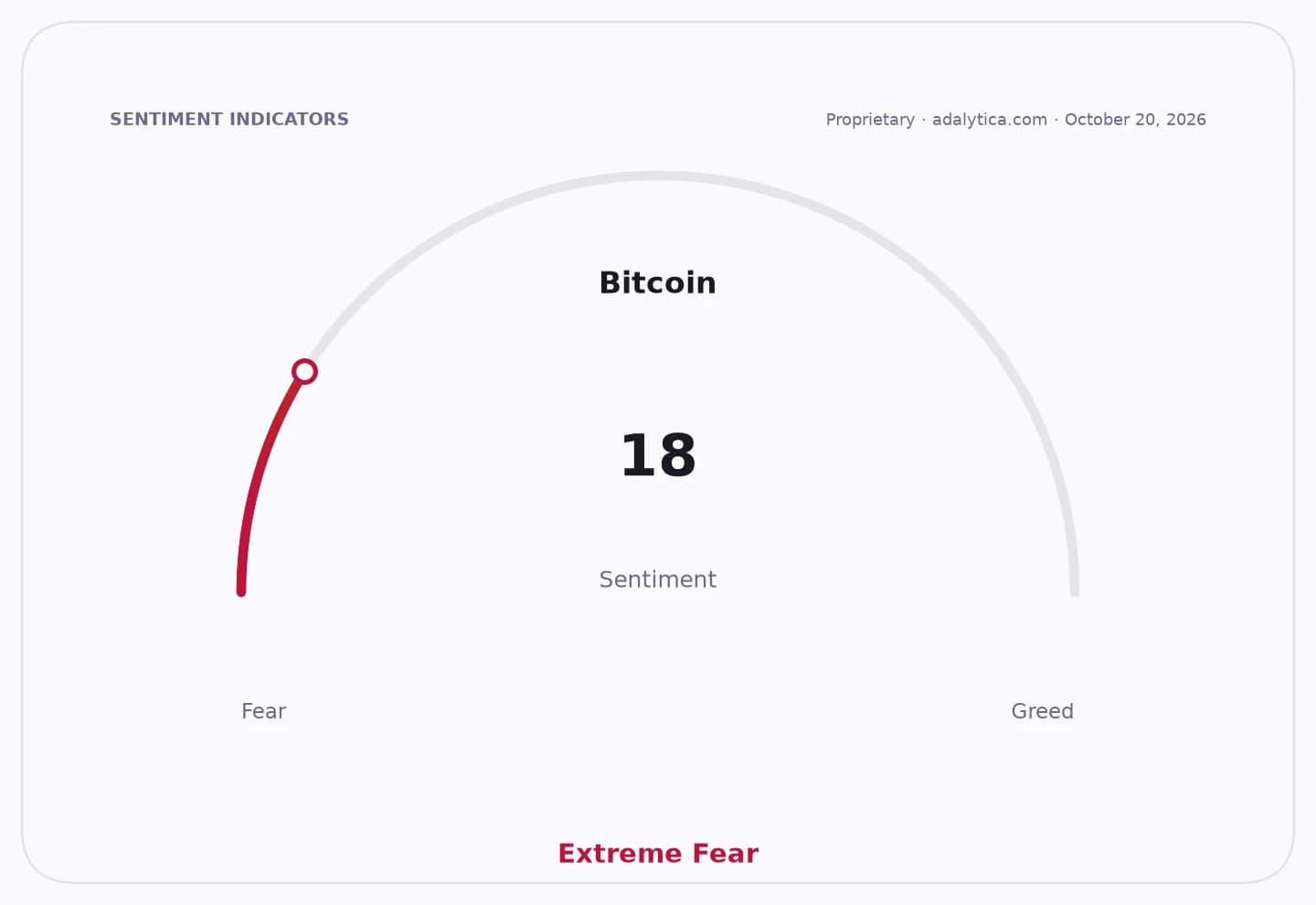
Bitcoin slipped below $82,000 on Oct. 23, reminding investors that even the world’s largest cryptocurrency is still trading like a high-beta risk asset when markets get nervous.
Bitcoin Falls Below $82,000 as Risk Assets Slide
Bitcoin
That matters because Bitcoin’s recent rally had raised hopes it could march back toward $100,000, but the latest downdraft shows how fragile that path remains when stocks wobble, oil spikes and the Federal Reserve’s message turns less supportive. In other words, this is not just a crypto story — it is a test of whether investors still want to own speculative assets when the broader market is under pressure.
Sentiment Indicators
Bitcoin fell as much as 2.4% in Asian trading to around $81,700 and briefly broke below $81,000, erasing the prior session’s gains. Ether, Solana and XRP also slid, underscoring that the selling was broad rather than idiosyncratic. The move came as Asian equities and U.S. futures weakened, while Brent crude pushed above $110 a barrel on escalating Middle East tensions, adding another layer of macro anxiety.
For long-term investors, the key takeaway is that Bitcoin’s trading behavior still mirrors the market’s appetite for risk. When technology shares are under pressure and bond markets are jittery, crypto often gets sold first. That is especially important for holders of crypto-linked stocks such as Coinbase and MicroStrategy, which tend to amplify every move in Bitcoin itself.
Yet the longer-term picture is not entirely bearish. Spot Bitcoin ETFs in the U.S. have pulled in $1.1 billion in net inflows so far this week, reversing $909.6 million of outflows in the previous two weeks. That suggests institutions are still willing to buy dips, even if they are doing so cautiously. Options positioning also shows downside protection is in demand, with the biggest open interest in expiring Bitcoin puts clustered around the $78,000 strike on Deribit.
Bitcoin is still about one-third below its all-time high above $126,000 from a year ago, so the asset is not exactly priced for perfection. But the combination of ETF inflows, a still-expanding institutional investor base and Bitcoin’s resilience through earlier macro shocks argues against writing it off. For patient investors, the better question is not whether this week’s pullback is uncomfortable — it is — but whether Bitcoin is still building a durable role in diversified portfolios over the next three to five years.
That answer will depend on whether macro pressure eases and whether the ETF bid continues to absorb volatility. For now, Bitcoin remains worth watching, not because the recent drop is unusual, but because the market is once again showing you what kind of asset it really is.
| Entity | Gains | Losses |
|---|---|---|
| Bitcoin ETF buyers | ▲Lower entry prices | ▼Near-term paper losses |
| Short-term crypto traders | ▲Volatility opportunities | ▼Momentum reversal |
| Coinbase and MicroStrategy holders | ▲Long-term upside if Bitcoin rebounds | ▼Bigger swings in share prices |
| Risk assets broadly | ▲Potential reset after froth | ▼Selling pressure and weaker sentiment |