JPMorgan Asset Management has just given Bitcoin a rare gift from Wall Street’s mainstream: a place at the top of its long-term return table, and investors should care because that says as much about the changing financial system as it does about crypto’s price.
Bitcoin tops JPMorgan long-term return assumptions

In its 2027 Long-Term Capital Market Assumptions, published Oct. 19, the firm modeled Bitcoin with a 10% annualized compound return over the next 10 to 15 years, ahead of 7.5% for U.S. large-cap stocks, 8.2% for U.S. REITs and 5.5% for gold. That matters because these assumptions shape how institutions think about portfolio construction, even when they do not translate into an explicit buy recommendation.
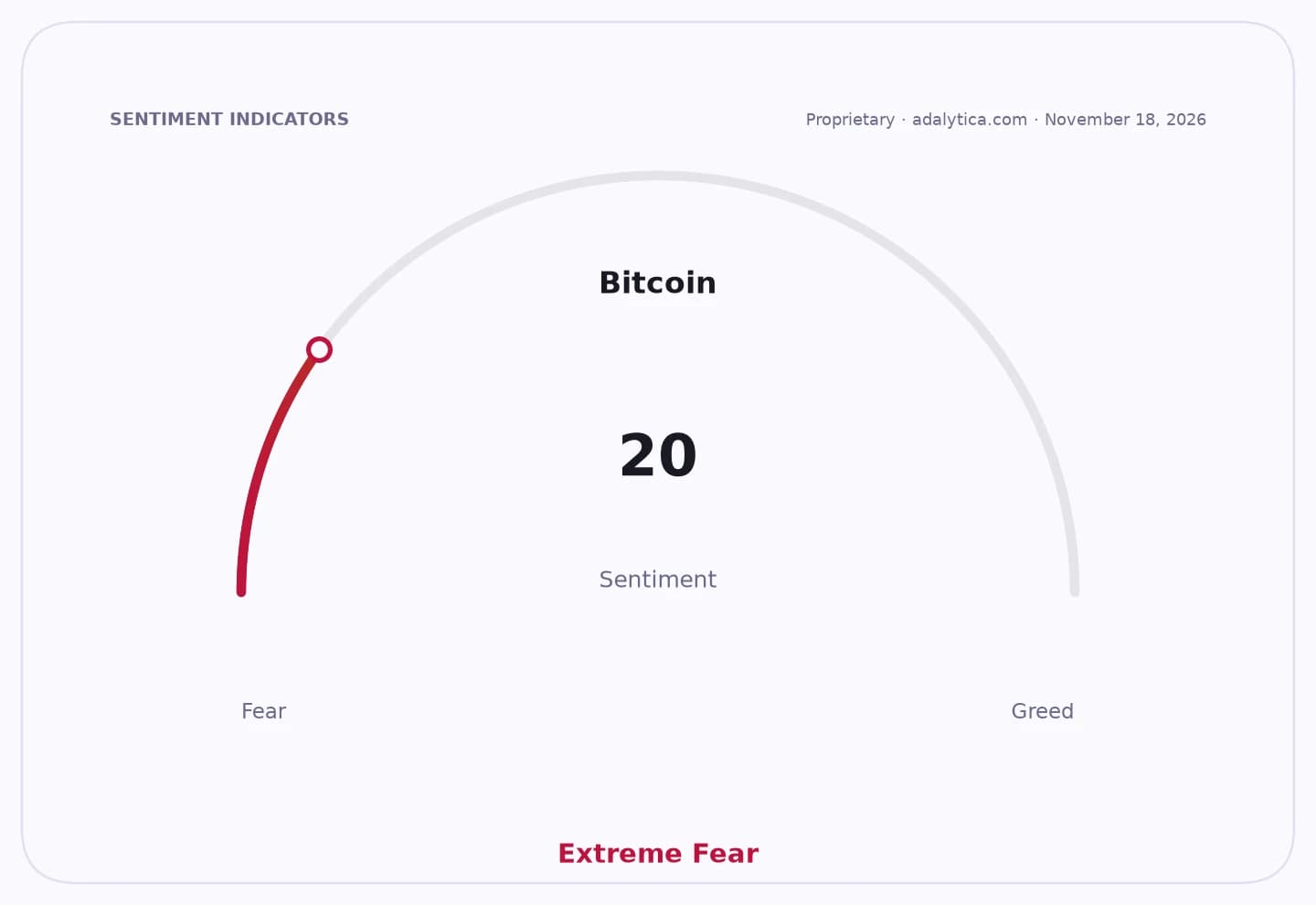
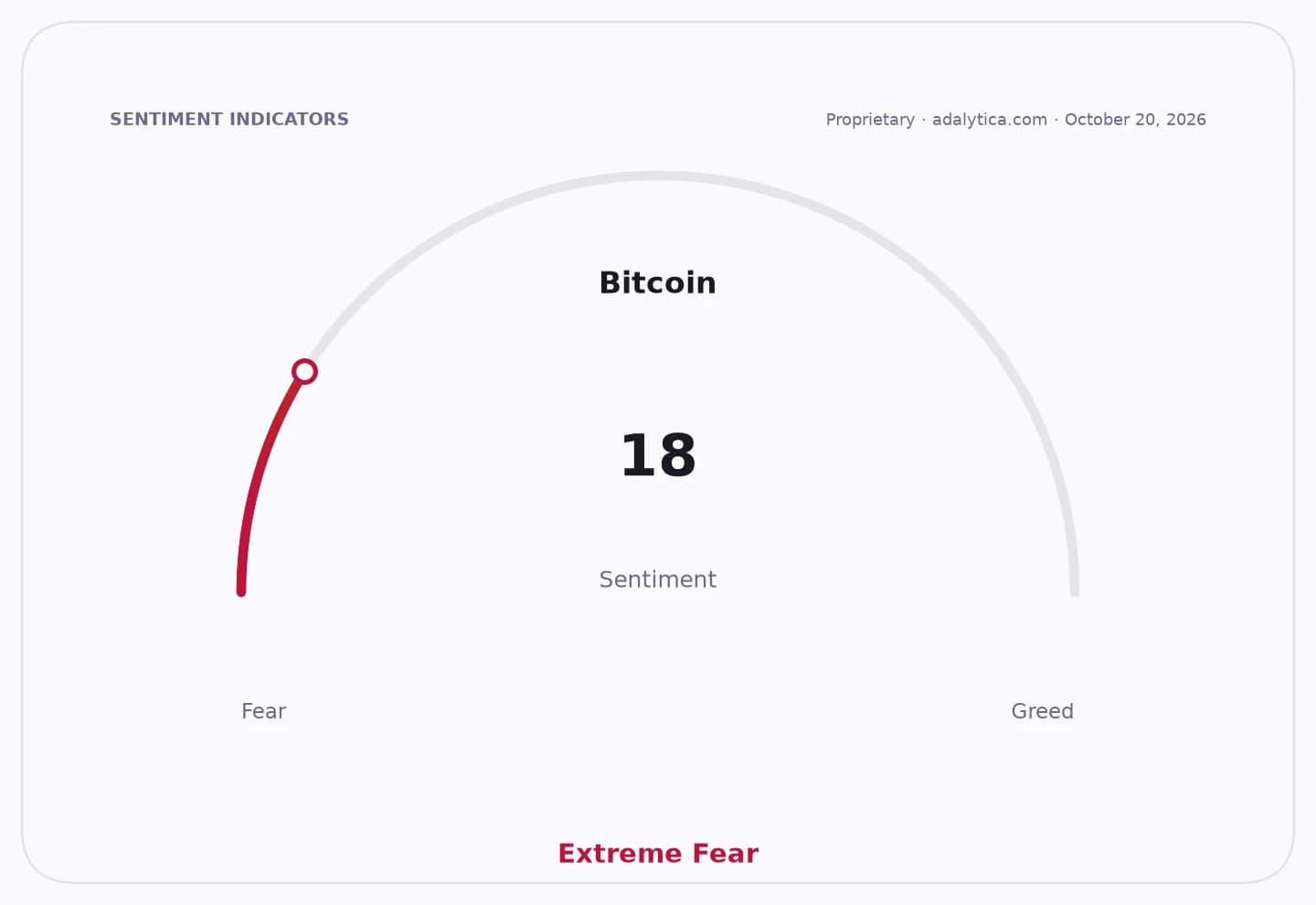
Sentiment Indicators
The estimate also underscores a broader shift: Bitcoin is no longer being treated only as a speculative trade, but as an asset class with a place in long-range capital market planning. JPMorgan has not folded Bitcoin into its main covariance matrices for portfolio construction, citing its volatility and unstable correlations with traditional assets. But the fact that it is modeling the token at all — and alongside equities, real estate and gold — shows how far digital assets have moved into the financial mainstream.
That said, the numbers also make clear why Bitcoin remains difficult to own in size. JPMorgan assigned the cryptocurrency annualized volatility of 55%, compared with 18% for U.S. large caps and 17.2% for gold. In other words, the return outlook is attractive, but the ride is still brutal. A 10% compound annual gain would multiply capital by about 2.6 times over a decade and more than four times over 15 years, but the path there would almost certainly be uneven.
That tension is exactly why investors should read the forecast carefully. A high expected return does not make Bitcoin a core portfolio holding for everyone, especially when real-world price action looks nothing like a smooth compounding machine. Bitcoin was last trading around $63,000 on Wednesday, after sliding to its lowest level since mid-July and dropping well below the 50-day moving average, while technical readings showed deeply oversold conditions. Adalytica’s Bitcoin Fear & Greed Index sat at 12, in “Extreme Fear,” a reminder that sentiment can turn sharply even as long-term models stay optimistic.
Gold has also weakened, with GLD falling to about $337, while the S&P 500 ETF SPY was around $722 after a volatile stretch. Yet the broader lesson is not that Bitcoin “won” a day or a week. It is that institutions are increasingly being forced to reconcile two very different realities: a volatile asset that can still suffer violent drawdowns, and a long-term thesis built on scarcity, adoption and a potential role as a store of value in a world of persistent macro uncertainty.
That macro backdrop matters. JPMorgan’s own assumptions incorporate higher bond yields, productivity gains from artificial intelligence and corporate profitability. In that setting, Bitcoin’s appeal rests partly on the idea that investors will continue looking for assets that can sit outside the traditional dollar-and-duration framework. Real yields, risk appetite and confidence in fiat money all feed into that story.
For long-term investors, the takeaway is simple: JPMorgan’s forecast does not erase Bitcoin’s risks, but it does reinforce the idea that the asset has graduated from fringe speculation to something that large institutions must now model seriously. For anyone building wealth over five to 10 years, the smarter question is not whether Bitcoin can be volatile — it plainly is — but whether a modest allocation belongs in a diversified portfolio that is built to endure. Worth watching, and for patient investors, worth keeping on the watchlist.
| Entity | Gains | Losses |
|---|---|---|
| Bitcoin | ▲Mainstream validation | ▼Less “outsider” status |
| JPMorgan Asset Management | ▲Credibility with crypto investors | ▼Simplicity of traditional models |
| Long-term allocators | ▲New return source | ▼Higher volatility risk |
| Gold and large-cap stocks | ▲Benchmark relevance | ▼Relative return ranking |