Bitcoin’s slide below $70,000 has sharpened the market’s divide between corporate buyers and increasingly cautious retail and ETF investors, even as Strategy and Coinbase add to their holdings. The purchases matter less as a near-term price signal than as evidence that large, balance-sheet-backed buyers still see value in Bitcoin’s long-term scarcity story while spot demand weakens.
Bitcoin Falls Below $70K as Strategy Buys More

Strategy bought 811 bitcoin for about $65.5 million at an average price of $80,846 a coin, lifting its total holdings to 849,327 BTC, according to the company’s disclosure cited in local media. Coinbase also increased its bitcoin reserves to 18,000 BTC. The buying comes as bitcoin has fallen to a three-month low, with the latest price data showing BTC around $69,000 after a sharp break lower that has pushed the token beneath its 50-day moving average and close to its 200-day line.
Sentiment Indicators

That gap between corporate accumulation and softer market pricing is important economically because bitcoin’s valuation remains highly sensitive to marginal flows. Bitcoin ETFs have seen heavy outflows, including a reported $262.8 million in a single day, suggesting that institutional and retail risk appetite has cooled even as a few “smart money” wallets continue to accumulate. In other words, the market is no longer being carried by a broad, one-way bullish trade.
For investors, especially younger ones, the more relevant message is not to chase the headline purchase but to understand what kind of buyer is stepping in. Strategy’s bitcoin treasury model is built on leverage to a long-duration asset and has repeatedly amplified moves in both directions. Coinbase’s reserve increase is different: as the industry’s largest U.S. crypto exchange, it is holding bitcoin partly as a treasury asset tied to the ecosystem it serves. Neither transaction guarantees higher prices, and both companies have access to risk management tools and funding flexibility that individual investors do not.
Bitcoin
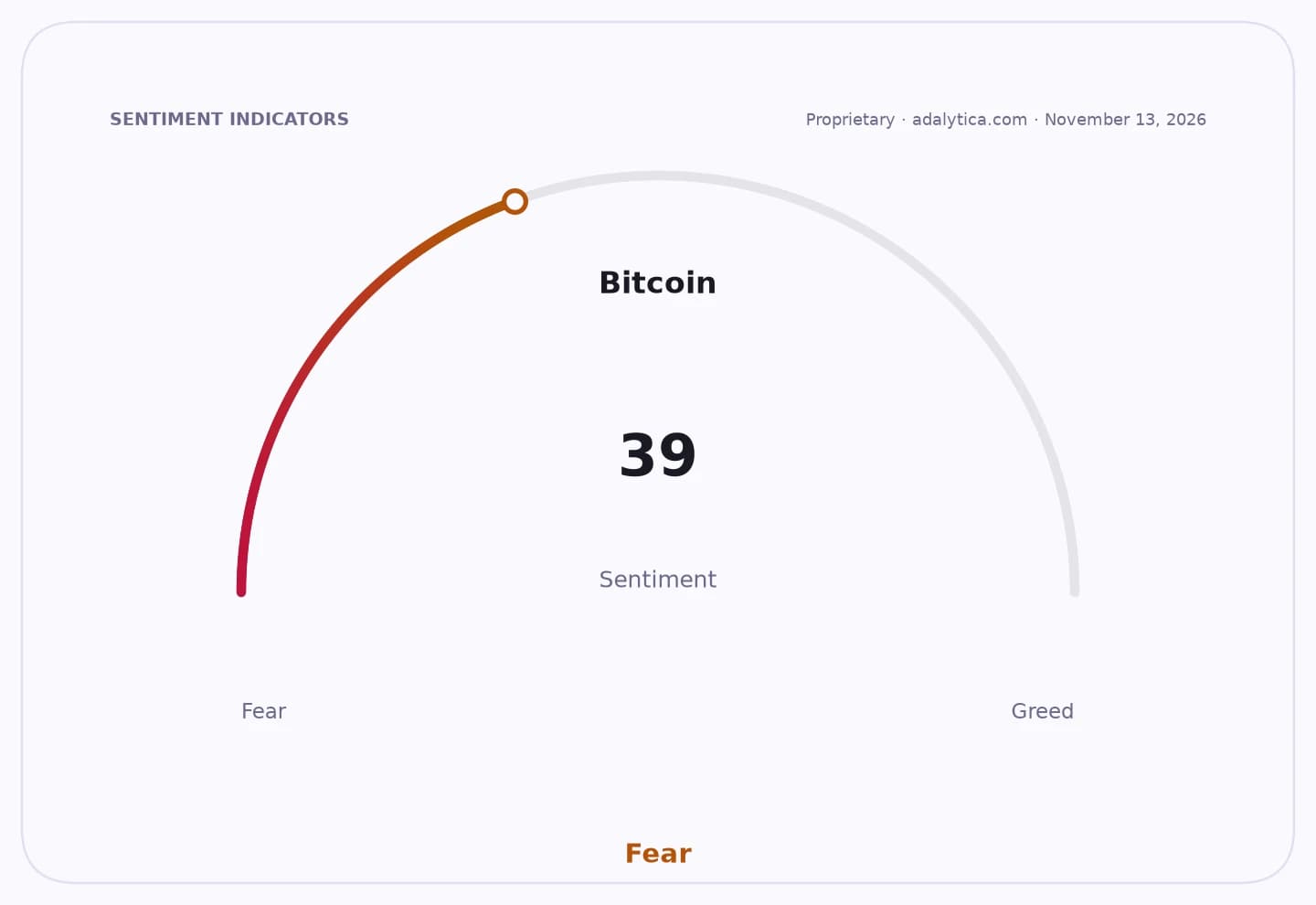
The macro backdrop is also less supportive than it was when bitcoin last mounted a strong rally. U.S. 10-year Treasury yields are near 4.9%, crude remains volatile around $90 a barrel, and the dollar is firm. That combination can pressure speculative assets by keeping real financing conditions tighter and reducing the appeal of non-yielding stores of value. Adalytica’s Bitcoin Fear & Greed Index at 39, in neutral territory, points to a market still searching for conviction rather than one in full capitulation or euphoria.
Technical signals reinforce that caution. Bitcoin’s 14-day RSI is near 29, a level that typically reflects oversold conditions, but the MACD remains negative and price is below the 50-day average, implying momentum has not yet turned. Strategy’s own shares have dropped to about $112.50, well below both its 50-day and 200-day moving averages, showing how closely the stock remains tied to bitcoin’s direction. Coinbase has also weakened, with the stock near $128.85 and similarly below its key averages, reflecting investor concern that a falling bitcoin price can hit trading activity and sentiment across the crypto complex.
The bull case is that balance-sheet buyers are still willing to accumulate near a psychologically important level, which could help stabilize the market if spot selling eases. The bear case is that corporate buying alone is not enough to offset ETF redemptions, tighter macro conditions and a market that may need a deeper washout before it finds a durable floor.
| Entity | Gains | Losses |
|---|---|---|
| Strategy | ▲Larger bitcoin stack | ▼Greater mark-to-market risk |
| Coinbase | ▲Treasury diversification | ▼Earnings sentiment if BTC weakens |
| Bitcoin buyers | ▲Lower entry levels | ▼Near-term price momentum |
| ETF holders / retail longs | ▲Potential stabilization | ▼Outflows and volatility |