Bitcoin is proving more resilient than the high-flying AI trade as a fresh bout of macro and geopolitical stress punishes risk assets, a divergence that could strengthen the case for the cryptocurrency as a portfolio hedge once the market’s headline noise fades.
Bitcoin Resilience Versus AI Stocks in Risk-Off Move
Bitcoin
The token has climbed 33.7% from its late-June bear-market low even as several AI value-chain names — including Intel, Oracle, Micron Technology and Sandisk — have dropped 20% to 62% over the same span. That split matters because both sets of assets have been exposed to the same forces this year: higher-for-longer rates, inflation surprises, energy-price pressure and geopolitical risk. If Bitcoin can hold its floor while equity investors rotate out of the most crowded growth trades, it suggests the coin’s demand base is becoming less dependent on speculative enthusiasm and more tied to its role as a scarce, liquid asset.
Sentiment Indicators
The comparison was sharpened in late October and early November, when the Fed left rates unchanged, hotter inflation data quickly pushed markets toward expectations of another hike, Brent crude rose on war fears and Binance disclosed the largest crypto hack on record, with about $6.3 billion stolen. U.S. spot Bitcoin ETFs also recorded $643.3 million of net outflows on Oct. 30. Yet Bitcoin largely traded between $76,198 and $84,082 over the 30 days to Nov. 5, underscoring that even bad news that would normally hit crypto hard did not break the market structure.
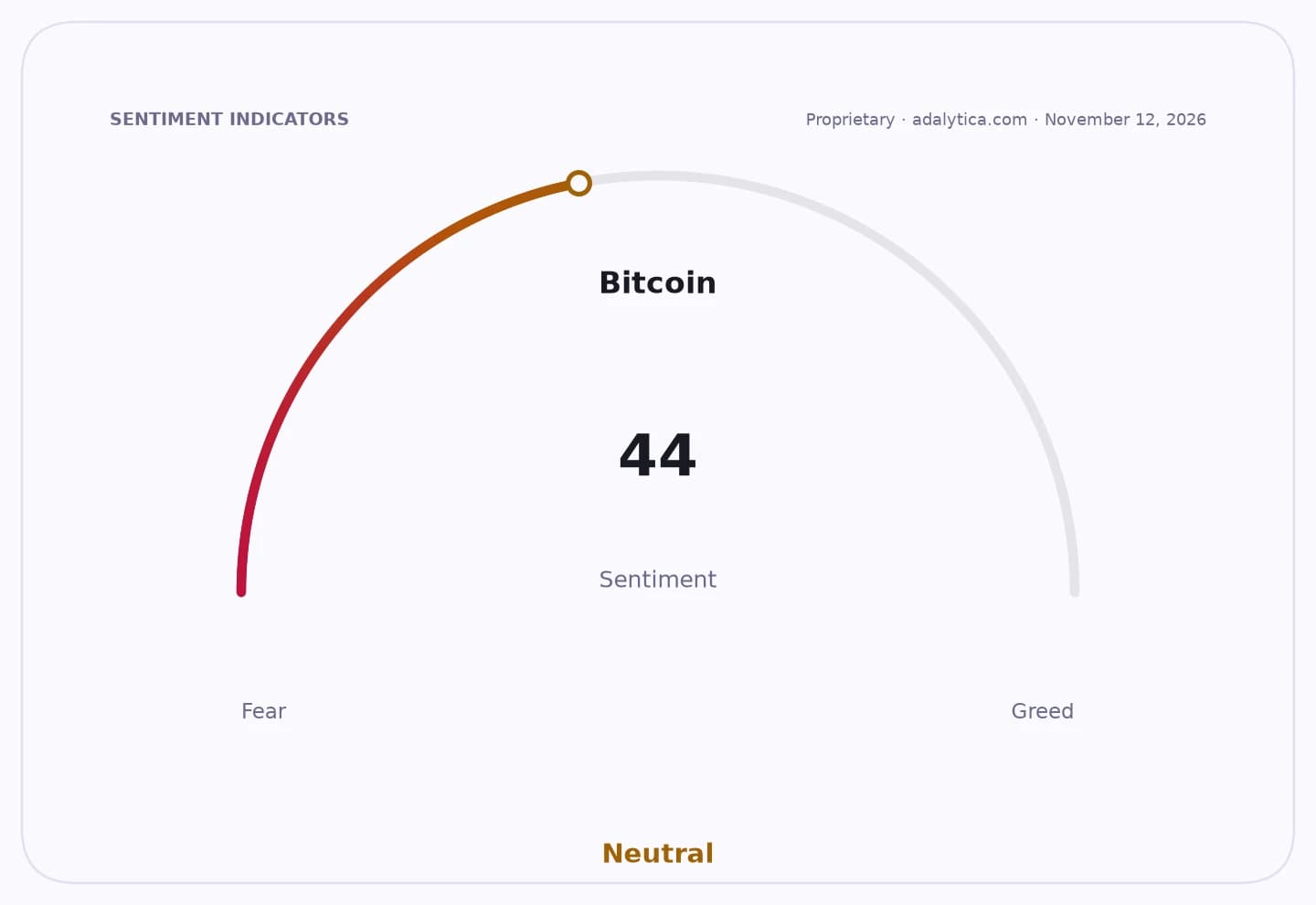
That price action is important for investors because markets often treat Bitcoin as a leveraged expression of liquidity and risk appetite. If the coin can stop making new lows when macro conditions deteriorate, that can be read two ways: bulls see evidence of durable institutional accumulation, while bears argue the market is merely stabilizing before the next leg lower. The data lean toward the former for now. Adalytica’s Bitcoin Fear & Greed Index sits at 39, neutral rather than euphoric, suggesting sentiment has not become stretched even after a sharp rebound in 2026. By contrast, the S&P 500 remains in extreme-greed territory on the same gauge, showing how crowded parts of the equity market may be relative to crypto.
The move also comes as Bitcoin’s technical picture remains mixed but not broken. At $68,362 on Nov. 13, it was still above the 200-day moving average near $73,036, but below the 50-day average around $80,537, with RSI at 28.1 and MACD negative — levels that point to near-term weakness even as the longer-term uptrend has not been fully erased. That leaves room for either a relief rally or a deeper reset, depending on whether buyers step back in above the low-$70,000s.
For investors, the key question is whether Bitcoin is entering a phase where adverse news causes less downside than before. If so, the asset’s next move may be driven less by event risk than by the gradual return of liquidity and the absence of fresh shocks. If not, the recent resilience will prove temporary. The distinction matters because Bitcoin’s biggest upside often comes when the market realizes the bad news has already been priced in.
| Entity | Gains | Losses |
|---|---|---|
| Bitcoin holders | ▲Better downside resilience | ▼Near-term volatility |
| AI stock investors | ▲Selective rotation opportunities | ▼Crowded growth exposure |
| Crypto ETF buyers | ▲Potential rebound catalyst | ▼Outflow risk |
| Short-term bears | ▲Lower momentum from weak price action | ▼Failed breakdown thesis |