Bitcoin’s break below $75,000 on Friday is the clearest sign yet that the current crypto pullback is being driven less by traders’ short-term nerves and more by a real withdrawal of capital from the market. The pressure from ETF outflows and forced liquidations is rippling beyond the token itself, hitting holders like Strategy and Circle while giving miners-turned-AI infrastructure plays such as IREN a chance to rebound from sharp weekly losses.
Bitcoin Falls Below $75,000 as ETF Outflows Hit Stocks
Bitcoin
That matters because bitcoin has increasingly traded like a macro-risk asset tied to liquidity, rates and equity sentiment rather than a standalone store of value. The selloff is landing just as the broader market is already digesting an AI-led tech slump, with risk appetite fragile after the latest jobs report and Treasury yields still elevated. The 10-year yield near 4.8% and the two-year around 4.5% keep pressure on speculative assets that depend on abundant liquidity and falling real rates.
Sentiment Indicators
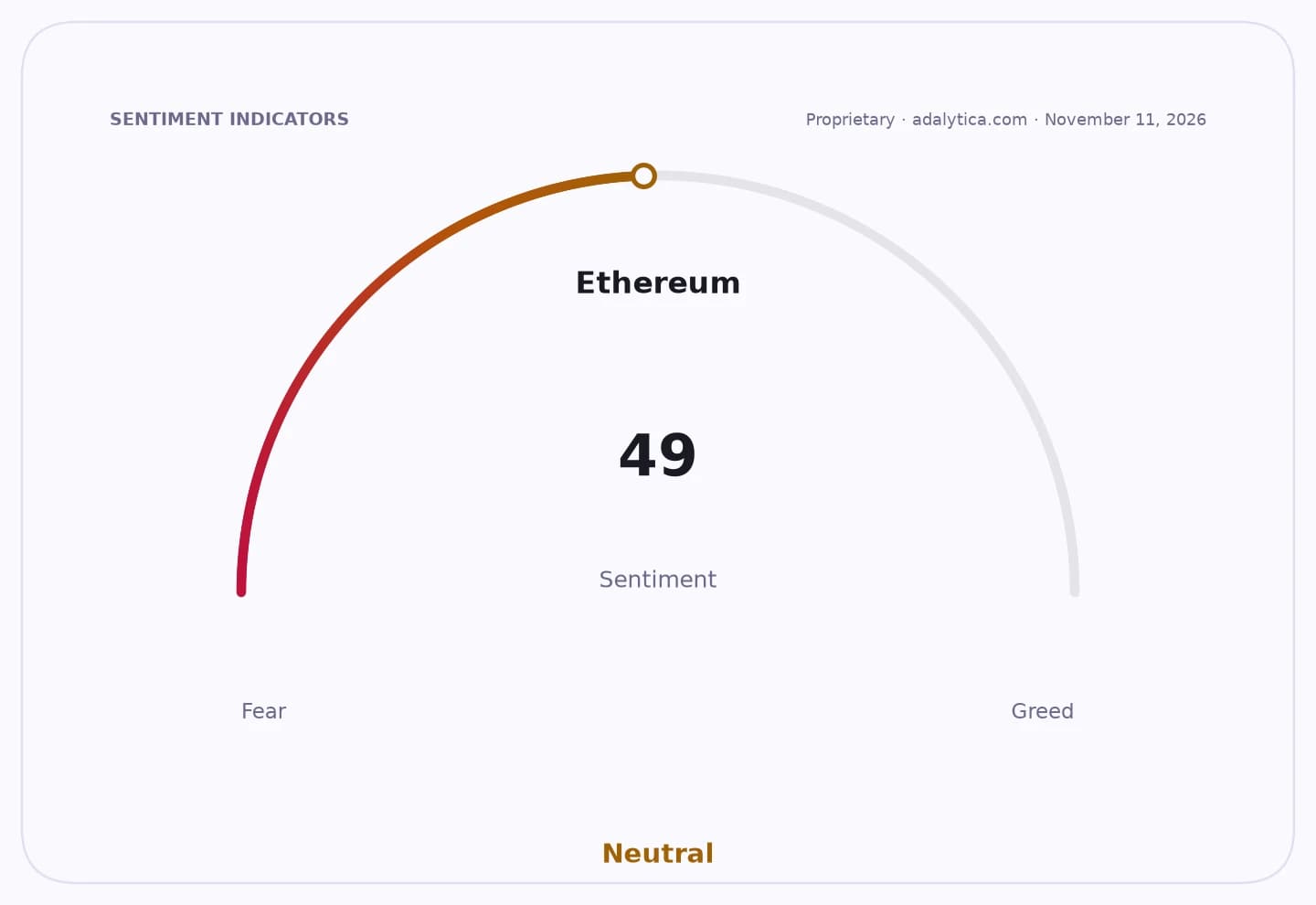
For investors, the message is straightforward: when ETF money leaves and leverage gets flushed, bitcoin’s downside can move faster than the underlying narrative changes. Bitcoin’s latest close around $73,500 leaves it well below its 50-day moving average near $80,900, with RSI readings hovering around the mid-30s, showing the market is still working through oversold conditions rather than building a durable base. Adalytica’s Bitcoin Fear & Greed snapshot has improved to neutral, but that does not erase the fact that spot demand remains vulnerable if ETF redemptions continue.
The biggest second-order trade is in crypto equities. Pure-play bitcoin proxies such as Strategy and Circle are getting punished because their valuations are still tightly linked to the coin’s price, leverage and flows. Miners are a more interesting setup. IREN, in particular, is trying to rebound after a brutal run even as it transitions toward AI infrastructure, which gives it a different earnings engine and a better long-term narrative than miners that remain almost entirely dependent on bitcoin economics. Its shares remain far below the 50-day and 200-day moving averages, but the bounce on Friday suggests investors are starting to separate AI compute capacity from pure bitcoin beta.
That distinction is where the opportunity may be hiding. The market is still treating many crypto-linked stocks as one trade, but the business models are diverging fast. Miners with access to power, data-center capacity and AI demand may eventually be valued less like volatile crypto proxies and more like infrastructure assets with optionality. If bitcoin stabilizes, the highest-beta names can rebound hard. If it does not, the companies that can redeploy capacity into AI and high-performance compute are the ones most likely to survive the next leg of the shakeout.
For now, the setup favors patience on bitcoin itself and selectivity in crypto equities. The trade is no longer about chasing the whole sector higher; it is about identifying which companies can outgrow their bitcoin exposure and which ones are still hostage to it.
| Entity | Gains | Losses |
|---|---|---|
| Bitcoin bears | ▲Faster deleveraging | ▼Price momentum |
| ETF buyers of bitcoin | ▲Lower entry prices | ▼Near-term mark-to-market losses |
| Strategy, Circle | ▲None | ▼Flow-driven selloff |
| IREN, AI-linked miners | ▲Rebound chance, compute optionality | ▼Bitcoin beta, if weakness persists |