Ethereum’s latest security milestone has not stopped the token’s market slide, with ETH trading near $2,120 and testing the lower end of a recovery range that traders had pegged at $2,500 after the Ethereum Foundation said its leanVM code passed a full formal check.
Ethereum leanVM passes formal check as ETH slides

The result matters because it captures the split between Ethereum’s long-term engineering progress and the market’s short-term willingness to pay for it. LeanVM is designed to protect Ethereum signatures from future quantum attacks without slowing the network, a meaningful step for a chain with about $280 billion in market value and a growing need to harden its cryptography. But investors are still marking ETH to current flows, not future architecture, and the price action shows the network’s technical advances have yet to translate into renewed demand.
Sentiment Indicators

ETH has fallen about 54% from its August 2025 record, and the recent rebound attempt has already stalled. On CoinGecko, the token was quoted at $2,435 on Nov. 5 before sliding further to $2,119.67 by Nov. 9. That leaves ETH below its 50-day moving average of $2,470.49 and only slightly under its 200-day average of $2,153.45, a signal that the market remains fragile even after a brief recovery from the February low of $1,821.68. The relative strength index at 35.5 points to weak momentum, while the MACD remains negative, underscoring that sellers still have the upper hand.
The leanVM check is still a substantive development for Ethereum’s investment case. Formal verification lowers the risk that a critical security upgrade contains hidden flaws, and the ability to process more than 1,000 signatures a second would help the network migrate toward safer cryptographic standards. In a market where confidence in infrastructure is often earned slowly and lost quickly, that kind of progress supports the argument that Ethereum remains the dominant programmable blockchain with the deepest developer base and the strongest institutional staying power.
Ethereum — 30-day sentimentadalytica.com
Explore this data interactively — full history, time series and cross-market comparisons.
Ethereum
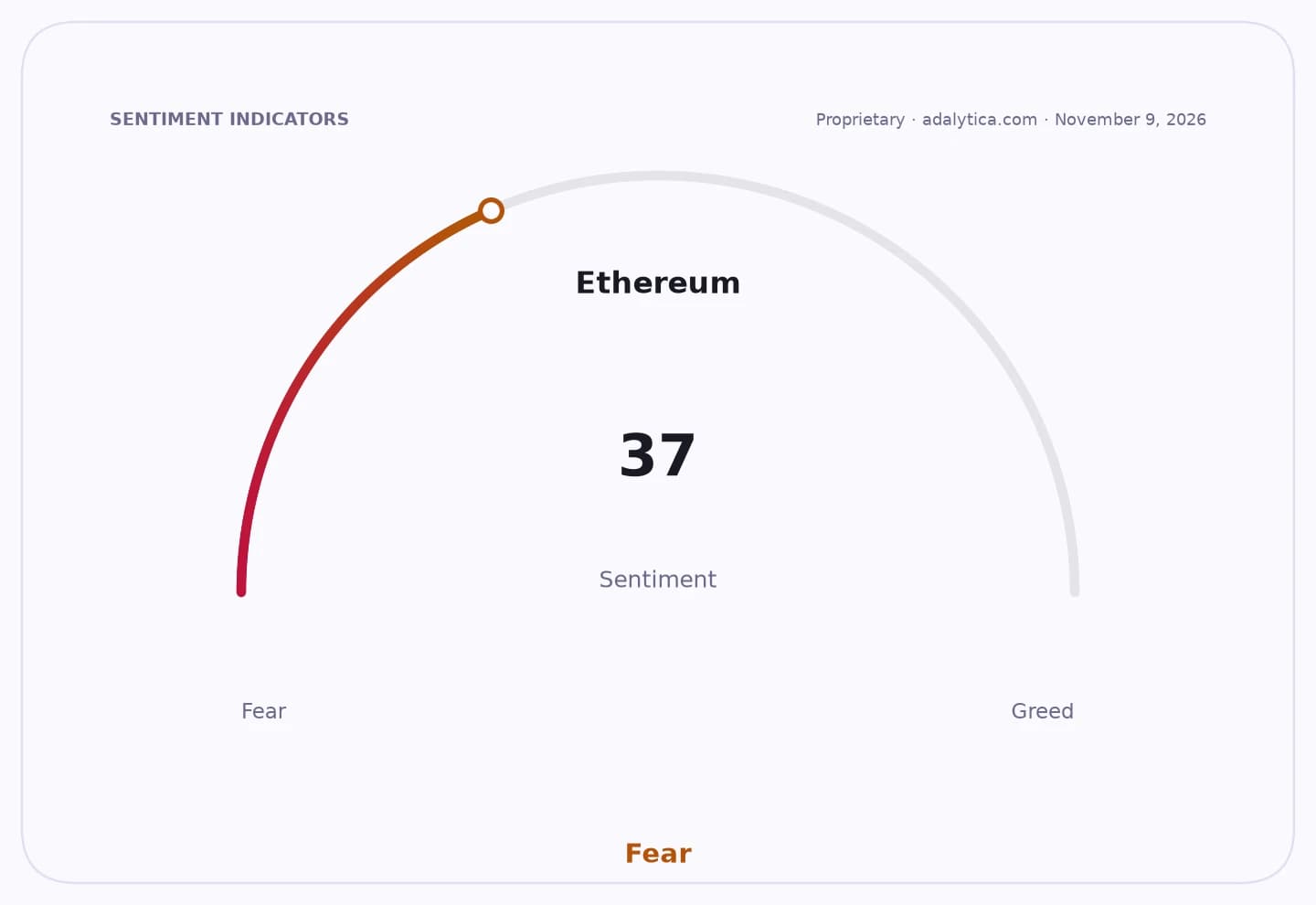
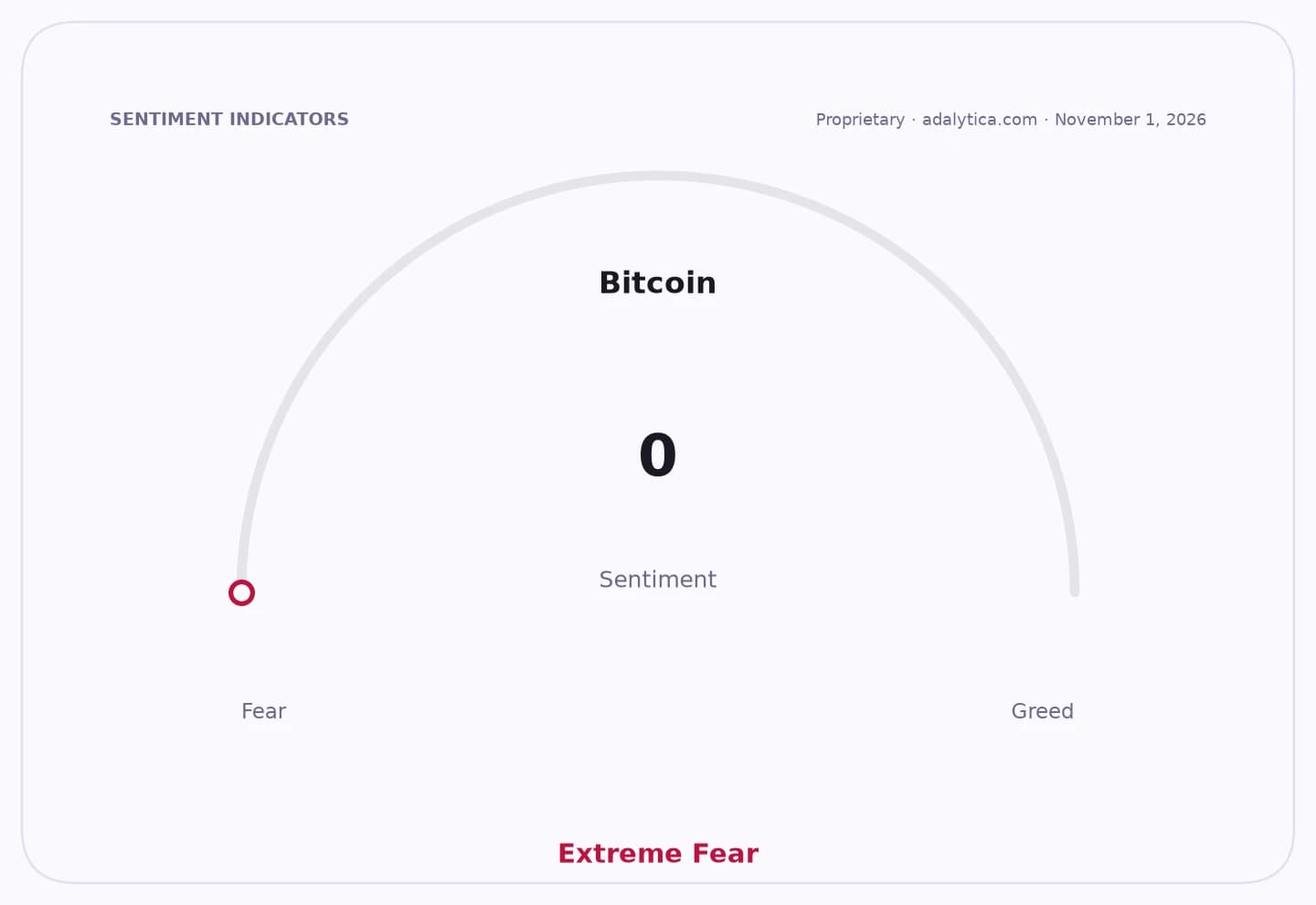
But the market is also forcing a valuation conversation. At Ethereum’s current scale, even a 5% gain to $2,500 would require billions in incremental buying. That makes it harder for technical milestones alone to move the token materially higher unless they are paired with stronger activity, broader risk appetite or a renewed rotation into large-cap crypto. Adalytica’s Ethereum Fear & Greed Index sits at 37, a neutral reading that suggests the market is not in panic, but neither is it rewarding progress with conviction. Bitcoin’s own sentiment gauge is still in fear territory, which points to a broader risk-off backdrop across digital assets.
The contrast with smaller, earlier-stage crypto bets is part of the same narrative. While Ethereum waits for proof that its engineering work can attract capital, some buyers are chasing higher-beta tokens and presales such as Pepeto, which has reportedly drawn more than $11.2 million. That does not make Pepeto a substitute for Ethereum’s network effects, but it does highlight where speculative money is flowing: toward assets with low entry prices and faster perceived upside, rather than toward a mature asset trying to re-rate on fundamentals.
For investors, the question is not whether Ethereum is making progress — it clearly is — but whether the market will pay for that progress before the next leg of risk aversion takes hold. A close back above $2,235 would help stabilize the chart, while a break below that level would revive the October lows and keep pressure on the recovery thesis. Until buyers return in size, Ethereum’s best engineering news may continue to matter more for the long term than for the next trade.
| Entity | Gains | Losses |
|---|---|---|
| Ethereum developers | ▲Technical validation | ▼Little immediate price reward |
| ETH long-term holders | ▲Stronger security roadmap | ▼Near-term valuation pressure |
| Short-term traders | ▲Volatility and trading range | ▼Upward momentum |
| Pepeto and other presales | ▲Attention from speculative capital | ▼Ethereum’s larger ecosystem |