Bloom Energy’s jump to the S&P 500 has given the stock a powerful liquidity and visibility boost, but investors are now being asked to pay up for a business whose valuation already looks stretched against both its sector and faster-growing peers.
Bloom Energy S&P 500 Inclusion and Valuation

Shares of Bloom Energy rose to a key resistance area after the company’s addition to the benchmark index was confirmed, adding a mechanical buying tailwind from funds that track the S&P 500 such as SPY, VOO and IVV. That index demand arrives as Bloom is also benefiting from accelerating orders tied to data center power needs, a theme that has pushed the stock up about 180% this year and sent it to a recent high of $252.87.
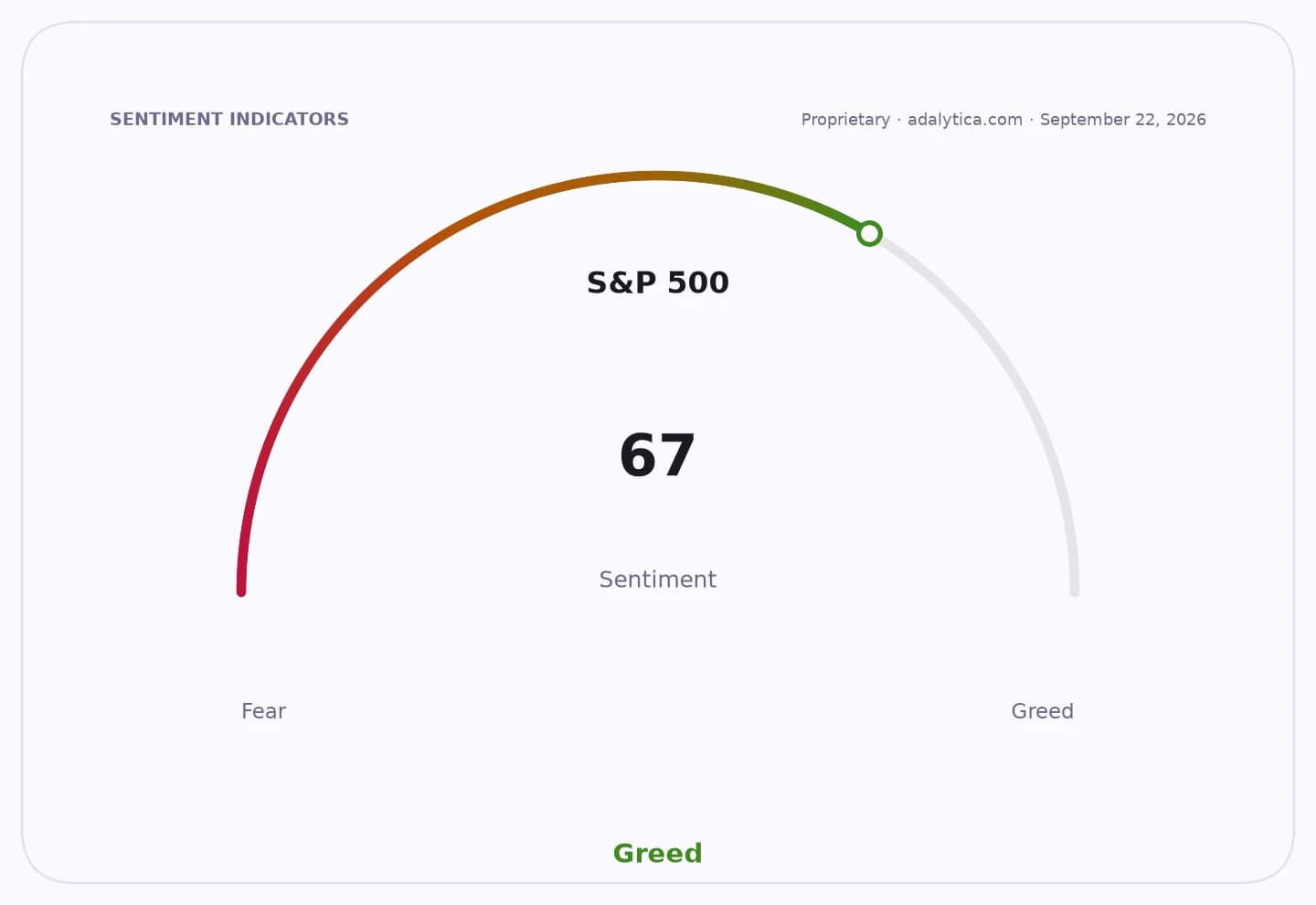
Sentiment IndicatorsⓘProprietary · adalytica.com · September 7, 2026
This is a snapshot — live sentiment, awareness and momentum for 130+ markets update continuously in the dashboard.Open AlphaPulse
The inclusion matters because S&P 500 entry is not just a prestige event. It can tighten trading spreads, broaden ownership and force passive managers to buy the stock regardless of short-term fundamentals. For Bloom, that flows into a narrative already supported by operating momentum: second-quarter revenue rose 166% from a year earlier to more than $1.065 billion, topping $1 billion for the first time, while gross margin expanded to 33.4% from 26.7% a year earlier. Management lifted full-year revenue guidance to $3.9 billion to $4.2 billion, implying roughly a doubling from last year.
The market’s enthusiasm reflects a larger bet that Bloom can keep selling onsite power systems into an AI buildout that is straining electricity infrastructure. The company has already won business from large cloud and data center names including Oracle and Nebius, and the pitch to investors is that demand for reliable, distributed power will keep rising as data center spending accelerates. That helps explain why Bloom has held a premium valuation even after its sharp run.
But the risks are becoming harder to ignore. At a forward price-to-earnings ratio of about 93, Bloom trades well above the energy sector median near 20 and at a richer multiple than some established semiconductor names that also benefit from AI infrastructure spending. That leaves the stock highly exposed if growth slows, if margins fail to scale as quickly as expected, or if investors decide the S&P inclusion and AI story have already been discounted.
There is also a growing policy and demand overhang. Data center projects are becoming a political issue in the U.S., and rising cancellations could hit the very demand narrative that has powered the stock’s advance. The broader lesson from recent index additions is that mechanical buying does not always translate into lasting outperformance: recent entrants such as Nebius, CoreWeave and Rocket Lab have struggled to sustain gains after index inclusion.
Technically, Bloom has pushed back into a zone that capped rallies in July and August, with momentum now strong enough to test its all-time high. The 50-day moving average has turned higher and RSI readings remain elevated but not extreme, suggesting the stock may have room for another move if passive buying and earnings optimism continue to outweigh valuation concerns. Still, once the index-related demand passes, the burden shifts back to fundamentals.
For investors, the key question is whether Bloom is becoming a durable AI infrastructure winner or simply the latest beneficiary of a crowded trade. The answer will likely depend on whether revenue growth and margin expansion can keep pace with expectations, and whether the company can avoid being caught in any slowdown in data center spending.
| Entity | Gains | Losses |
|---|---|---|
| Bloom Energy | ▲Passive index buying, higher visibility | ▼Higher valuation scrutiny |
| S&P 500 trackers | ▲New constituent exposure | ▼Forced buying at elevated prices |
| Long-term bulls | ▲AI power demand story | ▼Post-inclusion pullback risk |
| Short sellers / skeptics | ▲Potential valuation reset | ▼Near-term momentum squeeze |