Jair Bolsonaro’s defense has asked Brazil Supreme Court Justice Alexandre de Moraes to let two former aides resume work at the ex-president’s residence, a small procedural fight that nevertheless underscores how closely the judiciary still controls the political fate of Brazil’s most polarizing figure.
Bolsonaro Defense Seeks Return of Two Aides

The request is aimed at reversing part of Moraes’ Sept. 8 order that restricted the presence of first sergeants Sérgio Rocha Cordeiro and Max Guilherme Machado de Moura at Bolsonaro’s home. Bolsonaro’s lawyers argue the men are not private staff but officially designated support personnel tied to the institutional security structure available to former presidents, and that their return would not breach the court’s precautionary measures.
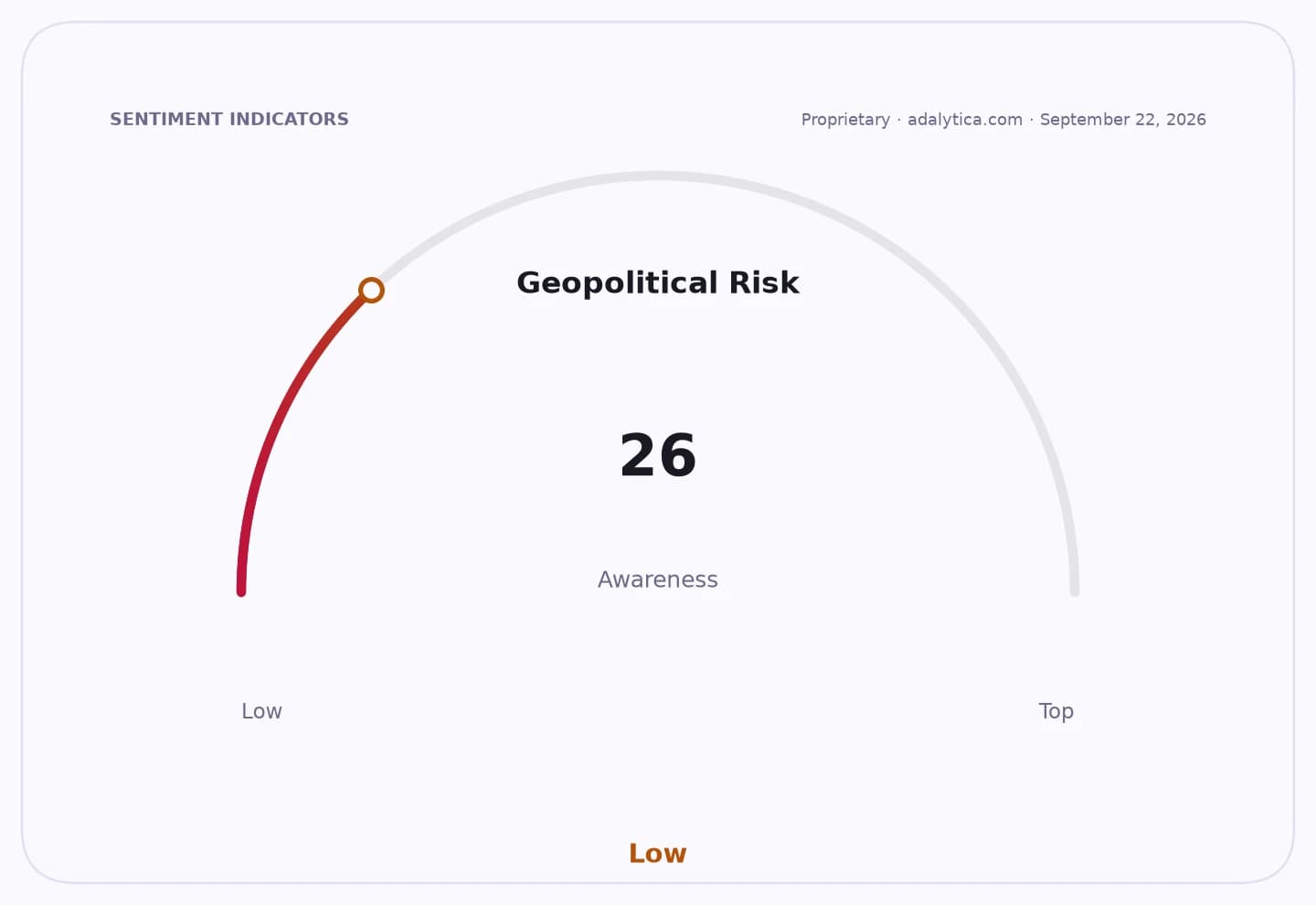
Sentiment IndicatorsⓘProprietary · adalytica.com · September 17, 2026
This is a snapshot — live sentiment, awareness and momentum for 130+ markets update continuously in the dashboard.Open AlphaPulse
That distinction matters because it goes straight to the broader question investors keep asking about Brazil: how much political uncertainty is still hanging over the country as the 2026 election cycle draws closer? Court decisions involving Bolsonaro and his circle have become a recurring source of volatility for domestic politics, and by extension for Brazilian assets, because they shape the odds of institutional conflict, protest risk and policy paralysis.
For investors, the immediate implication is not about these two advisers by themselves. It is about the ongoing legal pressure surrounding Bolsonaro, which continues to influence the mood in Brazilian markets and in exchange-traded funds such as the iShares MSCI Brazil ETF. Brazil’s benchmark fund, EWZ, has recently hovered near the high end of its range, with the close at $37.81 on Sept. 17, while technical readings such as the 50-day moving average and RSI suggest the market has been strong but potentially extended. In other words, the market has room to react if political headlines worsen.
That is why the tone from the court matters nearly as much as the ruling itself. Moraes has already shown little appetite for loosening restrictions around Bolsonaro’s legal perimeter, and the defense’s petition suggests the former president’s camp is still trying to redraw the line between personal restrictions and official protections. If the court refuses, it would reinforce the message that Bolsonaro remains under tight judicial oversight. If it grants the request, it could ease one pressure point, even if only modestly.
There is also a market narrative here that investors should not ignore: Brazil is still being priced not just on commodities, rates and growth, but on governance risk. Shares in Petrobras, one of the market’s key drivers, have benefited from a strong run, with PBR closing at $21.00 on Sept. 17 after a steep year-to-date climb. Brazil-focused leveraged exposure has also been volatile. That means political developments that affect confidence in institutions can matter far beyond Brasília.
For long-term investors, the lesson is simple. Brazil remains an investable market with real earnings power and commodity-linked upside, but its path can still be interrupted by legal and political shocks. Bolsonaro’s court battles are part of that risk premium. They are worth watching not as day-trading noise, but as a reminder that in emerging markets, the rule of law and the rule of markets are often inseparable.
| Entity | Gains | Losses |
|---|---|---|
| Bolsonaro defense | ▲More room for aides at residence | ▼Judicial restrictions if denied |
| Moraes/STF | ▲Stronger control over case terms | ▼Criticism from Bolsonaro allies |
| Brazilian assets | ▲Relief if tensions cool | ▼Volatility if conflict escalates |
| EWZ/PBR longs | ▲Stability if headlines fade | ▼Political risk premium if fights intensify |