Consumer demand for consórcio is strengthening as Brazilians look for lower-cost ways to build assets and preserve purchasing power, even as tighter credit conditions and volatile rates push households toward delayed-payment schemes rather than traditional loans.
Brazil Consórcio Demand Rises Amid Tight Credit
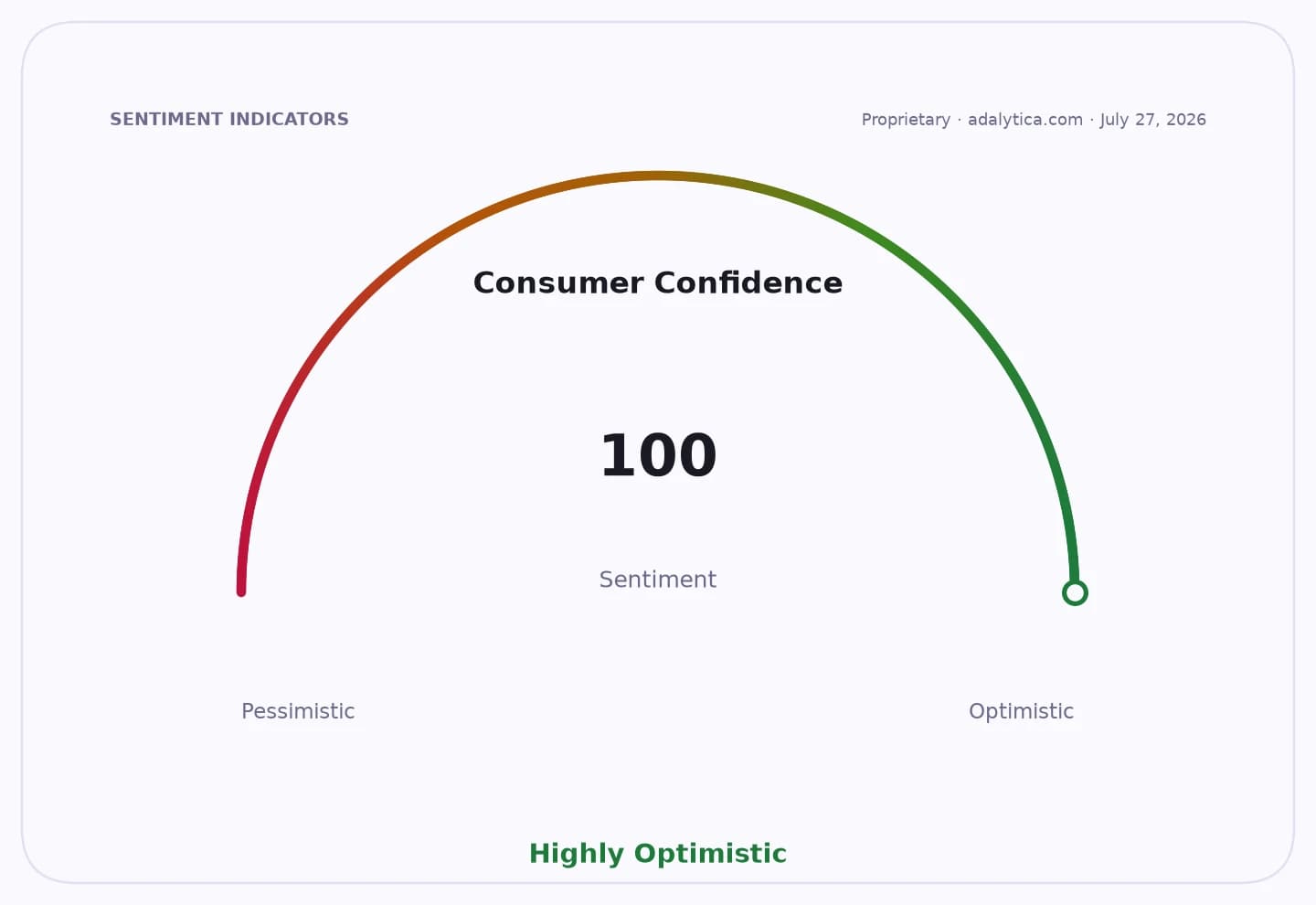
The shift matters because consórcio is not just a financing product but a barometer of how consumers are adapting to a more cautious macro backdrop. In a high-rate environment, the appeal is straightforward: buyers can plan for big-ticket purchases without paying the interest burden embedded in standard installment credit. That has made the model more attractive to households seeking to expand wealth gradually through property, vehicles and other durable goods.
Sentiment IndicatorsⓘProprietary · adalytica.com · July 27, 2026
This is a snapshot — live sentiment, awareness and momentum for 130+ markets update continuously in the dashboard.Open AlphaPulse
For operators, the trend can support growth in administered volume and fee income, but it also raises the stakes around credit discipline and customer retention. Unlike pure consumer lending, consórcio growth depends less on immediate borrowing demand and more on willingness to commit to long-term payment plans. That makes it sensitive to confidence, inflation expectations and labor-market stability. The recent swings in consumer mood underline that fragility: Adalytica’s consumer spending sentiment is in “fear,” while its recession-confidence gauge has jumped to “extreme greed,” a contradictory mix that suggests consumers are alert to risk but still hunting for defensive ways to accumulate assets.
The market backdrop in financials points to that same caution. U.S. lenders tied to consumer and credit cycles have been uneven, with stocks such as Ally Financial and Capital One moving sharply over the past year as investors reassess delinquency risk, funding costs and the durability of loan demand. For companies exposed to consumer balance sheets, the key question is not whether demand exists, but whether it is robust enough to sustain growth without forcing looser underwriting.
That is why the consórcio story matters beyond Brazil’s savings-and-credit niche. It signals a broader behavioral shift: when households want exposure to wealth creation but are unwilling to pay up for debt, they migrate to instruments that look more like disciplined saving plans than borrowing. Bulls will argue that this expands the addressable market for providers and can be resilient through rate cycles. Bears will note that if consumer confidence weakens further, the same clients may delay contributions, reducing new sales and slowing the float that supports the business model.
The near-term test is whether demand remains durable as inflation, income growth and policy rates evolve. If consumers keep favoring structured asset accumulation over conventional debt, consórcio could continue gaining space. If the macro picture deteriorates, that preference could become another sign of caution rather than confidence.
| Entity | Gains | Losses |
|---|---|---|
| Consórcio providers | ▲Higher demand, steadier fees | ▼More pressure on retention |
| Households seeking assets | ▲Lower-cost wealth building | ▼Less immediate access to goods |
| Traditional lenders | ▲— | ▼Slower demand for high-interest credit |
| Credit-sensitive investors | ▲Defensive growth exposure | ▼Greater macro cyclicality risk |