Augusto Cury’s pledge to preserve Brazil’s Pix system while hinting at unspecified “adaptations” matters less as a campaign sound bite than as a sign that one of the country’s most important financial rails is now squarely in the middle of trade and policy politics.
Brazil Pix Policy Debate Spreads to Banks and Fintechs

Pix is not just a convenience feature. It is the backbone of Brazil’s instant-payments ecosystem, a low-cost public utility that has helped accelerate digital commerce, pressure card fees and widen access to banking. Any meaningful change to how it is run would ripple through banks, fintechs, merchants and consumers — and potentially reshape competitive dynamics in a payments market where margins are already under strain.
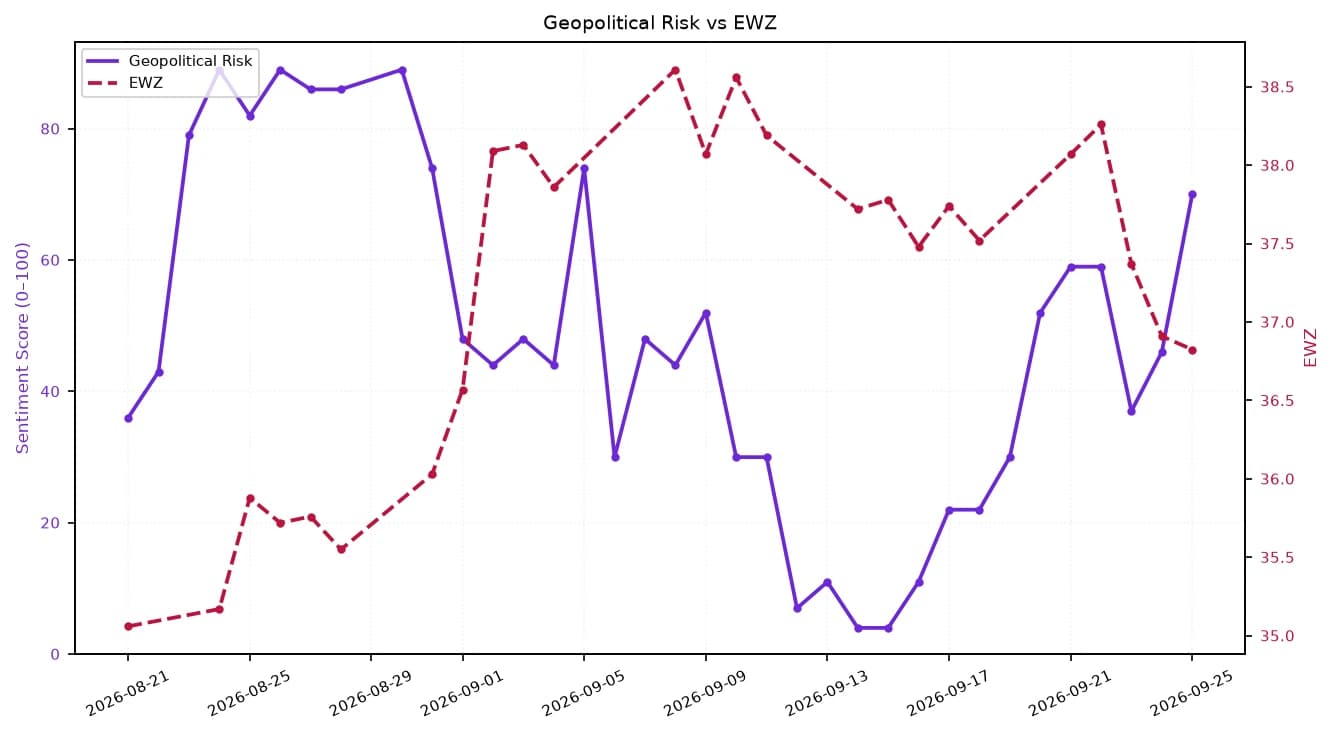
Sentiment IndicatorsⓘProprietary · adalytica.com · September 8, 2026
This is a snapshot — live sentiment, awareness and momentum for 130+ markets update continuously in the dashboard.Open AlphaPulse

That is why Cury’s refusal to explain what he would change is notable. The ambiguity keeps the market guessing on whether “adaptations” means regulatory tweaks, interoperability rules, fee structures or a broader recalibration of how Brazil’s state-backed payments infrastructure interacts with private-sector rivals. For investors, that uncertainty matters because the winners and losers would differ sharply across lenders, payment networks and fintech platforms.
The issue is also increasingly geopolitical. Cury linked Brazil’s policy posture to independence, saying the country should negotiate directly with other nations while remaining “peaceful” but not “subservient.” He also attacked Donald Trump’s tariffs and said he wants to speak with leaders in Argentina and the BRICS bloc. That framing places Pix inside a larger debate over sovereignty, trade leverage and foreign pressure — a reminder that Brazil’s financial infrastructure can become a proxy in disputes far beyond payments.
The stakes extend beyond rhetoric because Washington has already scrutinized Brazilian practices that may disadvantage U.S. companies, including the expansion of Pix. That raises the risk that any future attempt to modify the system could be interpreted through a trade lens, not just a domestic policy one. For global investors, that means Brazil’s fintech and banking exposure may carry more political optionality than the market is pricing.
On the charts, Brazil-linked financial names are already showing tension between optimism and caution. Itau Unibanco’s U.S.-listed shares have recovered to $8.15, above both the 50-day and 200-day moving averages, while Nu Holdings trades at $15.37 with its 50-day average comfortably above the 200-day. Banco Bradesco has also stabilized around $3.47 after a sharp summer swing. But the broader setup suggests investors are still paying for growth while underestimating policy risk in the payment layer that supports that growth.
My view is that Pix remains a secular asset, not a political talking point. The real opportunity is in the infrastructure and distribution layer around it: banks and platforms that can monetize payment volume, credit attachment and merchant services without losing share to a more heavily regulated rival. Until Cury or any other candidate defines what “adaptations” means, the market should treat Brazilian payments as a strategic asset with asymmetric upside — but only for the names best positioned to win under tighter rules, not the ones most exposed to disruption.
| Entity | Gains | Losses |
|---|---|---|
| Brazil consumers | ▲Lower-cost instant payments | ▼Policy uncertainty |
| Big banks | ▲Wider payment volume | ▼Margin pressure |
| Fintech rivals | ▲Scale from digital adoption | ▼Risk of tighter regulation |
| U.S. payment firms | ▲Little near-term benefit | ▼Exposure to Pix-led competition |