Brazil’s government is weighing a bold debt-relief program that would see the Treasury buy old household debts at steep discounts, a move aimed at clearing the names of millions of consumers and easing a drag on spending that has become a major economic problem.
Brazil Weighs Treasury Debt-Relief Program
The idea matters because Brazil’s household debt overhang is no longer just a social issue — it is a brake on consumption, credit growth and, by extension, economic momentum. Officials are studying a structure in which the Treasury would purchase long-delinquent, low-value obligations directly from creditors, likely through an auction-style process, at discounts that could approach 95%, according to local reports cited by Brasil 247. The target is debt that is already considered unlikely to be recovered, often four or five years past due, but that still keeps borrowers blacklisted and shut out of formal credit.
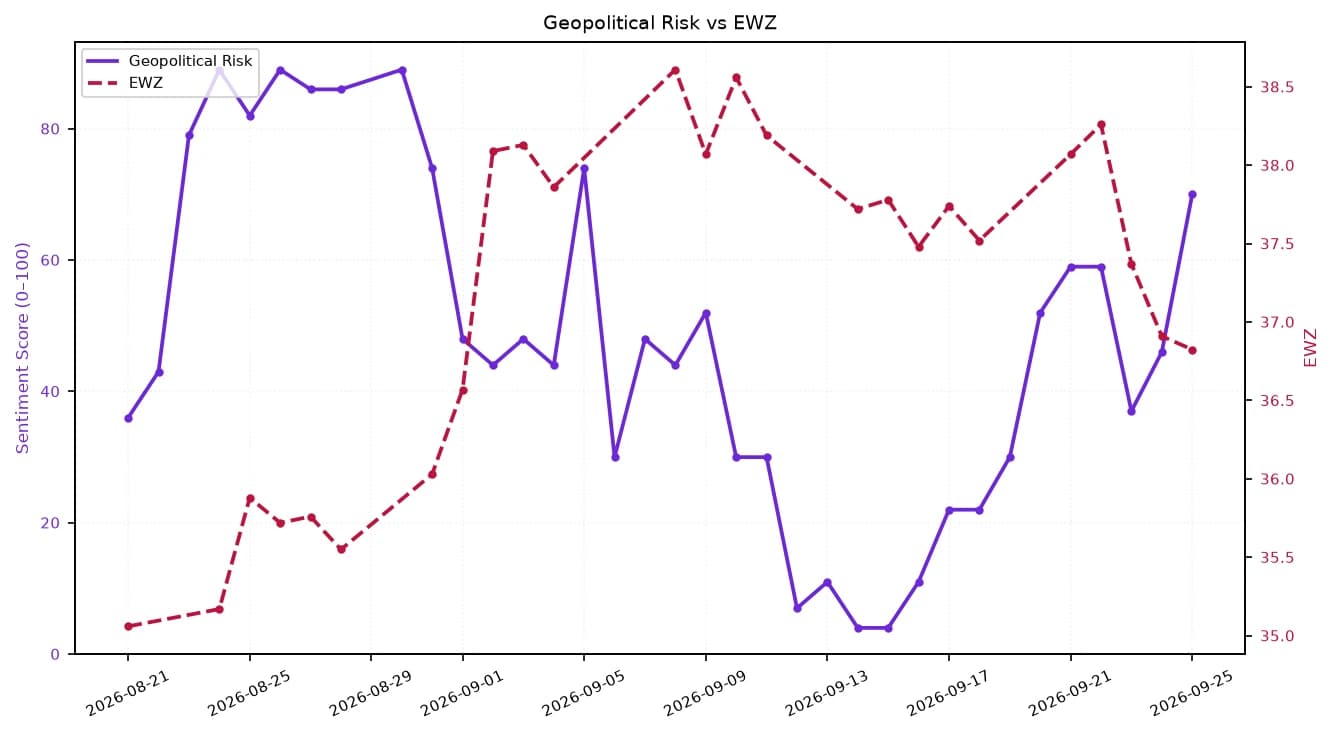
Sentiment IndicatorsⓘProprietary · adalytica.com · September 19, 2026
This is a snapshot — live sentiment, awareness and momentum for 130+ markets update continuously in the dashboard.Open AlphaPulse
That makes the proposal potentially more powerful than a standard refinancing program. Unlike earlier efforts such as Desenrola, this plan would not rely on public banks or funds. Instead, the government would negotiate directly with the current holders of the debt, including buyers of overdue loans and receivables that have already been written off by the original lenders. In practice, that could let the state remove old liabilities from the collections system without forcing families to repay the Treasury later, at least in the initial version under discussion.
For investors, the significance is twofold. First, if the program works, it could unlock consumer demand by allowing more households back into the banking system, which is positive for retailers, lenders and the broader domestic economy over time. Second, it would shift some credit risk onto the public balance sheet, even if officials say the fiscal hit should be contained within the budget and likely amount to a low-single-digit billion reais cost. That is manageable in the near term, but it still raises questions about precedent: once the state starts buying old bad debts, markets will want to know how far such relief can go and who pays for it.
The timing also matters. The government is still deciding whether the measure can be launched this year or must wait until 2027 because of election-law restrictions. Officials are also considering whether to include non-bank debts such as utility bills and other essential expenses, which would broaden the program’s reach well beyond the financial sector.
The backdrop helps explain why Brasília is moving. The government says the stock of household delinquency is around R$600 billion, a level it describes as a financial “pandemic.” Central bank data show household debt equivalent to 49.75% of income in June, while debt-service burden reached a record 28.9% of income. Those are the kinds of numbers that tell investors the consumer recovery is still incomplete, even after improvement in jobs and wages.
For long-term investors, the key takeaway is that Brazil is not just trying to clean up balance sheets — it is trying to restore the consumer engine. If the policy is executed carefully, it could support domestic demand, improve credit quality and reduce the dead weight of old arrears. If it is too broad, it could become another expensive stopgap. Either way, this is a story worth watching for anyone exposed to Brazil’s banks, consumer lenders and domestic growth plays.
| Entity | Gains | Losses |
|---|---|---|
| Brazilian households | ▲Cleaner credit records | ▼Ongoing collections pressure |
| Banks and debt buyers | ▲Can offload stale debts | ▼Forego recovery upside |
| Retailers and lenders | ▲Potentially stronger spending | ▼Short-term policy uncertainty |
| Brazilian Treasury | ▲May revive consumption | ▼Takes on fiscal cost |