The British pound fell against the dollar as U.S. Treasury yields remained elevated and traders kept a defensive stance toward sterling, reversing part of a recent run-up in the currency.
British Pound Falls as U.S. Yields Stay High

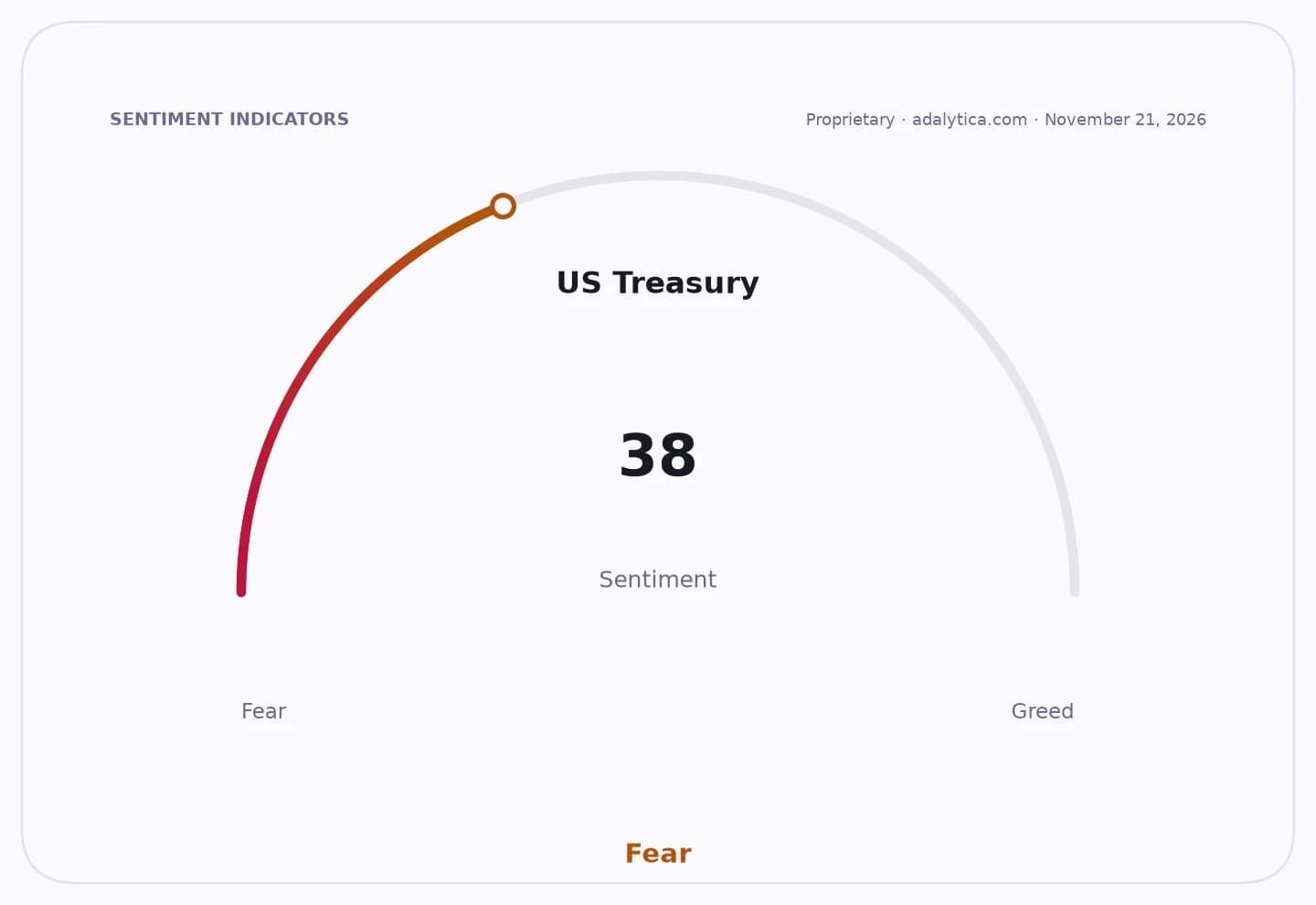
The move matters because exchange rates are being driven less by day-to-day risk appetite and more by the widening pull of interest-rate differentials. With the 10-year U.S. Treasury yield at 4.91% and the 2-year at 4.63%, U.S. rates continue to offer a relatively attractive return versus sterling assets, helping keep the dollar supported even as broader sentiment on the greenback remains weak. The 10-year/2-year spread has narrowed to 24 basis points, a sign markets still expect the Federal Reserve to cut rates faster than long-end borrowing costs fall, but not enough to remove the dollar’s carry advantage in the near term.
Sentiment Indicators

For sterling, that leaves the pound vulnerable to bouts of profit-taking after a strong recent showing. Adalytica’s British pound trade signals still show sentiment in “Greed” territory at 84, even after a one-day drop, suggesting positioning had become crowded and the latest dip may reflect technical exhaustion rather than a fresh macro shock. FXB, the sterling-tracking fund, closed at 126.19 on Nov. 25, below its 50-day moving average of 127.51 and just under its 200-day average of 127.86, while its RSI reading of 28.2 points to an oversold condition. That combination often invites short-term stabilization, but it also underscores that the pound has lost momentum.
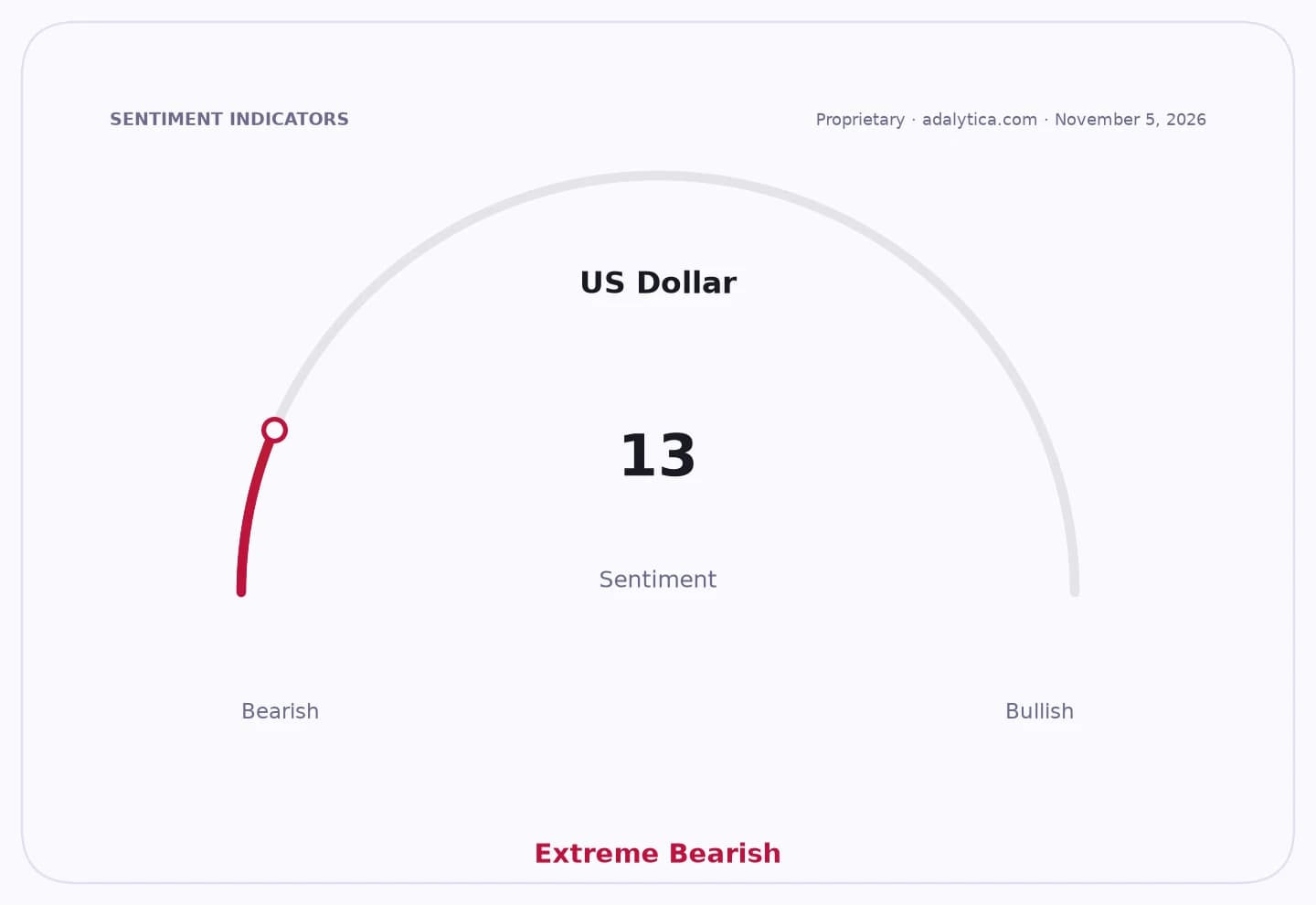
The dollar’s own backdrop is mixed but still supportive. Adalytica’s U.S. dollar signal sits in “Extreme Fear” at 8, which suggests investor conviction in the greenback is thin. Even so, when U.S. yields stay high and sterling loses momentum, the dollar can rise on relative grounds rather than broad enthusiasm. That is the key market narrative: not a decisive dollar breakout, but a pound correction driven by rates and positioning.
US Dollar
Economically, the exchange-rate move feeds into trade, import pricing and inflation expectations in Britain. A weaker pound makes imported goods more expensive, which can complicate the Bank of England’s inflation fight and limit how quickly policymakers can ease. For investors, the immediate implication is that sterling longs need either a clearer U.K. growth surprise or a faster drop in U.S. yields to justify another leg higher. Until then, the pound looks exposed to further two-way volatility around rate expectations, while the dollar remains anchored by still-firm Treasury returns.
| Entity | Gains | Losses |
|---|---|---|
| U.S. dollar | ▲Yield support | ▼Sterling shorts unwinding |
| British pound | ▲Export competitiveness | ▼Importers and rate-sensitive consumers |
| U.S. Treasury bulls | ▲Higher carry | ▼Currency diversification trades |
| U.K. inflation outlook | ▲— | ▼More imported price pressure |