Cantabria’s conservative government is preparing a fresh personal income tax cut and, for the first time, is open to adjusting tax brackets lower to offset inflation, a shift that would put more cash in households’ pockets but also narrow the regional budget’s room to maneuver.
Cantabria plans income tax cut and bracket changes
The move matters because it turns the fight over prices into the central economic plank of Cantabria’s early election positioning. Inflation has become the opposition’s main line of attack, and Buruaga is responding by leaning harder on tax relief for families, especially through the IRPF, the levy that most directly affects disposable income.
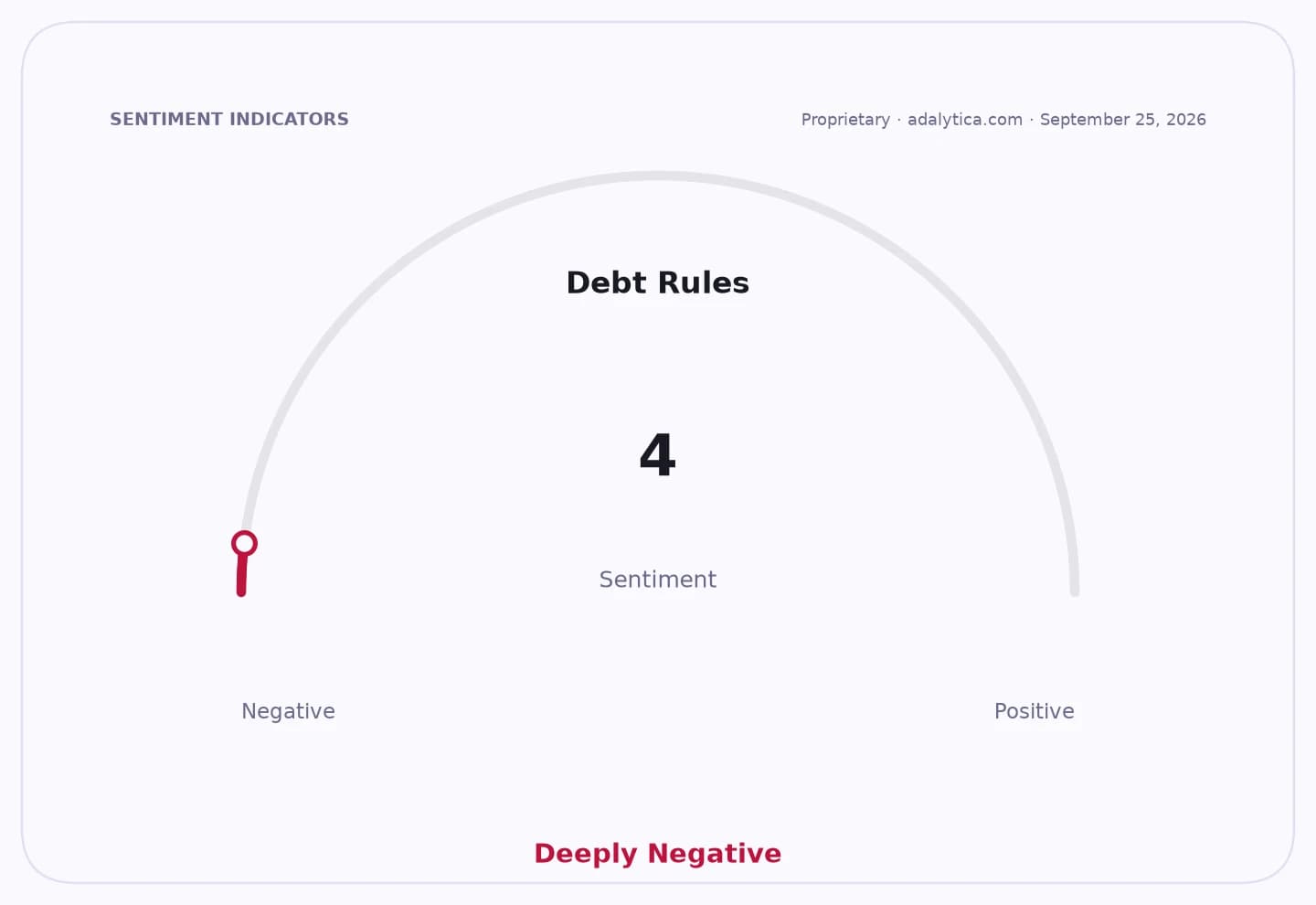
Sentiment IndicatorsⓘProprietary · adalytica.com · September 25, 2026
This is a snapshot — live sentiment, awareness and momentum for 130+ markets update continuously in the dashboard.Open AlphaPulse
Until now, the regional government had resisted full deflation of the tax bands, arguing that the income tax changes already in force since 2024 were more effective. Buruaga’s new openness marks a political and fiscal pivot: it acknowledges that nominal wage gains have been partly swallowed by higher prices and that tax policy is now being used to preserve purchasing power rather than just to lower rates in abstract terms.
The region’s economic backdrop explains the urgency. The opposition says Cantabria is among Spain’s inflation leaders and also ranks near the top for housing costs, while industrial output remains weak. Those pressures help explain why tax policy has moved to the center of the debate and why the government is trying to frame fiscal easing as a response to cost-of-living stress rather than a purely ideological cut.
Buruaga said Cantabria’s 2025 tax reductions generated around 100 million euros in savings for residents. According to her figures, the biggest share came from the regional IRPF cut, at 57 million euros, followed by 15 million euros from property tax changes and 13 million euros from transfer taxes. The government also cited 3.4 million euros of IRPF deductions linked to rent, children and childcare, plus 6 million euros to help first-time homebuyers.
For investors and businesses, the significance is less about the immediate size of the tax cut than about what it says regarding policy priorities in a smaller Spanish region. A lower tax burden can support household consumption and housing demand, but it also implies tighter fiscal trade-offs for public spending, especially if the government needs parliamentary support to pass the 2027 budget before any further reduction can take effect.
That political arithmetic is critical. Buruaga said the next round of tax easing would depend on the approval of the 2027 accounts, a process that looks uncertain. If the budget stalls, the tax plan may stall with it. If it passes, Cantabria would deepen a policy mix that favors disposable income and property-market incentives over revenue retention.
The opposition is trying to limit the government’s room to sell the move as broadly pro-growth. The Socialists argue the benefits of tax cuts skew toward higher earners and weaken public services, while Vox supports lower taxes but says the real driver of weaker household finances is inflation. The regionalist PRC, meanwhile, is pushing for direct compensation for price rises and says the government’s earlier shock plan has gone nowhere.
The broader story is that Cantabria’s budget debate has become a proxy fight over whether inflation should be offset through tax indexing or absorbed by households. For markets, the near-term readthrough is modest, but the direction is clear: the region is moving toward a more aggressive pro-household tax stance, with fiscal policy increasingly shaped by election timing and the need to defend real incomes.
| Entity | Gains | Losses |
|---|---|---|
| Cantabria households | ▲Higher disposable income | ▼Less public revenue |
| Regional government of Cantabria | ▲Electoral appeal | ▼Budget flexibility |
| Public services / regional spending | ▲— | ▼Tighter funding room |
| PSOE / PRC opposition | ▲Political attack line on services | ▼Less leverage if cuts pass |